Akal Takht can't unseat Mann, but spell trouble for him in 2027 polls
Laws banning use of religious diktat in polls may prove toothless if Takht, which wields enough influence, sets out to excommunicate Mann, sway voters against him

Moral authority and legal power are different things, but easily confused. A faith may command the conscience of its members. What it can command in law, over a man who holds office and faces voters, is a narrower question.
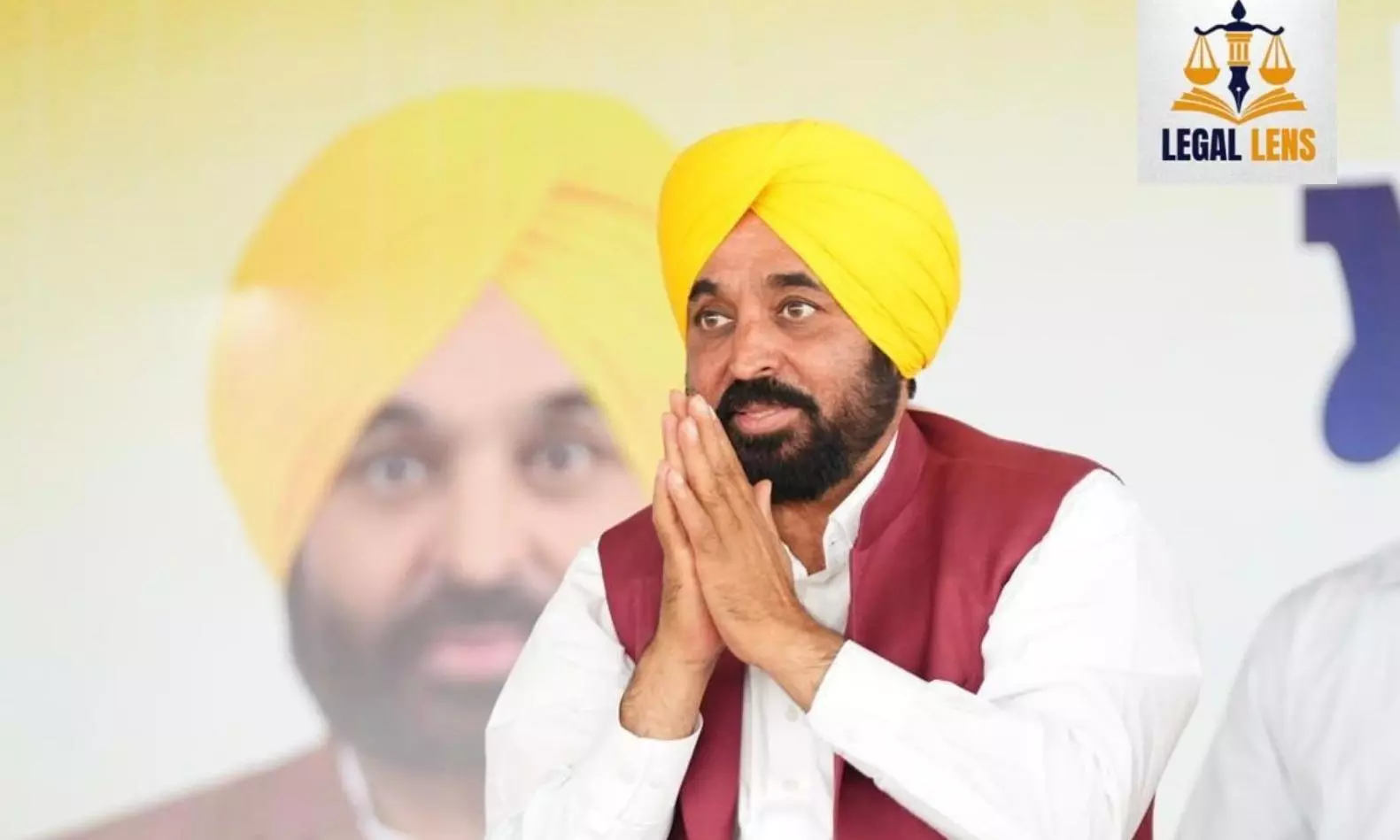
That question now surrounds Punjab’s Chief Minister Bhagwant Mann. The Akal Takht, the highest temporal seat of the Sikhs, has ruled against him. It declared him a ‘Guru Dokhi,’ or betrayer of the Guru, and asked Sikhs not to associate with him. The censure rests on a video in which a man resembling Mann is seen pouring alcohol over images of the Sikh Gurus. Two laboratories found it genuine, the Akal Takht said. The ruling Aam Aadmi Party (AAP) rejects the charge, saying the reports did not prove that the man was Mann.
Sikhs revere the Guru Granth Sahib as a living Guru, not a book. Its desecration, or ‘beadbi’, is among the gravest wrongs in the faith. The AAP government’s answer is the Jaagat Jot Sri Guru Granth Sahib Satkar (Amendment) Act, 2026. It makes desecration a serious crime.
Censure can’t harm CM, but risk poll results
The political storm is loud; the legal questions beneath it will outlast it. Three such questions matter. What can the censure do to Mann? Is the censure lawful? And what becomes of the law that provoked it?
The real risk is at the ballot box. The censure cannot, by itself, unseat him. Mann holds office under the Constitution. He answers to the Assembly and the voters, not to the Akal Takht. Against his office, the edict has no legal force.
Also read: AAP faces Punjab turmoil year before polls as Akal Takht declares Mann ‘anti-Guru’
The sharper risk waits at the next election. Section 123(3) of the Representation of the People Act, 1951 appeals for votes on religious grounds a corrupt practice. The bar covers asking people to vote, or to refrain from voting, “on the ground of his religion, race, caste, community or language.” It also catches appeals to religious symbols, or to national symbols like the flag, made to help one candidate or to damage another.
Censure may offset law
In S Harcharan Singh Vs S Sajjan Singh (1984), a Punjab election was challenged over an Akal Takht ‘hukamnama’ (order) used in the campaign. The campaign sought vote for the sponsored candidate as a religious duty. The Punjab and Haryana High Court was unconvinced; the Supreme Court reversed it, found a corrupt practice and set the election aside. The line it drew still holds. Calling a candidate a “good Sikh” is no appeal to religion. Telling voters that opposing him betrays the faith is.
So if a candidate or party turns the censure into a religious instruction to vote against Mann, it may be caught. The provision, though, reaches candidates and their agents, not religious bodies. The danger comes when campaigners adopt it, and the 2027 election is near.
Also read: Opposition accuses Punjab CM Bhagwant Mann of appearing drunk in Assembly
Yet one word in it was long contested: “his,” in “his religion.” Did it bar only an appeal to the candidate’s own faith, leaving an appeal to the voters’ faith untouched? Abhiram Singh Vs CD Commachen (2017) closed the gap. After a BJP candidate’s 1990 Maharashtra election was set aside for a religious appeal, the case rose to a seven-judge bench. That bench read “his” to cover the voter’s religion, not only the candidate’s. Telling Sikhs to vote as Sikhs is, therefore itself the forbidden appeal.
Risk of excommunication
A second provision goes further. Section 123(2) treats “undue influence” as a corrupt practice, naming the very tools in play: threats of social boycott, excommunication and “divine displeasure.” Warning voters that backing Mann invites the community’s wrath could fall here.
Can a community cast someone out? Is the censure itself lawful?
If the censure becomes a coercive boycott, what remedy exists? Maharashtra has a law against social boycott; Punjab does not.
A community may discipline its members. In Sardar Syedna Taher Saifuddin Saheb Vs State of Bombay (1962), the Bombay High Court protected the power of excommunication, the formal expulsion of a member. It was part of a denomination’s right under Article 26 to manage its affairs. That view no longer stands undisturbed. In 2023, the court said it needed a fresh look.
Being cut off, it warned, can mean losing access to shared property, worship and even burial grounds. It referred the question to the nine-judge bench in the Sabarimala reference. There, the counsel called excommunication a “civil death”, and the judges weighed Article 26 against individual dignity. The bench reserved its verdict in May. The boundary is, for now, unsettled. Either way, Mann keeps his rights as a citizen.
No remedy for social boycott
A paradox lies in wait. Suppose the court upholds excommunication. That settles whether a community may expel a member, but not whether the power may be used to move voters. Section 123(2) bans threatening voters with excommunication or spiritual censure. It spares a religious act done without intent to sway an election, but not one aimed at the ballot.
And a sanction the court has blessed is a more credible threat, hence more coercive. A favourable ruling could enlarge the danger, not shrink it.
Also read: BJP, SAD turn up heat on AAP govt over sacrilege bid at Golden Temple complex
If the censure becomes a coercive boycott, what remedy exists? Maharashtra has a law against social boycott; Punjab does not. A person shut out in Punjab must fall back on general law. He could invoke the criminal law against intimidation, or ask a high court to protect his dignity. Neither targets a boycott directly; each is a workaround.
The law behind the row
The Takht has also summoned Sikh ministers for June 29, over the law. That raises a question about power. The Takht may call them members of the faith. It cannot summon the Punjab Cabinet. When ministers make law, they answer to the Assembly, the Governor and the voters, not to a religious seat.
A faith may condemn a law and rally believers against it; that is lawful dissent. It may not turn disapproval into a veto, or hold ministers to account for how they voted. A law passed by the Assembly can be undone only by the Assembly, or a court.
Also read: Why South Asians, especially Sikhs, are living in constant fear in the UK
Now let’s talk about the law itself. Passed on April 13 and notified on April 20 this year, it punishes sacrilege of the Guru Granth Sahib. The penalty is seven to 20 years in prison and a fine up to Rs 10 lakh. The term rises to life where the act is part of a plot to disturb the peace. The government says it needs no Presidential assent and the Centre’s approval, because it is amending a state law, not the national criminal code. Earlier attempts waited years for that approval and never got it.
Takht-state power tussle
Three problems follow. First, that approval may still be needed. Criminal law is a shared subject, and the state law may clash with the national code, which already punishes offences against religion. Second, a fixed floor of seven years strips a judge of discretion. In Mithu Vs State of Punjab (1983), the court struck down a sentence that left judges no choice, holding punishment must be reasonable. Critics note that seven years for sacrilege rivals the term for rape or dacoity with murder. Third, the law shields the Guru Granth Sahib alone, raising a question of fairness to other scriptures.
Also read: Operation Bluestar anniversary: Akal Takht Jathedar slams Punjab anti-sacrilege law
The clergy’s response confounds expectation. A body devoted to the scripture might be expected to welcome a law guarding it. The Akal Takht has instead objected. Its grievance is not that the law is too soft, but that the state has trespassed. The government drafted it without consulting the Shiromani Gurdwara Parbandhak Committee (SGPC), the body that runs Sikh shrines, or the clergy.
To resist the government, the Takht invokes the very autonomy that is given to it in Article 26 of the Constitution. It is the same autonomy it uses to discipline the chief minister.
For them, sacrilege is the Panth’s own domain. The Act makes a “custodian” answerable for each ‘Saroop’, a consecrated copy of the scripture. That draws in ‘granthis’ (custodians of the Guru Granth Sahib), committees and ordinary families, some of whom, fearing prosecution, are returning their Saroops to gurdwaras. Even the plan to give each Saroop a registration number is read as desecration. The Takht resists the state defining and policing the sacred.
Stark irony
The irony is sharp. To resist the government, the Takht invokes the very autonomy that is given to it in Article 26 of the Constitution. It is the same autonomy it uses to discipline the chief minister.
Also read: BJP Sikh leaders take on Rahul over use of Sikh symbols in speech
The Akal Takht’s word carries deep moral weight in Punjab. That is why the law grows watchful when religious censure drifts toward the vote. But no voter may be told that the ballot is obedience, or disobedience, to the Akal Takht. That is the line the Constitution and the election law are built to hold.