Palestine ambassador questions India’s ‘consistency’ on Gaza | Exclusive interview
Abdullah Mohammad Abu Shawesh says Palestine’s absence from BRICS summit was ‘very strange’, urges India to take a more consistent stand on Palestinian rights

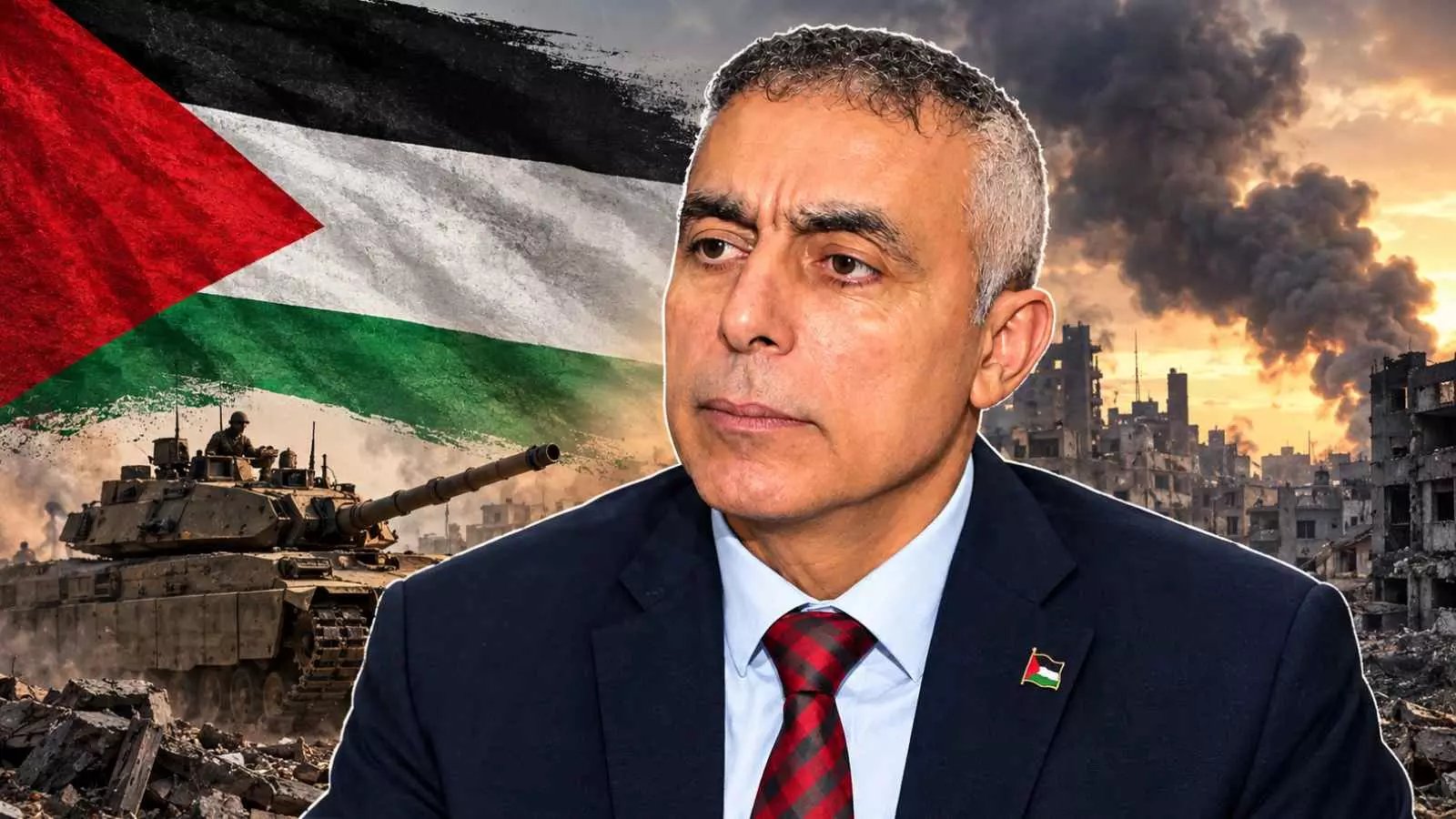
Palestine’s ambassador to India, Abdullah Mohammad Abu Shawesh, has been in Delhi for just over a year and six months. Yet, in this short period, he has made his presence felt. Since arriving from New York, where he spent eight years at the UN, the otherwise sleepy mission has been abuzz with activity.
He spends time and energy pushing his country’s views in a media landscape dominated by Israeli voices. To his credit, he has succeeded in getting the plight of Palestinians heard. As a diplomat, he has to mind his words, or as he often says, journalists are free to lob questions at him, but he has to reply, “according to my beliefs and my limitations as a diplomat; I am not here as a political commentator".
Also Read: Modi govt's response on Palestine abdication of humanity, morality: Sonia Gandhi
In this interview with The Federal, the ambassador talks about his disappointment that Palestine was not a part of the recent BRICS Summit in New Delhi, especially since India is "a champion of the Global South", about the Palestinians' concern that several nations, including India, have not condemned Israel's actions in Gaza, and that he is not very hopeful that the next government in Israel, even if Netanyahu loses, will accept a two-state solution.
Edited excerpts:
Were you happy with the BRICS New Delhi Declaration on Palestine?
One of the contradictory things is that the final BRICS declaration called for Palestine to be represented in the international community, everywhere, and yet, unfortunately, we were not invited to this meeting. I don’t know what happened, but we were not there. It is strange, in fact, more than strange, I would say, because we used to be invited to all the BRICS summits. President Mahmoud Abbas attended a few of them, especially the last time, when he went to Russia two years ago.
Also Read: French President Macron says France will recognise Palestine as state
And this is particularly strange when we are talking about representing the Global South. This summit was being held in India, the home of what we believe is a champion of the Global South. When we talk about South-South cooperation, India has always been a leader, a champion. So, for Palestine not to be invited to the house of the champion of the South is very strange.
How do you see India-Palestine ties at the moment?
I think India has taken some positive steps more recently. We had an official visit to Ramallah, and there have also been official-level engagements. But I think the question remains: How consistent is India’s position in standing up for the rights of the Palestinian people?
And the future of bilateral relations?
When we talk about India-Palestine relations, we talk about India as a whole. We have always spoken positively about India, regardless of which government is in power. With the present government, we believe that India-Palestine relations can be further improved. There have already been very positive steps, and we look forward to strengthening the relationship in the future. Of course, we will work with this government, as well as with any future government and whoever is in power in India, to further strengthen our bilateral relations. This is our responsibility.
India’s support for Palestine has weakened, particularly since 2014. Given its long history of backing the Palestinian cause, how disappointed are Palestinians with where India stands today?
Yes, India was the first non-Arab state to recognise the PLO as the sole and legitimate representative of the Palestinians. A PLO office operated from New Delhi, and today the same office where we are sitting has become our embassy, funded and built by the Indian people.
So, was it a shock to the people of Palestine to see India suddenly distance itself?
When you talk about Palestine and countries that have been very strong supporters and have unequivocally and unconditionally stood with us, then every single move, even if it is just one step backwards, is noticed. Yes, several countries, including some in our own neighbourhood, have taken a more positive view of Israel. Some have gone quite far in building positive relations with Israel, compared with their traditionally positive relations with Palestine.
While India condemned the October 7, 2023 Hamas attack on Israel within hours of the incident, New Delhi has not yet condemned Israeli action in Gaza.
India was not the only country to condemn the Hamas attack. Most countries, including several Muslim nations, spoke out against Hamas. But as rational people, and I believe we Palestinians are rational, we cannot ignore the root of the problem, which was at the heart of the October 7 attack. I strongly believe that India knows the attack did not happen in a vacuum.
Also Read: India votes in favour of UN resolution backing Palestine's statehood
Our main and legitimate concern is that countries condemned October 7, but then remained silent as 73,000 people were killed in Gaza, most of them civilians, including women and children. That is not taking a holistic view of the situation. Palestinians have every right to ask why countries unequivocally condemned an attack that killed 1,200 Israelis, but remained silent about Israel’s actions. We have a right to raise this question with the Indian government and with the international community at large.
The word genocide has been used to describe Israel’s actions in Gaza. India has kept out of the debate. Comment?
To my knowledge, no, the Indian official position is not calling Israel’s actions in Gaza genocide. Yet, a UN Commission of Inquiry has concluded that Israel has committed acts of genocide in the Gaza Strip. Navi Pillay, chair of the Commission, concluded after investigations that Gaza met the definition of genocide as outlined in the Genocide Convention. So has the International Criminal Court. Scholars of Holocaust and Genocide Studies have also dubbed Israeli action as Genocide. The firing by Israeli forces at the Jenin govt hospital and preventing ambulances from reaching the spot amounted to a deliberate attempt to destroy Palestinians. Those are acts of a government that believes in Jewish supremacy.
Also Read: Palestine, Mahatma Gandhi and Indian judiciary
Our life as a Palestinian people is nothing compared to the life of the Jewish people. India faced similar issues where Indian lives were expendable during British Rule. I am referring to the Jallianwala Bagh massacre of April 1919, where nearly 1,000 Indians were killed because the British General wanted to teach Indians a lesson. Their lives had no meaning, and the man who ordered the attack was never punished or jailed. His idea was to teach the British subordinate a lesson, much as the Israelis did by punishing the hapless people of Gaza.
Recently, there were reports that Benjamin Netanyahu was warned by no less a person than UAE President bin Zayed of Hamas planning an attack.
This is why many believe October 7 was a false flag attack. This has come from the Israeli media, it is not us saying so. It is a Haaretz investigation. We have always said that an international inquiry committee will investigate what happened on October 7. Even the Israelis themselves have not looked into this and did not create a national investigation committee to get to the bottom of these allegations.
Do you think things will change if Netanyahu loses the election next month?
Whether the next government in Israel is headed by the current fugitive from justice Benjamin Netanyahu or someone else, according to us, it will not make any difference. No Israeli political party is ready to accept the two-state solution.