'Keep Mekedatu separate, focus on Cauvery share now': Expert on upcoming Vijay-DKS talks
With tensions rising and water levels lowering, veteran journalist T Ramakrishnan analyses what TN Chief Minister Vijay can expect from his first Cauvery talks with Karnataka

A weakened monsoon this year has brought the simmering Cauvery issue to a boil, with both Karnataka and Tamil Nadu now on the brink of another political confrontation over the river's waters. As the decades-old Cauvery water-sharing dispute once again threatens to spark a political flashpoint between the two states, Tamil Nadu Chief Minister C Joseph Vijay is scheduled to visit Bengaluru in the first week of August for bilateral talks with Karnataka Chief Minister DK Shivakumar.
On July 28, the Cauvery Water Management Authority (CWMA) directed Karnataka to release 3,500 cusecs of Cauvery water daily to Tamil Nadu for 15 days. The order has triggered protests across Karnataka, including in Bengaluru and Mandya, with pro-Kannada organisations arguing that the state is itself grappling with a rainfall deficit and drought-like conditions.
Also read: Why Mekedatu will be an acid test for new CMs DK Shivakumar and Vijay
The Federal spoke to senior journalist T Ramakrishnan, who has closely covered the Cauvery dispute for decades, about the significance of the upcoming meeting, the likelihood of a breakthrough, Karnataka's position on the issue, and why the contentious Mekedatu project should remain outside the scope of the talks.
What is the significance of Vijay's meeting with D K Shivakumar on the Cauvery water-sharing issue?
The meeting is meant to facilitate the implementation of the essential features of the legal framework. Whatever has been provided for under the framework is what will be discussed.
According to the Cauvery Water Disputes Tribunal's final award of 2007, as modified by the Supreme Court in February 2018, Tamil Nadu should have received nearly 35 tmcft of water between June 1, the beginning of the water year, and July 25. Instead, we have received only about 3.5-6 tmcft. There is a shortfall of roughly 31 tmcft.
The purpose of the meeting is to impress upon Karnataka that it should implement the tribunal's final award, as amended by the Supreme Court. Vijay is not trying to disturb the legal framework. He is trying to make it more effective.
Also read: Cauvery issue: Farmers’ groups, parties criticise Vijay’s plan for talks with Karnataka
His initiative should therefore be seen as one that supplements and complements the existing legal framework.
Have such political talks succeeded in the past?
Most of the talks have failed. Even then, discussions have not always been cordial. There have been occasions of heated exchanges over the Cauvery issue.
The path of negotiation should never be abandoned, regardless of whether it produces immediate results. Sometimes discussions help, sometimes they do not. But you have to keep talking.
Vijay became Chief Minister only around three months ago. This will be his first meeting with D K Shivakumar as Chief Minister of Tamil Nadu. It will also help him understand the thinking and mindset of Karnataka's ministers and officials.
That first-hand understanding will be valuable in handling the issue in the coming years. We should not expect dramatic results from a one-day meeting. Sometimes such talks have even extended into a second day, as happened during M G Ramachandran's tenure.
Will the Mekedatu dam project a big part of the discussions?
Karnataka may certainly raise the Mekedatu issue because it is in its interest. But Tamil Nadu need not respond to it. We can simply say that, if required, a separate discussion can be held on Mekedatu.
Also read: Issue political warning to Karnataka on Cauvery water share: AIADMK to Vijay
Tamil Nadu has already written to the Union government seeking the constitution of a dedicated tribunal on the issue. Since the matter is pending before the Centre, it would not be appropriate to discuss Mekedatu during this meeting.
Tamil Nadu can tell Karnataka that this meeting is only about securing its rightful share of Cauvery water and safeguarding its legal rights. That is the limited purpose of Vijay's visit.
Could the political relationship between the Congress and TVK help these talks?
"Hopefully. But Karnataka's leaders have always been very firm in their approach to the Cauvery dispute.
They have long believed, rightly or wrongly, that the erstwhile princely state of Mysore was treated unfairly under the 1924 agreement. They continue to carry that sense of grievance.
Because of that, Karnataka's leaders do not want to be seen as conceding to Tamil Nadu on the Cauvery issue. D K Shivakumar is also known to be a tough leader.
Karnataka currently has around 60 TMC of water. The shortfall is around 30 TMC. I do not expect Karnataka to make up the entire deficit, but perhaps it could release a portion of it, maybe around one-third.
Before taking any decision, Karnataka is likely to hold an all-party meeting, something it routinely does on Cauvery issues, unlike Tamil Nadu. This meeting will help both sides better understand each other's concerns and constraints. That could prepare the ground for a more favourable decision from Karnataka.
Why is Cauvery water so crucial for Tamil Nadu every year?
Cauvery is the only major river in Tamil Nadu in the true sense of the term. We have rivers like the Vaigai and the Thamirabarani, but Cauvery is the only river that covers such a vast region and supports lakhs of people.
Tamil Nadu has two major cultivation seasons — Kuruvai (short-term crop) and Samba (long-term crop).
Also read: Mekedatu will benefit TN farmers more than Karnataka: CM Shivakumar
Traditionally, Kuruvai covered around 3 lakh acres. In recent years, because of better water availability and free electricity for agriculture, it has expanded to about 4.5 lakh acres.
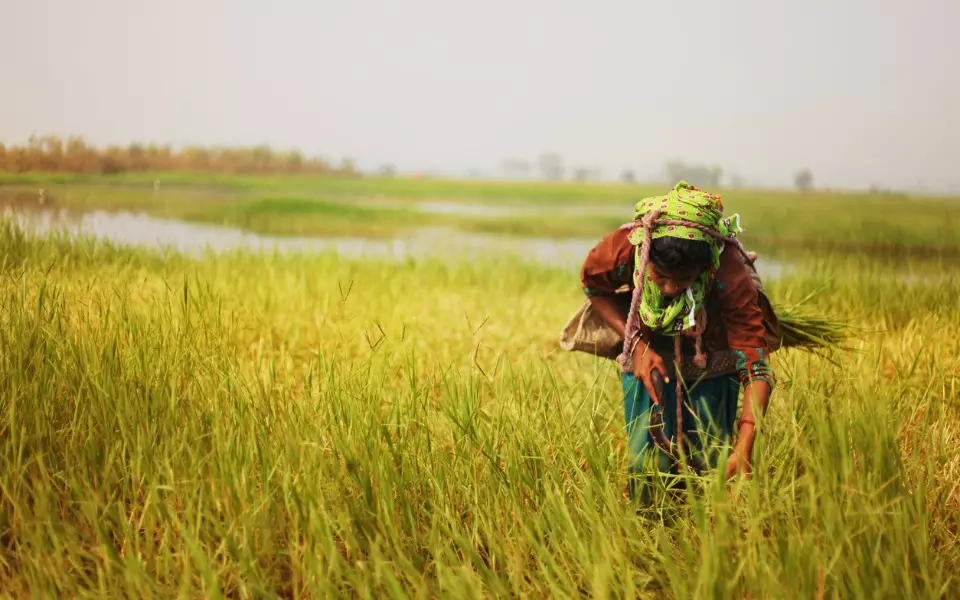
Samba cultivation extends over around 12 lakh acres, though it sometimes falls to around 10 or 11 lakh acres. During Samba, agricultural workers get employment and the rural economy depends heavily on this crop.
The Cauvery delta districts — Thanjavur, Tiruvarur, Nagapattinam, Mayiladuthurai, parts of Karur, Tiruchirappalli, Ariyalur and Pudukkottai —depend extensively on Cauvery water.
Tamil Nadu produces around 70 to 80 lakh tonne of paddy annually, and at least 30 lakh tonne come from the Cauvery delta. The delta is therefore vital for both the rural economy and food security.
Cauvery water has strengthened agricultural production, improved livelihoods and sustained the economy of the region. That is why Tamil Nadu is so desperate to secure its rightful share.
The river is truly the lifeline of the people living in the delta. Without Cauvery water, people suffer immensely. Although employment schemes exist, nothing can replace agriculture.
Water from the Cauvery has also shaped the civilisation, temples, sculpture, Bharatanatyam and the broader cultural heritage of Tamil Nadu.