



Delimitation will divide North and South India, says Congress
Party says govt's delimitation proposal, linked to women's reservation law, punishes southern states for better population control and development indices

Few political fault lines in India run as deep as delimitation, the periodic redrawing of constituency boundaries based on population. Ever since the idea of linking it to the implementation of the Women's Reservation Act resurfaced in mainstream political discourse, it has stoked anxieties in southern states that have long argued they should not be penalised for managing their populations well and achieving stronger human development outcomes.
Those anxieties burst into the open again on Monday (April 13).
Congress calls it North-South divide
The Congress party alleged that the government's proposed delimitation, tied to the women's reservation law, is a calculated attempt to drive a wedge between the northern and southern states.
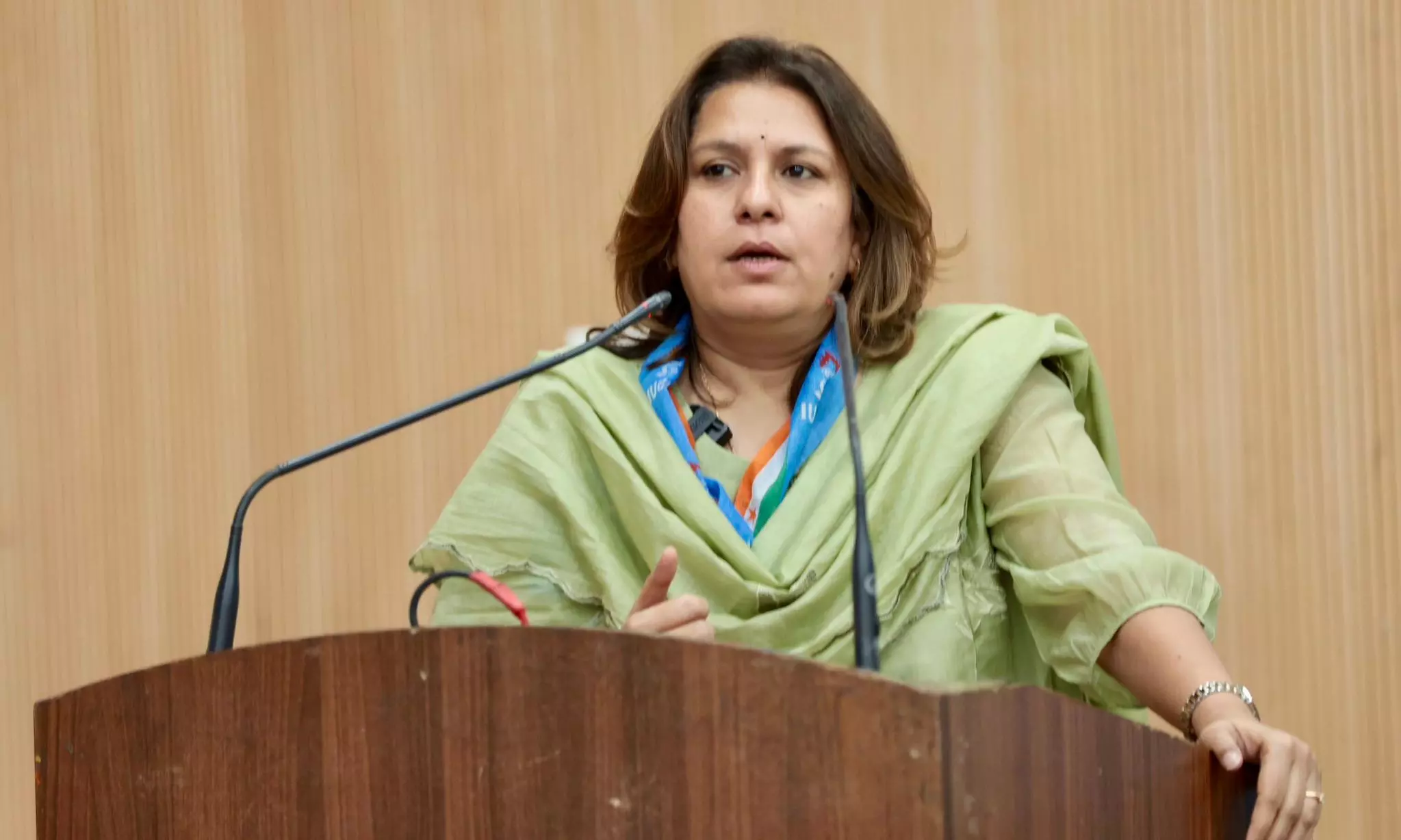
Speaking at a press conference in New Delhi, Congress spokesperson Supriya Shrinate said: "I believe the way delimitation is being thrust upon the people, it is an attempt to create a divide between the North and the South."
Also Read: Is Revanth’s delimitation formula for fair South representation reasonable?
The party argued that delimitation cannot be reduced to a mere numbers exercise. States such as Kerala, Tamil Nadu, Karnataka, Andhra Pradesh and Telangana, it said, should not be made to pay a price for better population control and superior development indices.
"There are many southern states whose Human Development Index (HDI) parameters are better than other states — they controlled population, controlled expenditure, so why is delimitation being done to harm them," Shrinate asked.
Suppressing southern voices
Shrinate went further, warning of political consequences if southern states are sidelined in the process. "If the voice of states such as Kerala, Tamil Nadu, Karnataka, Andhra Pradesh and Telangana is suppressed in Parliament and this is thrust upon them without a consensus or an all-party meeting, then people will be hurt, worried and will raise their voice in anger," she said.
Her remarks came in response to questions about Telangana Chief Minister A Revanth Reddy's criticism of the Centre over the delimitation formula reportedly proposed while seeking to amend the Women's Reservation Act for its implementation in 2029.
Citing a recent article by Congress veteran Sonia Gandhi, which argued that the real issue behind the government's move to convene a special sitting of Parliament is delimitation and not women's reservation, Shrinate recalled the party's position when the bill was first passed.
"When the women's reservation bill was being passed precisely 30 months ago in September 2023, the Congress supported it. Our leaders in the Lok Sabha and the Rajya Sabha, including Congress president Kharge ji and CPP chairperson Smt Sonia Gandhi ji, clearly said that women's reservation should be implemented immediately without being linked to a caste census and delimitation… After 30 months, without any trigger, Mr Modi wants to undo his own constitutional amendment," she said.
Questions over timing
The Congress also questioned the timing of the special session, pointing out that elections in Tamil Nadu and West Bengal are imminent.
"How does the government explain this U-turn? Why wasn't this bill introduced and debated before April 3? The Modi government chose to bring the bill on April 16, 17 and 18 in the middle of election campaigns in West Bengal and Tamil Nadu," Shrinate said. "Do they not have a constitutional right to campaign? Why not wait until April 29?"
Also Read: Sonia Gandhi flags delimitation as ‘real threat’, terms it an ‘assault on Constitution’
Sonia Gandhi, in her article published in The Hindu, described the reported delimitation proposal as "extremely dangerous" and an "assault" on the Constitution itself. She stressed that any delimitation involving an increase in the strength of the Lok Sabha must be politically, and not just arithmetically, equitable.
She also alleged that Prime Minister Narendra Modi's real intention is to further "delay and derail" the caste census, and that his appeals to the opposition to support the bills are an attempt to "bulldoze" them through Parliament in a special session timed when election campaigns in Tamil Nadu and West Bengal will be at their peak. "There can be only one reason for the extraordinary hurry, which is to derive political advantage and place the opposition on the defensive," Gandhi alleged.
The Budget session of Parliament has been extended, and a special three-day sitting has been convened from April 16 to 18 to bring amendments to the Nari Shakti Vandan Adhiniyam, commonly known as the Women's Reservation Act, for implementation in 2029.
Polls in West Bengal are scheduled in two phases on April 23 and April 29, while Tamil Nadu votes in a single phase on April 23. Votes will be counted on May 4.