Exclusive | Budget 2026: Centre accepts 16th Finance Commission recommendations
Recommendations of FC will be tabled ahead of Union Budget as mandated by Constitution; new provisions likely to leave major imprint on Budget 2026-27

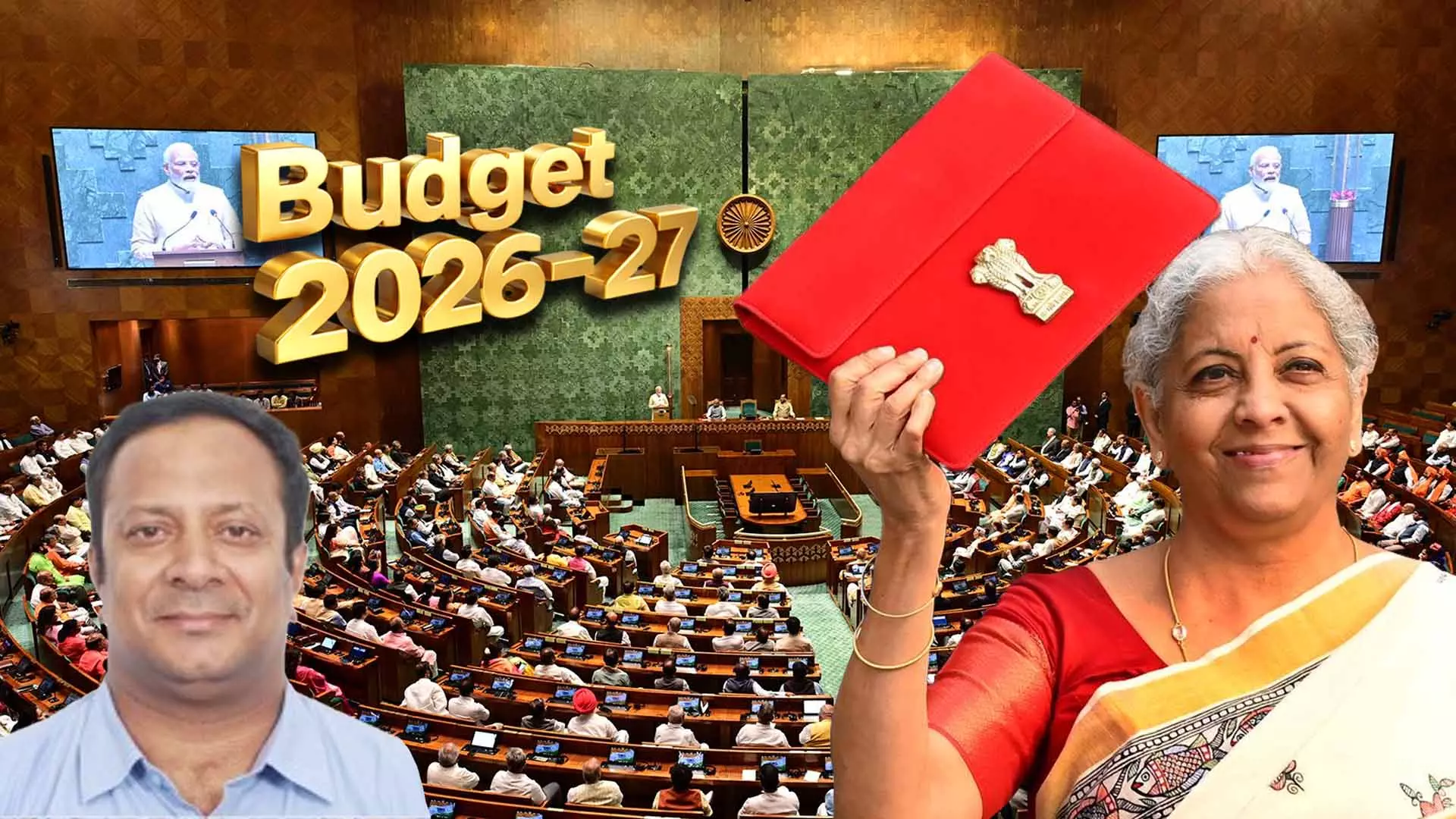
In a major development, the Centre has accepted the recommendations of the 16th Finance Commission. The new provisions in FC16 are likely to leave a major imprint on the Union Budget 2026-27 to be presented by the Finance Minister Nirmala Seetharaman on Sunday, February 1.
The recommendations cover the five year period from April 1, 2026 to March 31, 2031. The Budget Session of the Parliament is commencing from January 28, with President Droupadi Murmu addressing the joint session of the two Houses. The government is expected to table its annual economic survey on the same day.
The recommendations of the Commission too will be tabled ahead of the Union Budget as mandated by the Constitution.
On November 17, 2025, Finance Commission Chairman Aravind Panagariya called on the President and submitted his report. Earlier, on November 29, 2024 the Union Cabinet had accepted the terms of reference of the FC. The Commission therefore worked for nearly a year consulting the Centre and the state governments.
Also read: Can Budget fix the damage trade protectionism has done to India’s exports?
The Finance Commission decides how financial resources of Centre and the states are devolved from a divisible pool of taxes vertically (between the Centre and the states) and horizontally (among the states) based on a formula.
Apart from deciding on the Centre-states tax division, the 16th FC was also tasked with recommending the principles that should govern the grants-in-aid transferred by the Centre to the States, and also the measures needed to augment the funds of the States to supplement the resources of their panchayats and municipalities.
Vertical devolution
The FC recommendations are significant for the states, especially those from the South as they have been demanding a higher 50 per cent share in devolution of funds.
Under the 14th Finance Commission, this stood at 42 per cent. The 15th Finance Commission reduced it to 41 per cent.
During consultations held by the 16th FC across states, several state governments demanded that their share be increased to 50 per cent. The Centre, however, has indicated a figure closer to 40 per cent, with flexibility around that range.
This devolution, the government has suggested, will be linked to operational efficiency, rewarding states that manage finances prudently.
Horizontal distribution
Another key issue is horizontal devolution — how funds are distributed among states. A major concern during the 15th Finance Commission was the “distance” criterion, which critics argued skewed allocations.
Also read: How Budget 2026-27 can revive consumption for inclusive growth
The 16th Finance Commission is expected to substantially reduce the weight of this distance factor to ensure more equitable distribution and allow more states to receive improved funding.
Population remains a linked factor, with the upcoming population census expected to play a role in recalibrating allocations under the new formula.
Performance incentives
Operational efficiency and fiscal responsibility are central to the new framework. States that demonstrate financial discipline and undertake second-generation reforms — including in sectors such as power — are expected to be rewarded.
This marks a shift towards performance-linked devolution, where states are incentivised for responsible governance rather than relying solely on entitlement-based transfers.
The 16th Finance Commission has explicitly factored these elements into its recommendations.
Focus on local bodies
The recommendations also place emphasis on funding for panchayats and urban local bodies. The Commission has underlined that development priorities extend beyond health and education.
Special attention is being given to aspirational districts, with a focus on improving their financial capacity and development outcomes. The aim is to ensure better devolution to municipalities and local institutions.
This approach seeks to strengthen grassroots governance and ensure a more balanced distribution of development funds.
Disaster preparedness
Another critical aspect is disaster management. The Commission has proposed central allocations to improve India’s preparedness and response mechanisms across states.
These provisions are intended to ensure that disaster-related funding is available in a structured manner, reducing ad hoc responses during crises.
The disaster management component adds another layer of fiscal responsibility for the coming five years.
Political tensions
The implementation of these recommendations has become a political flashpoint. Several states have accused the Centre of not allocating sufficient funds, raising concerns about fairness in the federal structure.
With Budget 2026 approaching, all eyes are on how Prime Minister Narendra Modi and Finance Minister Sitharaman balance these competing demands.
The outcome will be closely watched to see whether it delivers equitable distribution across states, regardless of whether they are politically aligned with the Centre.