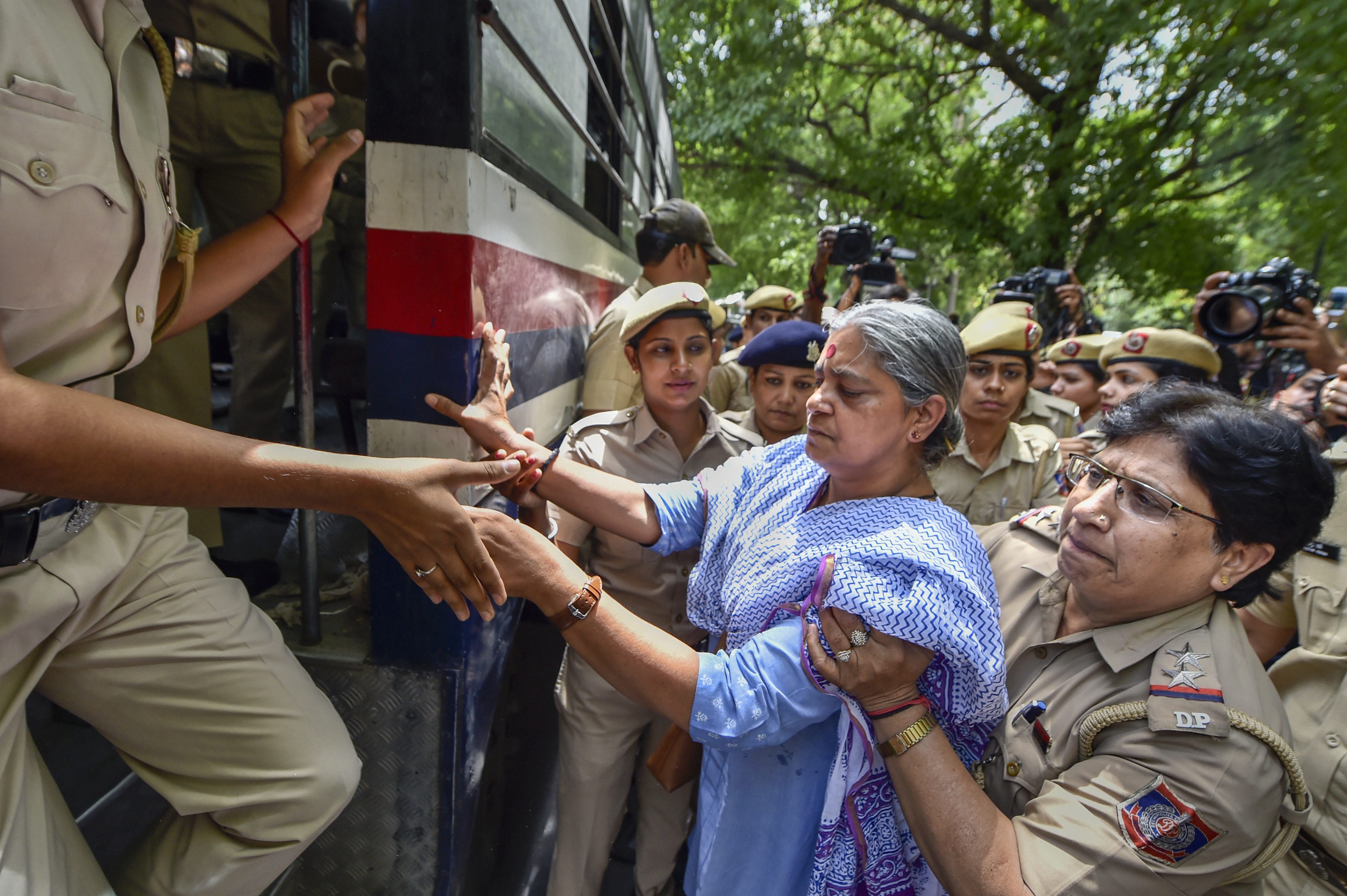
Supreme injustice: 350 women's rights activists reject clean chit to CJI

As many as 350 women’s rights activists and civil society members on Tuesday (May 7) “rejected” the findings of the in-house Justice Bobde committee that has cleared Chief Justice of India Ranjan Gogoi of sexual harassment allegations.
In a press statement, the signatories described it as a “blatant abuse of power exercised by the highest constitutional authority, the Supreme Court of India”.
The SC in-house committee, comprising SC judges Justice SA Bobde, Justice Indu Malhotra and Justice Indira Banerjee, has said it found no substance in the complaint of sexual harassment made by a former apex court employee against the Chief Justice of India, Ranjan Gogoi. Citing a Supreme Court judgment from 2003, the committee, through a note released by the Secretary-General of the Supreme Court, said the findings of the report would not be made public. The report had been handed over to the next senior-most judge, the note said. CJI Gogoi has also been given a copy of the report.
On May 6, the 35-year-old woman who levelled the allegations against the CJI, in a press release, said that her “worst fears have come true” and “all hope for justice and redress from the committee have been shattered”.
The complainant deposed before the committee twice before walking out when she appeared for the third time, citing a lack of ‘sensitivity’ on the part of the panel.
On May 6, the 35-year-old woman who levelled the allegations against the CJI, in a press release, said that her “worst fears have come true” and “all hope for justice and redress from the committee have been shattered”
In their statement, the signatories said, “We are proponents of independence of the judiciary and understand and respect that completely. However, we also believe that pointing out any lapses in the system of justice so that it may be rectified is in fact protecting this independence and not interference in procedures.”
“Today is a dark and sad day. The Supreme Court has told us that when it comes to one of its own, imbalances of power don’t matter, due process doesn’t matter, and basic norms of justice don’t matter. The ripple effect that this will now have across the board can well be imagined: if the guardian of the rule of law, and the institution that is supposed to be a moral exemplar to the nation, acts in this way, then why should anyone else act differently? And with what face can a court tell them to act differently, given its own conduct?”
“We vehemently reject this conclusion as it has been arrived at without adherence to norms of a fair and independent inquiry. The procedure followed in this case not only stands in utter violation of principles of natural justice but also in contravention with both, the letter and spirit of Vishakha Judgment and the Sexual Harassment of Women at Workplace Act 2013 (henceforth POSH Act) that seek to recognise and mitigate disbalances of power at the workplace.”
“We urge the Supreme Court to correct its own course and undo the gross injustice done to this complainant,” it added.