What emergency means to Sri Lanka

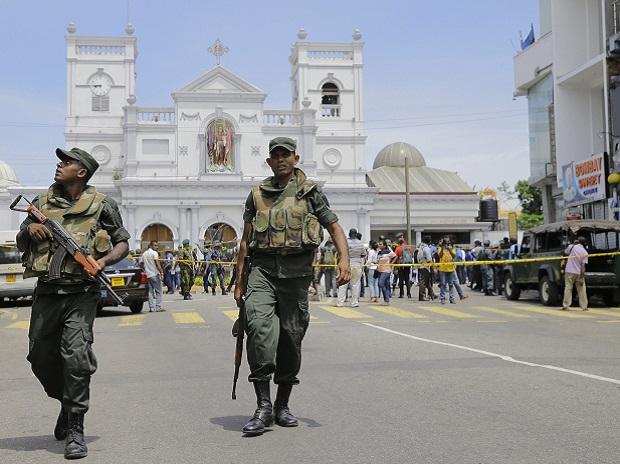
The Sri Lanka government on April 22 imposed an emergency in the country in the wake of serial bombings on churches and hotels in the island country on April 21.
Reports say the decision to impose emergency was taken at a meeting of the National Security Council to ensure public security.
A gazette issued in the name of Sri Lankan president Mathipala Sirirsena on April 22, announced the emergency and stated that “a public emergency is expedient in Sri Lanka in the interest of public security, the preservation of public order and maintenance of supplies and services essential to the life of the community.”
The president invoked Section 2 of the Public Security Ordinance (Chapter 40) as amended by Act, No. 8 of 1959, Law No. 6 of 1978 and Act, No. 28 of 1988 to exercise his power to impose a state of emergency.
What the law says
The Sri Lankan president has the power to proclaim a state of emergency under part II of the Public Security Ordinance of 1947 (PSO) and issue emergency regulations under section 5 of the PSO, which bypasses the normal parliamentary processes, says an research article by Radhika Coomaraswamy and Charmaine de los Reyes on ‘Rule by emergency: Sri Lanka’s postcolonial constitutional experience’. The president, however, has to immediately inform the Parliament of his decision, which the latter should approve within 14 days of the proclamation.
Under the Amendment Act No. 8 of 1959 in the PSO, the president can proclaim an emergency for the whole of or a part of the country. A 1987 constitutional amendment grants legal immunity to the president for such declarations.
Although emergency regulations are valid for a month, the president can renew a proclamation or modify a regulation that is renewed.
No questions asked
The Public Security Ordinance allows emergency rules to overrule any opposing legislation. Emergency regulations also restrict certain fundamental rights including equal treatment before the law, freedom of association, assembly, movement, and cultural and religious expression and procedural requirements in arrest and detention.
Although the 1978 Constitution limits parliamentary debate to a proclamation’s validity and does not enable parliament to debate the actual emergency regulations, section 5(3) of the PSO does state that parliament may revoke, alter, or amend a regulation through a parliamentary resolution, the article states.
Restrictions
During an emergency, the president enacts a set of regulations that give national security forces and law enforcement agencies special powers to search, arrest and detain people.
Under Regulation 16, the defence secretary can issue orders to restrict a person from being in a specified area, impound passports, keep a tab on movements of people and restrict employment and business activities among other restrictions. Individuals can contest such orders by making a fundamental rights application to the Supreme Court, which must be filed within one month of the alleged infringement.
Past emergencies
The Sri Lankan government first declared a state of emergency in 1958. The country again went into a state of emergency between 1983 and 2009, when the government fought against the LTTE. The longest period of emergency rule in Sri Lanka was from 1983 to 2001 – when the country saw the government fight the LTTE. Last year too, there was a state of emergency for 13 days meant to contain the clashes between the Buddhists and the Muslims.