Shape of Momo, Tribeny Rai’s assured debut, is a portrait of womanhood that refuses easy answers
Set in rural Sikkim and built on three generations of women, this Nepali-language film is one of the finest Indian debuts in recent years. With this, Rai joins the ranks of filmmakers from the Northeast who have insisted, one film at a time, that their stories belong in mainstream cinema on their own terms and in their own languages.

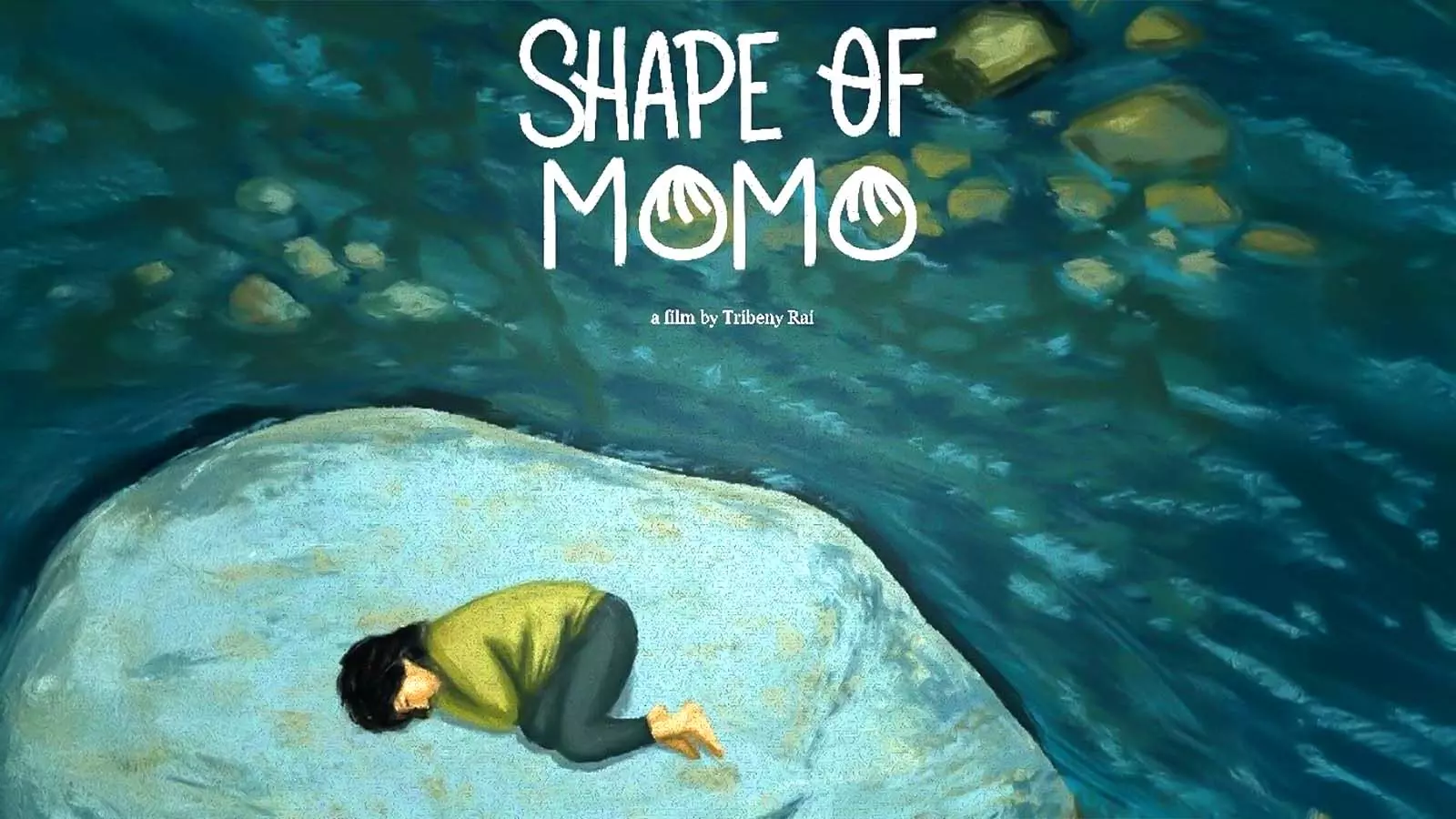
Shape of Momo had its world premiere at the Busan International Film Festival last year, generating significant critical acclaim in the festival circuit. It releases in theatres on May 29.
There is a certain kind of homecoming story Indian cinema has told so many times that it has become its own grammar. Someone leaves their village for greener pastures. They survive the city and then return changed, sharper, more knowing. The village is the past; they are the future. Tribeny Rai's stirring Nepali-language debut feature, Shape of Momo, begins as if it is that story and then methodically dismantles it.
The film, set to release in theatres on May 29, opens with Bishnu (Gaumaya Gurung), freshly back in her village in rural Sikkim after quitting her job in Delhi, reading out a piece of advertisement copy she has written to a room full of relatives and elders. And then, in the same breath, the conversation turns to which of the few men still living in the village might make a suitable husband for her. Her face simply shuts. That small moment is the film's thesis: that no amount of distance, education or financial independence fully immunises a woman from the place she comes from, because the place is not just geography. It is an expectation handed down for so long that it has started to look like inheritance.
Also read: Why Bhooter Bhabishyat maker Anik Dutta will remain ‘immortal’, ‘undefeated’
Co-written by Rai and writer-director Kislay — whose own debut Aise Hee (Just Like That, 2019) showed a similar instinct for the domestic and the political — Shape of Momo had its world premiere at the Busan International Film Festival last year, generating significant critical acclaim in the festival circuit before securing a theatrical release in India and Nepal, with filmmakers Payal Kapadia, Zoya Akhtar, and Reema Kagti on board as executive producers.
The misfit
Shape of Momo is set within a single household and its architecture is built on three generations of women. There is a grandmother, ailing and largely bedridden, who has organised her remaining life around waiting. There is a widowed mother (Pashupati Rai in a performance of enormous authority) who runs the family's orange orchard, tends to the community, and has learned to want only what is available to her. There is Junu (Shyama Shree Sherpa), the older daughter, now pregnant and retreating from a troubled marriage back into her mother's home. And then there is her sister Bishnu (Gaumaya Gurung), who arrives from Delhi with the posture of someone who has decided, once and for all, that she will not become any of them.
The film’s title comes from an early scene in which the family sits around a kitchen counter making momos. Bishnu cannot get the folding right: her momos come out misshapen, lumpy, resistant to the neat pleated form that the women around her produce without thinking. Her response is telling: the taste is what matters, not the shape. It is a throwaway remark that the film returns to quietly, gathering meaning as Bishnu herself proves unable to fit the boxes that her community expects of her — beginning to wonder whether that is her failure or theirs.
Also read: Drishyam 3 review: Finally, Georgekutty slips; Mohanlal stands tall
Rai appears too precise a filmmaker to let any of this tip into polemic. What is striking about Shape of Momo is its restraint — the way it resists the pull toward easy judgment, sitting instead with the texture of a community that is neither simply backward nor simply modern but uncomfortably both. The village has supermarkets and smartphones. The grandmother is on FaceTime. But what has not moved are the unspoken rules about how women should conduct themselves, how much space they are permitted to occupy, how gracefully they are expected to absorb what is asked of them.
Rai renders all of this through accumulation, through the small daily negotiations her characters make between who they are and what is required of them. It is the kind of assured filmmaking that trusts its audience to feel the weight of what is left unspoken.
In that, the film's sharpest scene arrives in an exchange between Bishnu and her mother, in which the older woman explains that being a woman means learning to endure, to find equilibrium in a world that offers none back. From Bishnu’s eyes, it sounds like resignation. But for her mother and her sister, it is survival, dressed up as wisdom because there still remains no other name for it. Bishnu's answer is blunt: "I will not endure. I will not tolerate it."
Both women are right. Both women are trapped. The mother has paid the price asked of her so quietly that everyone around her could call it grace. At the grandmother’s funeral, the village gathers to praise her for lifelong refusal to complain, reframing her sacrifice as virtue only once it can no longer cost anything. What the film gradually reveals is that these women — except Bishnu — have built their inner lives around men who are largely absent. A son in Dubai. A husband heard only through a phone. A village patriarchy that does not need to be in the room to be obeyed. In the film's final image, Bishnu writes a letter to her mother and names this inheritance plainly: “watching you smile so easily, she says, I learnt to smile less”.
Point of privilege
Where the film is most unsparing, though, is in what it shows us about Bishnu's own blind spots. She is not only a modern woman up against a regressive community. She is also a privileged one — and Rai does not let her off the hook for it. A Nepali migrant family that farms land leased from Bishnu's household becomes the film's most uncomfortable thread.
Bishnu, who has herself known what it is to be an outsider in Delhi, cannot extend that recognition across the class divide. Her decisions about the tenancy carry consequences for this family that the film holds in plain sight while Bishnu looks elsewhere. It is a layered, pointed critique: of how progressive instincts so often stop at the boundary of economic self-interest, and of how a woman punished by one hierarchy can, without noticing, become an instrument of another. Bishnu's rebellion, Rai suggests, is genuine, but it is also selective, and the distance between those two things is where the most interesting parts of her character live.
Marking her acting debut, Gurung’s turn carries these contradictions without the film needing to explain them for her. It is a performance built on watchfulness: on what Bishnu registers in a room and what her face chooses to do with it. Archana Ghangrekar's widescreen cinematography is equally attuned to interiority: she shoots the Himalayan landscape for mood, finding in its fog, orange groves and its compressed domestic spaces a visual grammar that mirrors the emotional terrain of the women moving through them. There is a particular quality to the light in this film — cold and diffuse, neither flattering nor harsh — that makes every frame feel inhabited.
At its heart, Shape of Momo is a coming-of-age portrait of womanhood specific enough to feel lived-in and expansive enough to ache universally. The Sikkim it conjures — its domestic textures, its social pressures, its landscape, beautiful and indifferent in equal measure — is a world that has rarely existed on screen. And Rai fills that absence with a film deeply humanist in its refusal to sort its characters into the deserving and the failing. She joins the ranks of filmmakers from the Northeast like Rima Das (Village Rockstars) and Dominic Sangma (Rapture), who have insisted, one film at a time, that their stories belong in mainstream cinema on their own terms and in their own languages.
Even in 2026, independent Indian cinema remains a structurally precarious enterprise: regional-language films routinely fail to find theatrical distribution, and the ones that do often arrive softened for palatability. That a film as formally restrained and geographically specific as Shape of Momo enters theatres without compromising a frame of itself is not a small thing. Rai has a great deal more to say, and if her debut is any evidence, it would be worth clearing space to hear it.