Wildwood review: An ambitious studio vehicle that puts the artiste first
The stop-motion animation feature could have done with a bit more edge to its narrative, but is nevertheless an enthralling ride. Based on American indie band The Decemberists’ frontman, Colin Meloy’s 2011 novel of the same name, Wildwood, directed by Travis Knight, is a delectable fairytale.

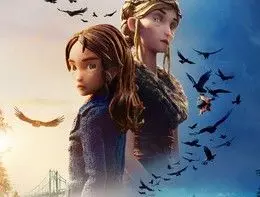
Wildwood is an enthralling ride, with a realism in character expressions and overall nuanced execution, which is impressive and layered.
In an age of tech-heavy filmmaking, Travis Knight’s Wildwood comes across as a work of cinema that’s not only deeply humane and sensitive but also an artistic triumph in myriad ways.
The longest stop-motion animation feature made to date (at 132 minutes), LAIKA Studios’ Wildwood is reported to have been in development for close to 16 years and employed over 1,000 artistes, who created more than 230 puppets and 130 sets, at least since the project went on floors full-fledged six years ago. Animators painstakingly controlled the puppets — about 140,000 of them, etched using groundbreaking 3D-printing technology — and imbued them with such life and vitality onscreen that a remarkable irony comes to the fore: as live-action films increasingly use computer graphics (CG) to enhance their visual appeal, only to end up feeling synthetic, Wildwood takes the same studio setup to create a consummate human-driven experience. In fact, the realism in character expressions and the overall nuanced execution are far more impressive and layered.
At the same time, the film doesn’t set itself a lower benchmark for storytelling, nor does it use its visual form to distract us from a weak narrative.
A tale of two worlds
Wildwood is based on American indie band The Decemberists’ frontman, Colin Meloy’s 2011 novel of the same name and is a delectable fairytale traversing both modern-day Portland — rife with its famed bohemian spirit — and a mystical wilderness at the city’s edge that has castles, talking coyotes, owls and sheep, exiled queens (or governesses) and a whole gamut of enchantments. The two worlds cannot and do not come in contact with each other, but the adolescent and very nifty Prue McKeel (voiced by Peyton Elizabeth Lee) manages to drift across them after a massive murder of crows kidnaps her baby brother Mac.
Maybe Prue has a special connection with the Impassable Wilderness — as her perpetually fearful boho parents call it — or maybe she is the chosen one destined to break the curse afflicting the well-meaning folk of the forest. She has for company her classmate Curtis (who definitely has a crush on her, though she considers him a loser), a rebel bird group inside the woods, and a sage-like old lady she can turn to for help, but none of them is mightier than her own self-belief, which makes her face bloodthirsty beasts and demented queens head-on.
Wildwood is a conventional fantastical adventure in that sense, but it is also uniquely ambitious. On the one hand is its source material, brimming with wonder and darkness in equal measure and the on-screen adaptation of which is suitably snappy, charismatic and a heap of fun.
Travis Knight, a man with varied credentials to his name, including that of a bona fide rapper, infuses energy through intricately choreographed sequences that always have a surprise or two up their sleeves. Simultaneously, the film’s PG-13 rating allows it to make a few bold pivots on the family-friendly genre and Wildwood takes surprising grim turns from time to time; its nuances are particularly evident in how the governess Alexandra’s (voiced exquisitely by Carey Mulligan) arc is treated, lending it such ache and tragedy that the character’s villainy feels justified.
The voice work includes many more exciting names, including Richard E. Grant as a wise old owl, Jake Johnson as Prue’s dad, Mr McKeel, Awkwafina as a congenial rat, Mahershala Ali as a bandit king, Tom Waits as a grumpy coyote and Angela Bassett as the most amazing giant eagle.
A predictable third act
On the other hand is the technical finesse itself, which only enhances the film’s credibility in hindsight. Knight and co. are mostly mindful not to go overboard with showcasing their talent, but a timely reminder that everything put on screen is achieved by hand (aided by CG, of course) makes some of the large-scale sequences all the more worthy of praise — the finale scene involving Alexandra and Prue, for example.
Yet, Knight isn’t fully able to contain his zest for dazzling us. Wildwood is especially beguiling in its first half, but once the initial setup is out of the way, the film starts to veer towards a third act that restricts itself to the predictable beats of a coming-of-age story. The inventiveness is traded for epic moments that are entertaining, no doubt, but at the cost of some of the whimsy that defines the narrative. The battle scenes in the conclusion are grand and exceptionally well staged, but they are bookended by a bout of heartfelt sermonising that has increasingly come to define Hollywood mainstream animation work.
Nevertheless, despite the edge being taken off by those convenient writing choices, Wildwood is an enthralling ride that is special for an entirely different reason. The film emerges from the same world of template filmmaking that is very happy to remain impersonal and relegate its artistes to a place of unfair anonymity, and, in turn, gives them a platform where every little manoeuvre is individualistic and expressive. That isn’t to unnecessarily romanticise the craftsmanship, but to highlight the fact that the story at heart here, regardless of its shortcomings, is an engaging conversation that isn’t dictated by an algorithm or market needs. It is a bit like life, with all its acceptable imperfections.