Animals review: Ben Affleck’s Kurosawa riff is a bizarre misfire
The Netflix release isn’t exactly uninteresting, but is rather disinterested in being a good film for inexplicable reasons.

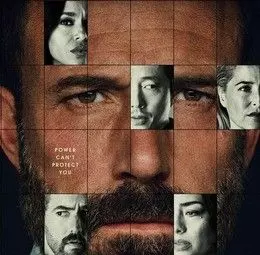
Ben Affleck appears out of his depth for most of the film.
A Ben Affleck directorial is certain to turn heads for various reasons, but the prospect of him riffing on an Akira Kurosawa classic like High and Low (1963) is simply too interesting to pass up. Affleck also leads the film, Animals, as a passionate, desperate mayoral candidate named Mark Kimball, joined by an ensemble cast that includes Kerry Washington, Steven Yeun, Adriana Paz (of Emilia Pérez fame) and Gillian Anderson (no less), making the proposition all the more riveting. Add to this the services of master cinematographer Robert Elswit, and you are sure to feel that something special — or, at least, worthwhile — is on the cards.
But, as it turns out, however, the best part of Animals may well be the expectations it sets, because once the film gets going, it doesn’t take much time for the excitement to morph into perplexity. Elswit’s frames look like nothing he has ever composed before, Anderson’s lines sound shockingly campy, Steven Yeun is cruelly undervalued in the story, and the film, in general, behaves as if it’s commanded by an AI tool of sorts.
Affleck himself appears out of his depth for most of it, unaware of what he was dealing with, despite having co-written the film with Connor O. McIntyre and Billy Ray.
A web of complications
The film's oddness (not a flattering term, by any means) couldn’t stay hidden even when the story coughs up something actually promising. Affleck’s Mark Kimball is at his wits' end with his election campaign, and his main man Sam (Yeun) tells him that his key focus at this point should be the Spanish-speaking ‘Latino’ population of the city. The modern-day LA — the San Fernando Valley, to be precise — is a crucial element of the story, and also a relevant one, given how it lends itself to a discourse about immigrants and the US's current policies that treat them unfairly. Kimball is pro-immigrant, at least on the surface, and his affable ‘liberal’ media image is completed by his African-American wife, Abigail (Washington), and their son Denny. The kid’s nanny, Cecilia (Paz), is Mexican and an integral part of the family, and her boyfriend Ramon (Luis Gerardo Méndez) is an illegal immigrant living precariously in the city with his pre-teen son, Hector.
Also read: Beware Boiuna review: Middling creature feature shies away from baring teeth
The mix should ideally work wonders for Kimball, but instead, it proves to be a web of complications. A secret affair brews in one corner, while a kidnapping (remember we mentioned Kurosawa) turns his life upside down in a jiffy, threatening to ruin everything he has worked for over many years. Gillian Anderson’s Dayla Burton, then, enters the fray ostensibly to tie up the loose ends, but one look at her — stoic, uncaring in a pearl-white pantsuit — tells you that she has a whiff of trouble about her.
Waiting for end credits
Now, on paper, this seems a tantalising prospect, especially considering Affleck’s impressive run as a director of layered, gripping thrillers such as Gone Baby Gone (2007) and The Town (2010), the latter also shot by Elswit. His penchant for dealing with complex men and women who inhabit well-defined worlds has yielded moments that urge one to claim that he is a (far) better filmmaker than an actor, and the story in hand here feels right up his street. Unfortunately, though, that discerning presence isn’t to be seen anywhere in Animals, and what we instead get is a paper-thin, clunky film that just wants to see the end credits rolling.
Indeed, that is quite likely the film’s intent, because almost everything feels distinctly out of order. Characters behave so inconsistently that in one moment, they are beside themselves with tension and trauma, and in literally the very next one, they go about life as though nothing was ever wrong; Kerry Washington’s scenes particularly seem to have been shot without much sense of narrative continuity. The marriage angle, a crucial aspect of the story, is so dull and undercooked that infidelity adds no vitality to it; the drabness is amplified further with all the pointless, emotionless yelling taking place between Kimball and Abigail. The all-important kidnapping angle gets a bland treatment as well and except for one stretch in the climax portion, none of the scenes elicits any thrills.
And these are only a few of the many bizarre things that Animals has to its name. It’s one of those films that’s not exactly disinteresting, given it’s got just enough to hold a sliver of your attention, but is rather disinterested in being a good film for inexplicable reasons. It’s also a film that’s resigned itself to being nothing more than second-screen content, made specifically for an ambient streaming environment.
Also read: The Social Reckoning review: Mark Zuckerberg indictment is ineffective and dated
Affleck doesn’t try hard to sell it either, and the only place he exerts himself a little is in landing the climax; there is a curious thread about the human desire to leverage (a word absurdly used several times in the 108-minute runtime) a tricky situation, and the film’s last few minutes make a fairly decent case for it. But a neat little bow cannot make a torn package look better, can it?