







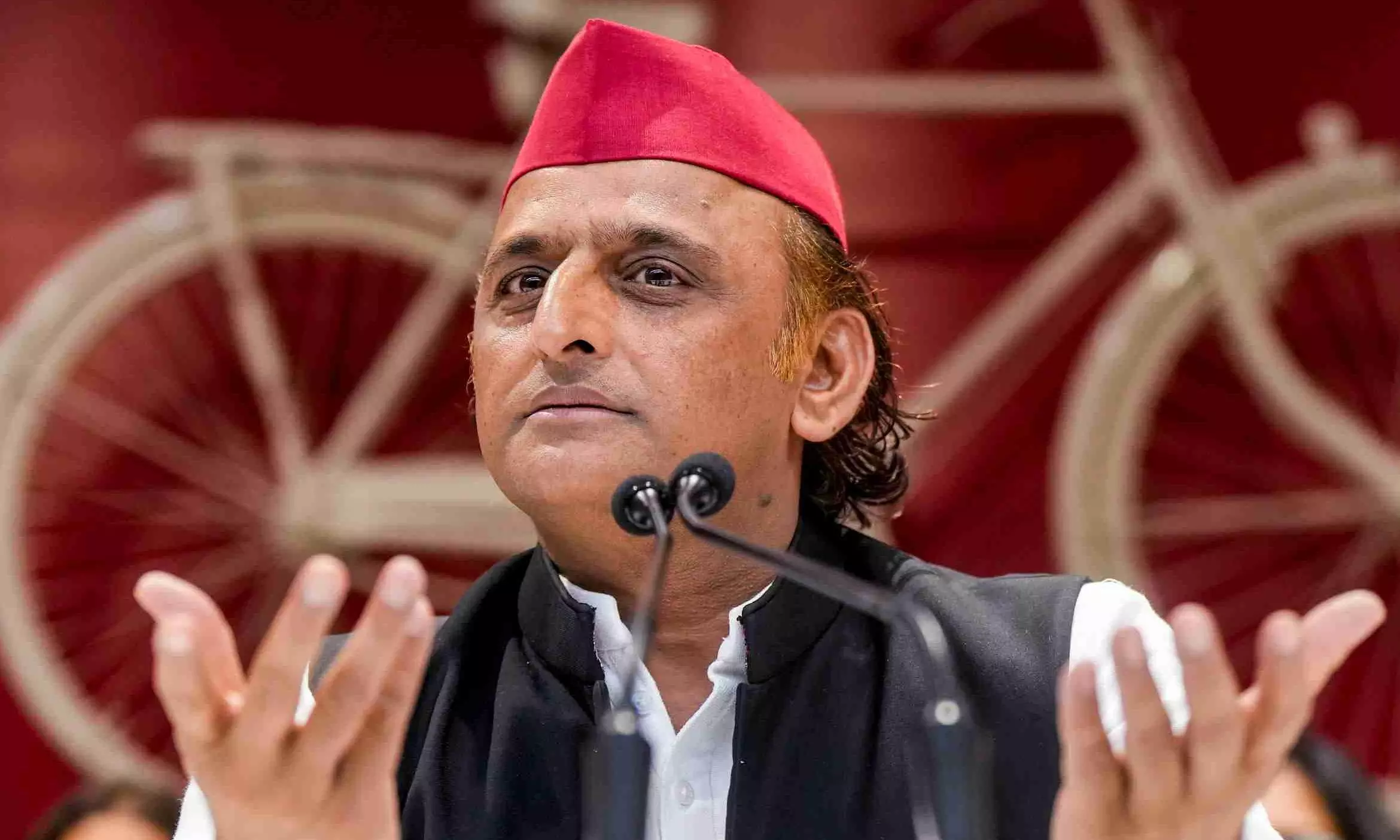
'We are together': Akhilesh Yadav downplays rift with Congress over UP seat-sharing
A wide gulf separates the SP's 26-seat offer from the Congress's push for over 105 constituencies in the 403-member Uttar Pradesh Assembly

Candidate winnability, rather than party quotas, will determine constituency allocations for the 2027 Uttar Pradesh Assembly elections, Samajwadi Party (SP) president Akhilesh Yadav declared on Friday (November 27) as he moved to downplay growing friction with the Congress.
Addressing the media amid stalled seat-sharing negotiations, Yadav brushed aside suggestions of a fracture within the INDIA bloc.
"A lot of conspiracies are afoot, but we are together," he said, insisting that both partners would jointly map out their campaign and back contenders with genuine electoral prospects.
Also read: Rs 40,000 for women, farm loan waiver, free power: 12 big promises in SP manifesto
"Both Congress and SP will sit together and work out how to coordinate, and identify good candidates. The winning candidate of the INDIA alliance will be fielded," Yadav said.
Emphasising that voters across the 403-member Assembly expected viable nominees, he added, "Winning is the basis for selecting a seat. The people of Uttar Pradesh also want winning candidates, and we will stand with whoever has the potential to win."
Yadav noted that his party had already commenced ground-level preparations under its PDA (Pichhda, Dalit, Alpsankhyak) outreach formula to challenge the Bharatiya Janata Party (BJP).
Wide gulf in numbers
Despite Yadav's conciliatory messaging, closed-door negotiations remain deadlocked over a steep mismatch in expectations. During preliminary discussions, the SP reportedly put forward just 26 constituencies for its ally, triggering sharp resentment within the Congress ranks. According to Yadav, the Congress had opened talks by seeking 181 seats — a figure party insiders say was subsequently trimmed to roughly 120, with leaders unwilling to settle for a drastically-reduced footprint.
Also read: Kharge urges Imran Masood to ‘focus on action’ amid Congress-SP seat-sharing spat
That discontent spilled into the open through Uttar Pradesh Congress working president Imran Masood, who escalated his critique of the 26-seat proposal. After his comments, Congress president Mallikarjun Kharge publicly nudged him at a Lucknow event to prioritise collective action over media soundbites, telling party workers, "[There's] Imran Masood, whom I frequently hear on television, where he often speaks with great passion. However, we must focus on action rather than just words; the more we work together, the further we will progress."
Masood brushed off any suggestion of a rebuke, insisting, "Kharge ji has acknowledged my efforts; he is appreciating my work. I am prepared to sacrifice my very life for the progress of my party."
'Why are you trying to undermine your ally?': Masood
Refusing to soften his stance against the SP, Masood argued that the Congress deserved upwards of 105 seats, pointing out that the party had contested that exact tally during the 2017 Assembly polls when its state unit was far weaker.
"Give us seats; we can contest and win. We need both quality and quantity... You take the Chief Minister's post. There is no dispute here regarding the Chief Minister. But why are you trying to undermine your ally? Why do you want to belittle your ally?" he asked.
Also Read: ‘We aren’t begging’: After 26-seat ‘insult’, Congress fumes over SP candidate list
Beyond seat arithmetic, Yadav argued that the newly-introduced Delimitation Bill would soon expose true political loyalties across party lines. He also accused the BJP of bogging the opposition down in electoral roll discrepancies, claiming that compromised oversight by the Election Commission had forced SP cadres to carry out verification work meant to be done by polling officials.