



In Bengal’s migrant belt, women challenge identity politics with survival demand
In Murshidabad migrant belts, women’s concerns over jobs, migration, and deletions from voter rolls matter more than identity politics dominating poll campaign

“Every election, they ask whether we are Hindus or Muslims. Nobody asks why my husband is washing dishes in Kerala.” This angry remark by Rehana Bibi, a resident of Samserganj whose husband works in Kerala’s Kochi, sums up the mood in the migrant-majority belts of West Bengal’s Murshidabad district.
Women voters in Samserganj and Lalgola are emerging as a potentially decisive force in Murshidabad, which will vote on April 23, with many saying that their concerns over jobs, migration and deletions from electoral rolls now matter more than the identity politics dominating the campaign.
Stepping out of male shadow
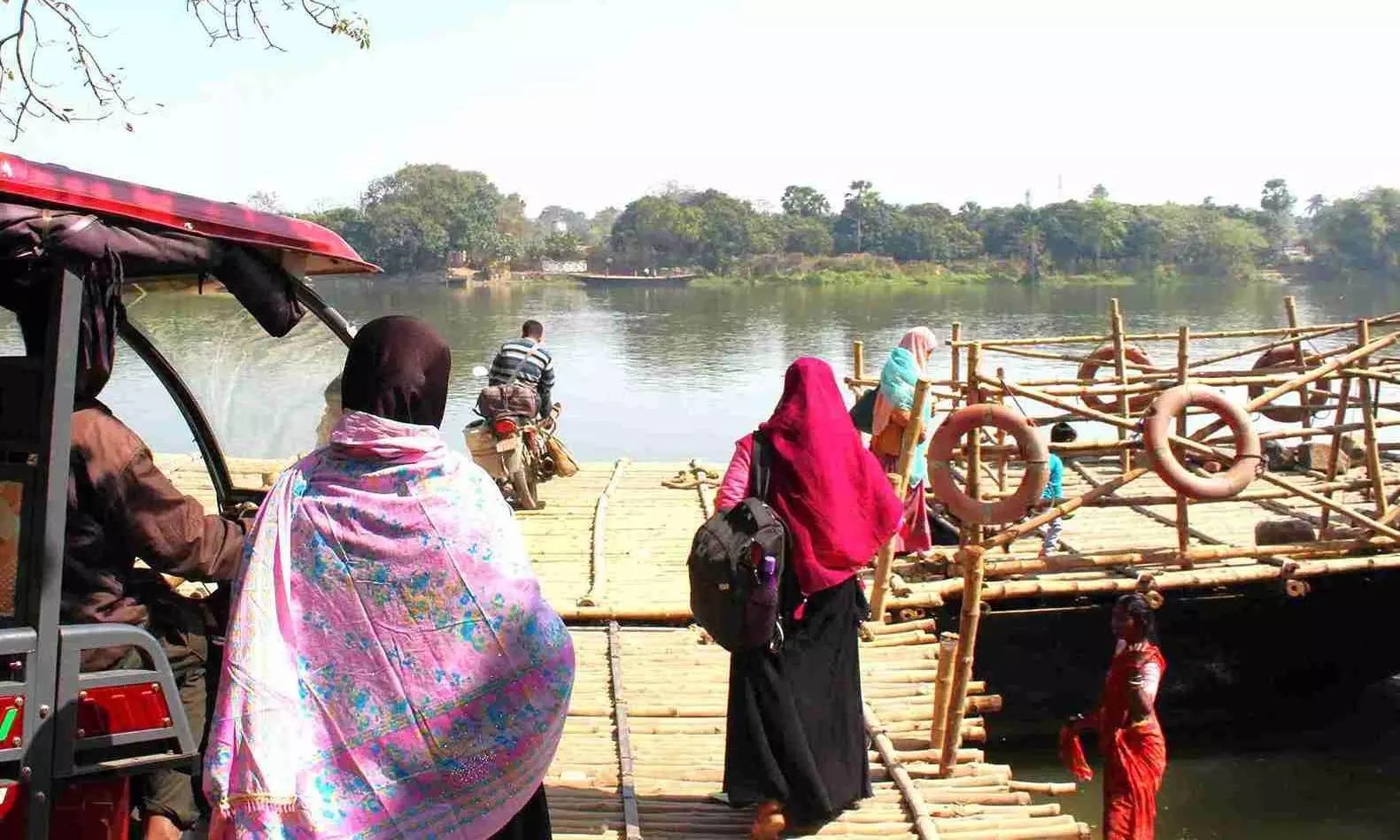
With thousands of men from the two constituencies working in Kerala, Delhi, Mumbai, Bengaluru and the Gulf, women are running households, dealing with banks and government offices, and for the first time, taking political decisions of their own.
For years, these women voted the way the men told them to. Their husbands would return from Kerala or Mumbai before polling day, the family voted together, and politics remained a male affair.
Also read: Polls a week away, 12,000 Murshidabad voters remain in a limbo | Ground report
But migration has slowly changed that. Men return less often. Some do not come home even during elections because the train fare is too high or the contractor refuses to let them leave. The women remain behind, and with every year of handling money, papers and government offices, they are becoming less willing to merely obey.
Fear and anger
Rehana does all of that apart from making repeated visits to the BLO office after hearing that several names had disappeared from the voters’ list. “Earlier, I listened to my husband. This time, I told him to first come and stand in the ration queue,” she fumed.
The shift in mood has acquired added significance after around 92,000 names were deleted from the electoral rolls in Samserganj and nearly 69,000 in neighbouring Lalgola in the Special Intensive Revision exercise.
The deletions have created widespread anxiety among women, many of whom now spend their days carrying Aadhaar cards, ration cards, and voter cards to booth-level offices while their husbands and sons remain away.
It’s about survival
At another village in Samserganj, 38-year-old Hasina Khatun used to follow her husband’s political instructions from Mumbai, but said women now know more than men about what is happening in their villages.
Also read: 'Avenge SIR deletion by voting': Mamata issues clarion call at Murshidabad poll rally
“He would tell me to vote for this party because he earned and sent money. But when names vanish from the voter list, or ration does not come, we go and fight. Nobody asks why my son has to clean hotel rooms in Dubai,” she said.
Her son’s name is still on the rolls. Hers has been marked for deletion.
“Officials tell us to come tomorrow, bring more papers, and bring another photocopy. If my name goes, who am I then? My husband is dead. My son is away. This house survives because I survive,” Khatun said.
Repeated trips for inclusion in rolls
At Lalgola, Shabnam Khatun said her husband, who works at a construction site in Bengaluru, called last week and told her which symbol to press.
“Earlier, I would do what he said. This time I told him, ‘you stay in Bengaluru, and I stay here. I will vote for the one who helps me here’,” she snapped.
Her anger is not ideological. It is practical. She has spent the last fortnight making repeated trips to an office after hearing that nearly 69,000 names have been deleted from the electoral rolls in Lalgola.
Migrant men’s names on list, women’s vanish
Outside a booth-level office in Samserganj, there are long queues of women carrying Aadhaar cards, ration cards, photocopies and fading voter slips.
Several of them said they do not fully understand the legal process. They only know that if their names disappear, something larger may vanish with it.
Also read: Babri mosque politics turns Murshidabad belt into Bengal's most volatile poll battleground
“Before asking me for my vote, first tell me whether my name still exists,” said a woman in Samserganj whose migrant husband’s name remains on the list although he has been in Kerala for nine months.
“My husband is not even here. Still, his name remains. I am the one standing in the queue. Yet my name disappears. Does that mean I count for less?” she said.
Tired of identity politics
Now, in these villages, women are beginning to form opinions separate from the absent men. They are also increasingly tired of identity politics.
“They come and ask if we are Hindus or Muslims,” said a woman in Lalgola whose two sons work in Mumbai.
“Nobody asks why both my sons had to leave the village for work. Nobody asks why I borrow money every month before the remittance comes,” she said.
Only narrative from parties
As always, none of the major political parties have any solution to their problem. The TMC seeks to consolidate women and minority voters by portraying the deletions as an attempt to frighten poor Muslim families. The BJP is sharpening its campaign around infiltration and bogus names. The Congress is trying to regain ground by arguing that both parties are exploiting fear while ignoring Murshidabad’s deep unemployment and migration crisis.
Also read: Massive protests in Bengal's Murshidabad after local migrant found dead in Jharkhand
District TMC leader Abu Taher Khan accused the BJP and the Election Commission of frightening poor Muslim women. “They know the men are outside and the women are vulnerable. So they are creating fear through deleted names,” he said.
“Those with proper documents will remain. The TMC is using these women emotionally because it wants to protect bogus names,” a BJP leader said.
A Congress leader said both parties are “exploiting the anxieties of women while ignoring migration and unemployment”.
Will the language of survival be more powerful?
The men still speak the language of identity over phone calls from Kerala and Dubai. The women, left behind in empty courtyards and locked rooms, are speaking a different language: ration cards, deleted names, remittances, loneliness and survival.
Also read: Bengal elections could be decided by 65-70 constituencies with razor-thin margins
And in Murshidabad this year, that quieter language may prove more powerful than the slogans. Political workers privately admit that in the villages emptied by migration, women may now decide the result.
The elections to the 294-member West Bengal assembly will be held in two phases—on April 23 and 29. Votes will be counted on May 4.
(With agency inputs)