



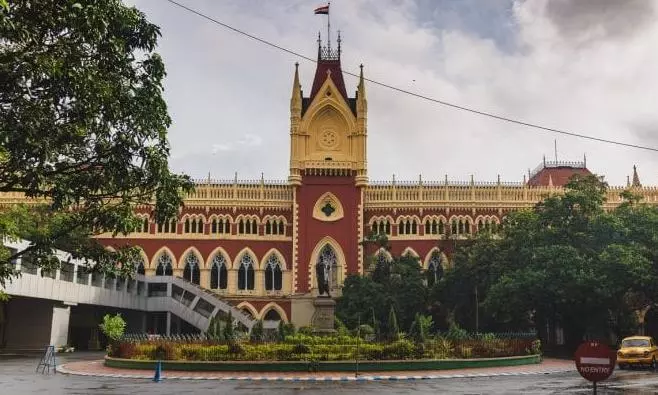
Bengal polls: Ex-Calcutta HC Chief Justice Sivagnanam quits SIR Appellate Tribunal
Justice Sivagnanam sent his resignation to Calcutta High Court Chief Justice Sujoy Paul on Thursday

Former Calcutta High Court Chief Justice TS Sivagnanam on Thursday (May 7) resigned from the SIR Appellate Tribunal, which was hearing appeals against exclusions from voter lists during the Special Intensive Revision (SIR) of electoral rolls in West Bengal.
In March, the Supreme Court had ordered the setting up of independent appellate tribunals, headed by former high court judges. Following this, Justice Sivagnanam was among the 19 retired judges designated as single-member Appellate Tribunals by the Election Commission of India (ECI).
'Personal reasons'
Justice Sivagnanam sent his resignation to Calcutta High Court Chief Justice Sujoy Paul on Thursday. The Election Commission and the Chief Electoral Officer of West Bengal were also informed, a report in Indian Express said.
Also read: After Bengal, is Kolkata Municipal Corporation set to turn saffron?
“I have resigned owing to personal reasons,” Justice Sivagnanam told the publication.
Over 90 lakh names were deleted in the SIR process in Bengal, which went to polls in two phases on April 23 and 29. About 27 lakh people had challenged their removals from voter lists.
Only 136 out of the lakhs of voters who appealed had been added to the electoral roll through the appellate process in time for the West Bengal Assembly Elections 2026, according to a report on Live Law.
The results were announced on Monday (May 4) with the BJP sweeping to power for the first time in the state.
The scale of the SIR exercise that reportedly led to the deletion of about 12 per cent of the state’s electorate, emerged as one of the most debated factors, influencing both voter participation and the broader political narrative in the run-up to the polls.