Counting of votes on May 4: How are EVM votes counted? Who oversees this?
From videographing opening of strong rooms to extra VVPAT audits, multi-layered verification system seeks to ensure integrity of final verdict; read details here

As the five states head into counting day on Monday, May 4, the spotlight shifts to a tightly-choreographed process that determines the final verdict of the electorate. Counting begins at 8 am and unfolds through a series of carefully defined stages, each stage designed to ensure that every vote is accurately recorded and verified.
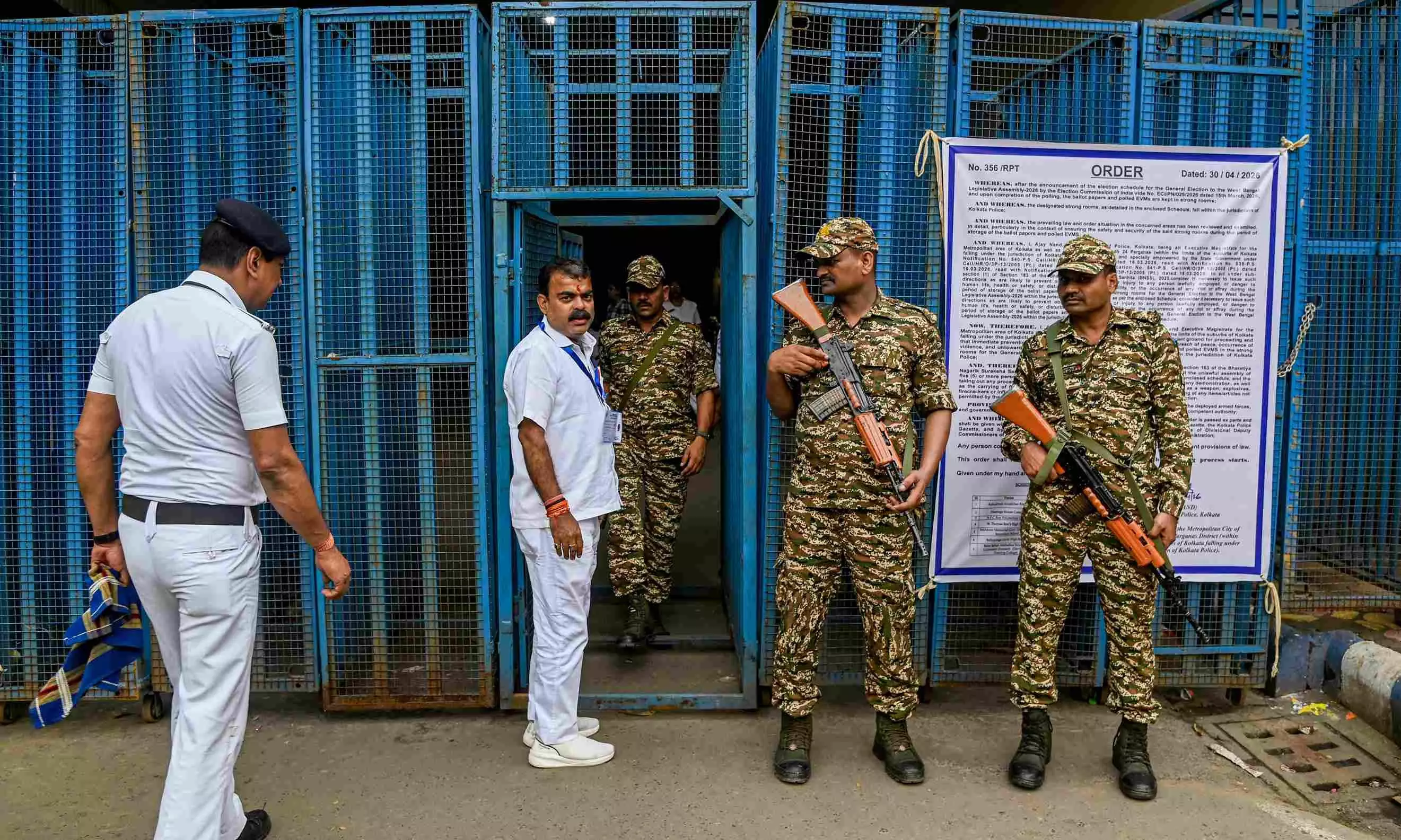
The process starts with the opening of strong rooms where Electronic Voting Machines (EVMs) and polling materials have been stored under strict security since polling day. These rooms are opened in the presence of candidates or their authorised agents, election observers and officials. The entire procedure is videographed, reinforcing transparency at the very first step.
The first set of votes to be counted are postal ballots. These include votes cast by service personnel, election staff and absentee voters. Counting them first ensures that these ballots are included in the overall tally before electronic counting begins.
In closely-fought contests, postal ballots can influence early trends.
The process
Once postal ballots are completed, the counting of EVM votes begins. The process is organised into rounds, with each round typically covering votes from up to 14 polling booths in Kerala’s case. This structure ensures a systematic flow of counting and allows results to be compiled progressively across constituencies.
Also read: Tamil Nadu elections: Discrepancies in turnout and seizure data spark controversy
At each counting table, the EVM control unit is brought in and opened according to prescribed procedure. Alongside the unit, the Form 17C is placed, which is the official record of votes polled at that booth. The figures displayed on the EVM are noted and then cross-checked with the data recorded in Form 17C. This verification is a crucial safeguard, ensuring that the number of votes counted matches the number of votes actually cast.
If any discrepancy is detected between the EVM count and the recorded figures, it triggers further scrutiny. This is where the Voter Verifiable Paper Audit Trail, or VVPAT, becomes significant.
Cross-checks and VVPAT slips
VVPAT slips provide a physical record of each vote, displaying the candidate’s name, serial number and election symbol.
As an added layer of verification, VVPAT slips from five randomly selected polling stations in every constituency are counted and matched with the electronic results. This mandatory cross-check acts as an independent audit of the EVM count.
Also read: EC releases final poll data: 4.88 crore voters cast ballots in Tamil Nadu
In addition, random EVMs in each round may be selected by observers for further verification, strengthening the overall reliability of the process.
Round-wise system
Counting proceeds round by round, with results aggregated after each stage. This round-wise system often produces early leads and shifting trends, but officials make it clear that only the final consolidated figures determine the outcome. Each round contributes to the cumulative tally that ultimately decides the winner in a constituency.
The counting centres themselves are structured to handle this process efficiently. Multiple counting tables are set up, allowing simultaneous counting of EVMs from different booths.
Postal ballots are counted separately, with dedicated tables arranged based on volume.
Post-count report
After all the rounds of counting are completed, the results are compiled and finalised for each constituency. This is followed by the preparation of a detailed post-count report known as the Index Card.
This document contains a comprehensive account of the election data, including votes polled, counted and verified through various checks.
Also read: EC can choose counting personnel, no further order: SC on TMC plea
The Index Card undergoes further scrutiny to ensure accuracy before being submitted to the Election Commission. This final step closes the loop on a process that is built on multiple layers of verification.
From the opening of strong rooms to the counting of postal ballots, from EVM tabulation in rounds of 14 booths to VVPAT audits, the system is designed to minimise errors and maximise transparency.