How Meta’s US settlement for social media users under 18 reveals gaps in India’s protection framework
Under the agreement, teenage users in US are to have a default two-hour daily limit across Facebook and Instagram, with parental permission required to lift it. Access is blocked by default between midnight and 6 am; notifications are muted at night and during school hours. The agreement also requires stronger age assurance and independent auditing. Under the settlement, every teenager in US is promised something their counterparts in India are not: a legally enforceable brake on the app.

The debate over social media access for children and teens has been drawing fresh attention since Meta (the US tech company that operates social media platforms like Facebook and Instagram, among others) reached a settlement with US state attorneys general last month over the way platforms like Facebook and Instagram work for users below 18. The lawsuit had accused Meta of designing features...
The debate over social media access for children and teens has been drawing fresh attention since Meta (the US tech company that operates social media platforms like Facebook and Instagram, among others) reached a settlement with US state attorneys general last month over the way platforms like Facebook and Instagram work for users below 18. The lawsuit had accused Meta of designing features that encouraged excessive use by children and teenagers while misleading families about the risks.
Meta denied wrongdoing. But under the agreement, teenage users are to have a default two-hour daily limit across Facebook and Instagram, with parental permission required to lift it. Access is blocked by default between midnight and 6 am; notifications are muted at night and during school hours; visible ‘like’ counts are restricted; cosmetic-procedure filters are barred for minors and teenagers can choose a non-personalised feed. The agreement also requires stronger age assurance and independent auditing.
The settlement matters in India because the American case examined the design of the platform itself. The issue was wider than whether a child encountered harmful content. It focused on the architecture that decides what is recommended, how often the app calls back a user and what protections operate automatically when the user is a minor.
Imagine two 15-year-olds opening Instagram after everyone at home has gone to sleep. One lives in California; the other in Coimbatore. They may watch the same reels, follow the same footballers and stop at the same beauty filters. But after Meta’s landmark settlement with American states, the Californian child is promised something the Indian child is not: a legally enforceable brake on the app.
The resulting difference on how many hours a child spends on a screen can have far-reaching impacts on their life. “I see poor posture and cervical problems, numbness in the fingers and carpal tunnel syndrome,” said psychologist Geetanjali Kumar. “There are appetite changes, mood swings, disturbed sleep, reduced attention and attendance, lower academic performance, irritability, anxiety, aggression, social anxiety, loneliness and depression,” she added. “What worries me is also the loss of imagination, creativity, experimentation and adventure. Children are losing the time spent on small talk through which larger relationships are built.”
Geetanjali also links platform design to body-image pressure and social comparison. “When young people repeatedly see idealised appearances, beauty filters and products being pushed at them, it can affect self-esteem and relationships. They can alter how they look online through filters or AI, and then there is a gap between that image and how they actually look,” she said. “I have seen eating-disorder concerns, and in one case self-harm, in this context.”
Her emphasis is on shared responsibility rather than leaving the problem with families. “The schools and the families have awakened. The social-media companies have not,” Geetanjali said. “Every stakeholder has to contribute if children are to retain even an iota of their innocent childhood. If companies are designing these products for children, they also have a responsibility to help them grow according to their developmental needs. They need to go slow.”
Also read: What is the ‘second invoice’ paid by AI users, the silent cost most consumers do not even notice
India has had its own campaign for child safety online in recent years.
The National Commission for Protection of Child Rights (NCPCR) initially emphasised awareness, privacy, cyberbullying, exploitation and responsible online behaviour through its Being Safe Online guidance and later school-focused cyber-safety material. The debate then moved into court.
In April 2025, Zep Foundation — a non-profit organisation which empowers rural and tribal women and youth through skill development, wellness education, and digital balance — approached the Supreme Court seeking restrictions on social-media use by children below 13, stronger age-verification systems and penalties for platforms that failed to comply with child-protection requirements. The court treated the issue as one involving policy choices, allowing Zep Foundation to make a representation to the authorities and directed that, if made, it should be considered within eight weeks.
Parliament subsequently moved the debate towards platform responsibility. In March 2026, the Committee on the Empowerment of Women recommended age-appropriate regulation, calibrated usage limits and “safety-by-design standards” for children and adolescents.
A petition in the Delhi High Court by advocate Kirti Dua and paediatrician Dr Sharad Gupta sought age-based restrictions, stronger age checks and overnight curbs; the court directed the Centre to consider the suggestions. A consultation by the Ministry of Electronics and Information Technology (MeitY) last month reportedly considered alternatives to a blanket ban, while the National Commission for Protection of Child Rights (NCPCR) has been reported to be working on a code of conduct for social-media platforms.
The striking part for India in Meta’s settlement in the US lies in a sentence deep inside the agreement. Meta and the states specify that the product changes are limited to the participating American jurisdictions and do not establish a standard for any international jurisdiction. In other words, the company is free to extend the changes elsewhere, but this settlement does not require it to do so.
Meta already offers ‘Teen Accounts’ in India and says they automatically make accounts private, restrict messages from strangers and limit sensitive content. Teen Accounts also include reminders and parental-supervision tools. The US settlement goes further in one crucial respect: it converts specified safeguards into enforceable duties, fixes deadlines and provides for independent auditing.
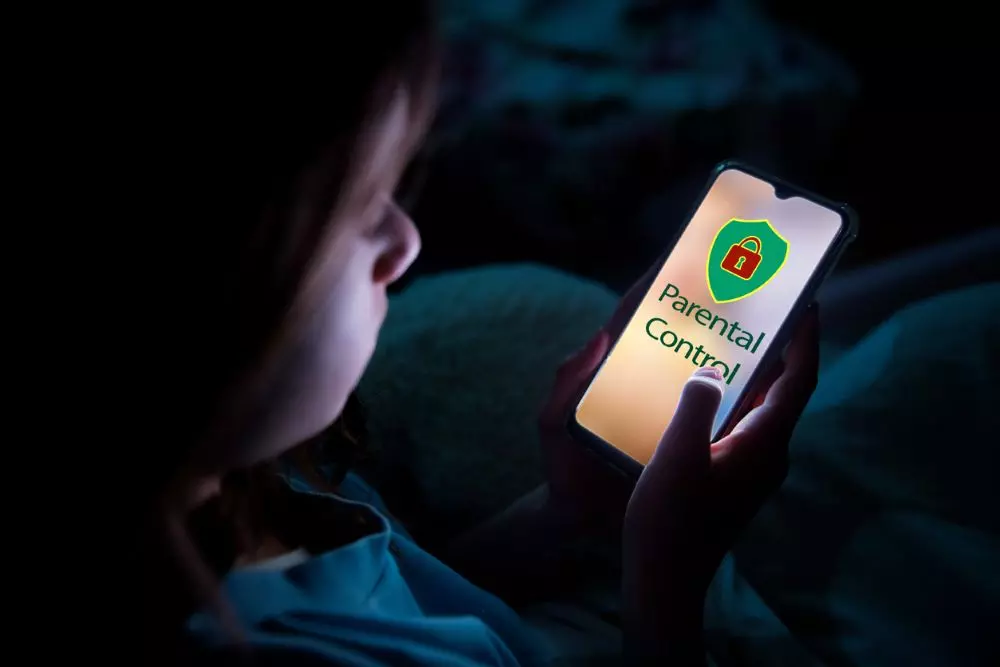
Experts want responsibility to extend beyond parental supervision to the companies operating social media platforms. Photo: iStock
This distinction matters because a safety feature that a company voluntarily supplies can also be modified by the company. A court-backed obligation has an outside enforcer. The question is therefore not whether Indian teenagers have no safeguards. It is why the stronger package is guaranteed on one side of the world but left to corporate choice on the other.
India’s Digital Personal Data Protection (DPDP) Act treats everyone below 18 as a child. It requires verifiable parental consent before a company processes a child’s personal data. It also prohibits tracking or behavioural monitoring of children and targeted advertising directed at them, subject to exemptions that may be prescribed.
The Digital Personal Data Protection Rules, notified in November 2025, require a platform to check that the person giving parental consent is an adult, using reliable identity-and-age details or a digital credential issued by an authorised entity. But this safeguard begins only after the platform identifies the user as a child. A child who registers with a false adult age may avoid the parental-consent process altogether because the Rules do not prescribe how platforms must detect such false declarations.
The rules governing parental consent and the processing of children’s data will become operational only in May, 2027, eighteen months after the Rules were notified.
For cyberlaw expert and senior advocate in the Supreme Court, Pavan Duggal, the weakness in India’s framework is structural. “The DPDP Act, 2023 treats the child as a data subject. The IT [Information Technology] Rules, as amended in February 2026, treat the child as a recipient of content. The POCSO [Protection of Children from Sexual Offences] Act and the BNS [Bharatiya Nyaya Sanhita] treat the child as a victim of crime. What none of them reaches is the child as a user of a designed system,” he told The Federal.
Duggal argues that harm can arise even when the content being delivered is lawful. “The harms parents describe, including sleep displacement, compulsive use, body-image amplification and contact risk arising from recommendation rather than search, are produced by lawful content delivered by an optimising architecture,” he said. “Data protection law asks whether processing was authorised. It does not ask what the system did with the attention it lawfully captured.”
The advocate considers consent an inadequate foundation for the years that follow sign-up. “Parental consent is an entry gate, not a governance mechanism,” he said. “We are, therefore, still substantially where we were: consent at the front door, criminal law at the far end, and nothing addressed to the years in between.”
Advocate (Dr.) Prashant Mali, a cyber, AI and privacy lawyer, makes a more nuanced argument. “The laws do not yet constitute a comprehensive child online-safety regime,” he told The Federal. “The law needs to move from parental or guardian consent to platform accountability and safety-by-design.”
Mali believes the government can mandate age-appropriate defaults, nighttime restrictions, autoplay and infinite-scroll controls and restrictions on recommender systems for minors, provided the measures satisfy constitutional requirements of legality, necessity and proportionality. “The government’s objective should be child-harm prevention, rather than blanket blocking or censorship,” he explained.
Duggal is more cautious about hard caps and curfews. “The distinction that decides the question is between regulating content and regulating architecture,” he said. Turning off autoplay for known minors, making personalised recommendations opt-in and suppressing overnight push notifications are, in his view, architectural rules. “Hard time caps and night-time curfews are closer to a blanket restriction, the empirical basis is thinner, circumvention is trivial, and I would not build the regime on them.”
India’s official statistics do not separately tell us how many 13- to 17-year-olds use social media. They do, however, show how thoroughly the internet has entered young lives. The National Statistics Office surveyed 1,42,065 people in early 2025. It found that 94.3 per cent of Indians aged 15 to 24 had used the internet during the previous three months.
Meanwhile, teachers say the impact of social media lure is being seen in classrooms.
“Many students find it difficult to remain engaged in class for extended periods and are easily distracted by their phones or the constant urge to check notifications,” said retired senior teacher Mukta Rajput. “Students who stay up late using social media often come to school tired, less attentive and less participative.”
Rajput emphasises that schools cannot handle the problem alone. “Too much responsibility is being placed on teachers and parents for a problem that is also created by the design and functioning of these platforms,” she said. She favours stronger safeguards for younger children and progressively greater independence for older teenagers.
Archana Nagariya, a teacher at a school in Delhi and the parent of a teenager, takes a more nuanced view of the matter. According to her, while screen-time limits and nighttime restrictions “help to some extent, children can sometimes find ways to bypass them”. From a teacher’s perspective, she added: “It is a difficult [situation to check] because phones and laptops are also needed for education. Schools need clear rules and students’ cooperation.”
Reasonable default protections for minors can provide a safer starting point, agrees Chennai-based Subashree (identified by first name only), mother of a teenager. But added that parents should still have the ability to adjust settings based on their child's age, maturity and individual circumstances. “Most parents have limited time and young people often use several platforms simultaneously. Effective supervision requires a combination of technology, trust, communication and digital literacy rather than constant monitoring alone.”
On privacy, she said: “Parents should have visibility into potential risks, especially for younger teenagers, but they do not necessarily need access to every conversation. A balance should be maintained between safety and the teenager's right to develop independence and privacy.” She would trust age verification more, she said, if it collected minimal information, was transparent, independently audited, securely stored data and deleted it when no longer needed.
Every safeguard on social media depends on the platform recognising that the user is under 18. But what happens when a teenager enters a false birth date? An existing account may have been created years earlier with an adult age. A shared family phone can blur the identity of the person actually scrolling.
The US agreement requires ‘age assurance’, a broader system that can use account signals to estimate whether someone is likely to be a child and then ask for proof or place the account under safer settings. But stronger age checks create their own dilemma: proving age can require collecting more personal information from children. Duggal argues that regulation should distinguish age assurance from identity verification. “The platform needs one attribute: that the user is above or below a threshold. It does not need a name, a document image or a number,” he said. Mali captures the same principle more simply: “Prove you are over the threshold, not who you are.”
Experts fear heavy use of social media by teens cuts into physical and outdoor interaction with peers, affecting social and team-building skills. Photo: iStock
Nishit Kumar, founder and managing director of the Centre for Social and Behaviour Change Communication, has worked in child protection for 25 years and ran Childline India’s helpline operations for 11 years.
According to him, the discussion must begin with adolescent brain development. During puberty, he explains, dopamine-driven reward seeking becomes stronger and the amygdala, which processes emotional responses, is highly active, even as the prefrontal cortex, responsible for judgement, impulse control and weighing consequences, continues developing into the mid-20s.
“There is a developmental mismatch,” he said. The brain’s reward and emotional systems are already highly active, while its “braking system” is still developing. This, he argues, helps explain why teenagers are more susceptible to immediate rewards, peer approval and high-risk behaviour, and why features such as likes, notifications and other repeated rewards on social media can have a particularly strong pull.
He places adolescent social-media use in the context of a phase when peer influence becomes stronger and parents may find that methods that worked with younger children no longer do. “Social media allows them linkage to peers even while still in their rooms and it has no parents to look at what they are doing,” he said. Like Geetanjali, he too worries that heavy use cuts into physical and outdoor interaction with peers, affecting social and team-building skills.
He supports targeted structural measures, but not a regime built around blanket bans. “Overnight blocks and school-hour restrictions are highly effective at reducing specific, critical harms like sleep deprivation and classroom distraction,” he said. He added that school-wide restrictions can reduce FOMO (Fear Of Missing Out) because “when an entire peer group is disconnected simultaneously, it removes the social anxiety of missing out on real-time online updates”. But abrupt limits imposed as punishment can invite resistance and workarounds.
His larger emphasis is on guidance at home and school alongside platform safeguards. “Local, hands-on guidance is the most direct and adaptable way to protect children, as legislation often struggles to keep pace with fast-evolving digital trends,” he said.
Parents, in his view, are best placed to notice behavioural changes, set household boundaries, create screen-free spaces and keep communication open. “Schools should teach digital citizenship, critical thinking and media literacy and can use phone-free policies during school hours”, he says.
Nishit argues for introducing children to digital media early, at home and at school, while balancing online use with healthy outdoor activity rather than relying on blanket bans. At the same time, he says “cutting hours alone cannot neutralise engagement-driven design features such as algorithmic rewards, visible likes and follower counts, or highly curated beauty-filtered content”.
Still, Mali and Duggal want responsibility to extend beyond parental supervision. “Parental supervision asks the parent to govern a system the parent cannot see,” Duggal said. “No reasonable person can supervise a recommender whose operation is disclosed to nobody.” He argues for a statutory duty of care owed to the child, including risk assessments and duties to mitigate foreseeable harms.
Mali puts the argument more forcefully: “Parental supervision cannot be the primary safety architecture when platforms themselves design algorithms that maximise engagement and earn money.” He wants risk assessment, safety-by-design, algorithmic accountability, transparency, incident reporting and independent audits. “Children’s digital safety cannot be outsourced to parents. The capitalist platforms that design the children’s digital playground should also carry a legal duty to make the playground safe”, he says.
Also read: How digital impersonators are turning staff trust into a weapon to empty company accounts
The demand for platform accountability has another Indian context. On 3 September, the National Human Rights Commission (NHRC) sought reports from MeitY, the Information and Broadcasting Ministry and Delhi Police over allegations that paid Instagram advertisements promoted or facilitated access to child sexual abuse material (CSAM). The issue is distinct from compulsive use and adolescent mental health, but also raises questions about platform recommendation and amplification.
The US settlement shows one route to enforceable accountability. India’s route has so far involved awareness programmes, court petitions, parliamentary recommendations and consultations.
Shobha (name changed), a 19-year-old user from Pune, offered a practical counterpoint: a daily cap might simply push her towards another app, while a nighttime restriction seemed reasonable. She was uncomfortable with intrusive age verification.
India therefore has to decide how far regulation should go into platform design, how age can be established without continuous identification, and how responsibility should be divided among companies, parents, schools and young users. India’s campaigns and court cases have put many of the same questions on the table; the next step is deciding which safeguards will become enforceable obligations on platforms.