- Home
- India
- World
- Premium
- THE FEDERAL SPECIAL
- States
- Perspective
- Videos
- Sports
- Education
- Entertainment
- Elections
- Features
- Health
- Business
- Series
- In memoriam: Sheikh Mujibur Rahman
- Bishnoi's Men
- NEET TANGLE
- Economy Series
- Earth Day
- Kashmir’s Frozen Turbulence
- India@75
- The legend of Ramjanmabhoomi
- Liberalisation@30
- How to tame a dragon
- Celebrating biodiversity
- Farm Matters
- 50 days of solitude
- Bringing Migrants Home
- Budget 2020
- Jharkhand Votes
- The Federal Investigates
- The Federal Impact
- Vanishing Sand
- Gandhi @ 150
- Andhra Today
- Field report
- Operation Gulmarg
- Pandemic @1 Mn in India
- The Federal Year-End
- The Zero Year
- Science
- Brand studio
- Newsletter

Ground report from Kathmandu: Why in Nepal the GenZ say their movement is ‘far from over’
Close to a year since the September 2025 youth protest that brought down the then incumbent government of Prime Minister KPS Oli, there are concerns about the new Balen Shah government. And the GenZ, which spearheaded the change, is not willing to stop asking questions. The movement to 'strengthen democracy' in Nepal is on.

“I don't believe the GenZ movement is over,” says Jasmine Ojha, talking about the youth protests that shook Nepal in September 2025, resulting in the fall of the then-incumbent government. The Gen-Z activist and lawyer, who had actively participated in the protests, added: “The protests may no longer be as visible as they were in the beginning, but the movement itself continues. For many...
“I don't believe the GenZ movement is over,” says Jasmine Ojha, talking about the youth protests that shook Nepal in September 2025, resulting in the fall of the then-incumbent government. The Gen-Z activist and lawyer, who had actively participated in the protests, added: “The protests may no longer be as visible as they were in the beginning, but the movement itself continues. For many of us, it was never just about bringing a new government to power. It was about changing the way politics works in Nepal. We wanted a political culture built on transparency, accountability, inclusion, and respect for democratic values. Those aspirations are still relevant today.”
The protest, which began from Nepal’s nondescript Maitighar Mandala and quickly became one of the most violent protests by the civilians of Nepal in the country’s post-1990 democratic era, eventually left at least 75 innocent civilians dead and more than 2500 injured.
Now, nearly a year later, the traffic light at Kathmandu’s Maitighar Mandala cycles through its colours at regular intervals, guiding a steady flow of vehicles — cars, buses, scooters — into an orderly procession that adheres to the rules of the road. Yet, just a short distance away, one corner of Maitighar presents a stark contrast. This area, situated in the bustling heart of downtown Kathmandu, is eerily quiet, marked by a scattering of individuals brandishing banners and chanting slogans that echo their fervent opposition to “rising corruption” and “proposed legal changes”. This place – a major traffic intersection – is known to be a hub for carrying out demonstrations and protests.
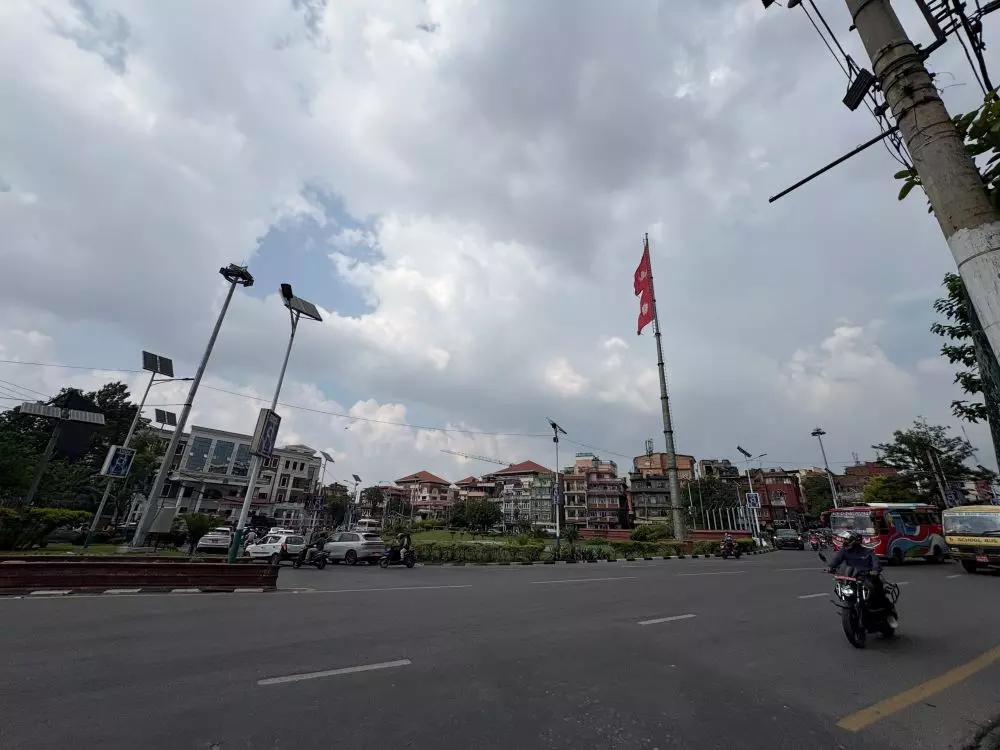
Maitighar Mandala, where the 2025 protests began. Photo: Nayanima Basu
It is from this very spot that the Gen-Z protests in Nepal erupted on the late morning of September 7, 2025, intensifying and drawing larger crowds until the early hours of September 10, when military forces were deployed to quell the unrest. However, nearly 10 months since the protests rocked the Himalayan nation, it would be a grave misjudgement to assume the protests have come to a halt. In this remote corner of Maitighar, the undercurrents of tension and indignation still pulse, hinting at a simmering discontent that refuses to be extinguished.
“Many of the issues that brought young people to the streets remain unresolved. We continue to see protests by marginalised communities, including landless families, Indigenous groups, and others who feel excluded from government decisions. As activists, many of us are still standing with these communities through advocacy, legal action and public engagement,” Ojha tells The Federal.
“I also believe that democracy does not end with elections. It requires active citizens who can question those in power without fear. A strong democracy needs a government that is willing to listen, a strong opposition, an independent judiciary, and a vibrant civil society. When people stop asking questions, democracy becomes weaker.”
Ojha adds, “So, I see the Gen-Z movement as an ongoing democratic movement rather than a single protest. It will continue as long as young people believe that accountability, justice and inclusion are worth fighting for.”
The origins of the Gen-Z protests can be traced back to a controversial ban imposed by the KPS Oli government on September 4, which targeted social media platforms. This draconian measure was justified by officials as a necessary step to enforce compliance with registration requirements, but it quickly ignited a firestorm of public outrage.
For months leading up to this decision, the hashtag #NepoBaby had gone viral, shedding light on the glaring disparity between the “opulent lifestyles of politicians and their families” and the struggles faced by ordinary citizens “grappling with pervasive corruption, rising unemployment, and a troubling exodus of talent from the country”.
The social media registration requirements stemmed from the Social Media Management Directive 2080, enacted in November 2023 under the authority of the Electronic Transaction Act 2063. This directive mandated that digital platforms serving users in Nepal establish a physical presence within the country and appoint grievance and compliance officers. These officers were expected to monitor content and ensure accountability in a legal context. Despite numerous warnings and attempts at diplomatic engagement, most platforms failed to meet the registration deadline of August 28, 2025.
The Oli government defended the shutdown that followed as an overdue regulatory measure, citing concerns that unregistered platforms had evolved into hotbeds for hate speech, organised misinformation campaigns, online harassment and content capable of inciting violence. However, critics contended that the ban extended far beyond legitimate regulation, seeing it instead as a tactic to stifle online dissent and suppress free expression.
As public frustration transitioned from virtual protests to physical demonstrations, several key locations in the Kathmandu Valley emerged as battlegrounds for confrontation.
The protests, initially centred in Maitighar, began to spread rapidly to areas like New Baneshwor on September 8, with passionate crowds demanding accountability and reform, signalling a significant escalation in the fight for their rights.
By September 9, several important buildings in Kathmandu, including the Singha Durbar, Parliament and the Supreme Court, literally stood gutted. Apart from this, residences of prominent political leaders, ministers, offices and media houses were also torched and attacked.
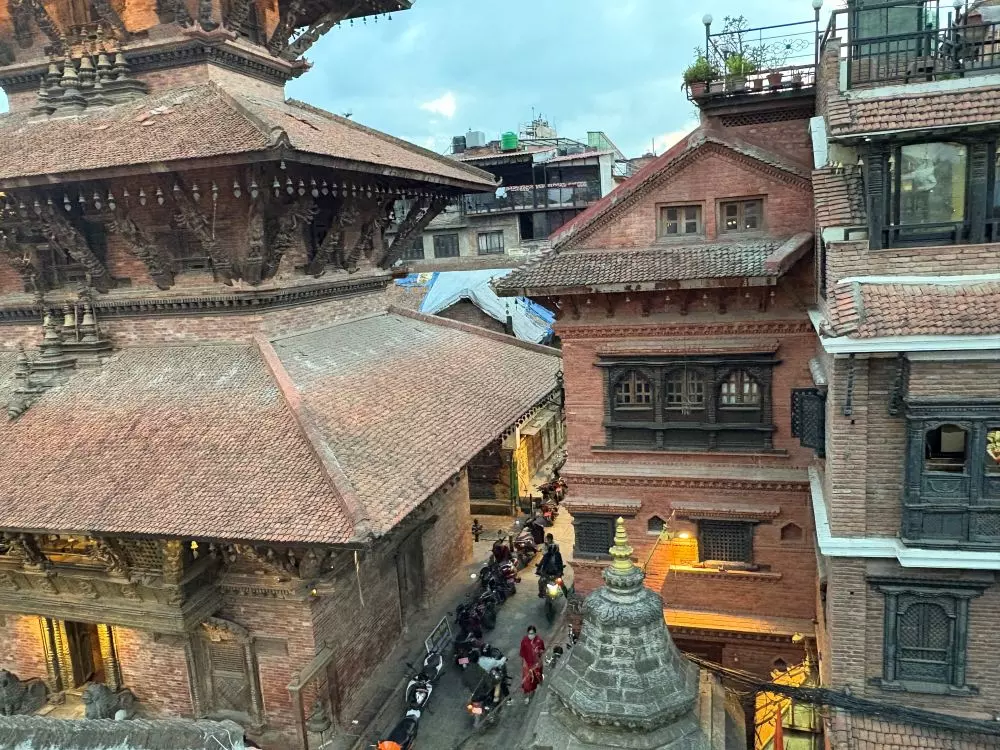
Nepal's iconic Patan Durbar Square. Photo: Nayanima Basu
The peak period of violence in the initial phase of the 2025 uprising did indeed conclude with the military's intervention on September 10, 2025, yet the movement itself did not terminate at that point. While the most intense street battles took place between September 8 and 10, the broader Gen-Z activism has continued well into 2026 as an ongoing movement.
On September 12, 2025, former Chief Justice of Nepal Sushila Karki was sworn in as the country’s Prime Minister – the first woman to hold the position in Nepal.
Ultimately, the Rastriya Swatantra Party (RSP) came to power in Nepal on March 27 this year, following a decisive victory in the parliamentary elections held on March 5. Building on the impetus generated by the Gen-Z anti-corruption protests that brought down the previous administration, the RSP won 182 seats in the 275-member House of Representatives, thereby securing the first single-party majority government in Nepal since 1999.
Prior to this, in December 2025, RSP founder Rabi Lamichhane had forged a 'Grand Unity' alliance with Balendra Shah, who was then a highly popular independent mayor of Kathmandu and a rapper and structural engineer. The two leaders agreed on Lamichhane continuing as party chief with Shah as the prime ministerial face.
On March 27, 36-year-old Shah took office as Nepal's youngest Prime Minister.
Also read: Why two NCERT Kannada language books have academics in Karnataka riled up
Ojha alleges, however, that ever since the arrival of the RSP government under Shah, the space for peaceful civic engagement has been rapidly “shrinking”.
“Several young people who participated in the Gen-Z movement continue to face legal cases, and many families are still waiting for meaningful responses. In a democracy, governments should engage with criticism rather than dismiss it,” she insists.
According to Ojha, “another concern is the government's approach to youth participation”. “There seems to be a lack of clarity about the role young people should play in public life. On one hand, there are efforts to discourage student politics. On the other hand, controversies such as the reported inclusion of underage individuals in party membership records have raised important questions about how political participation by young people is being understood and managed,” she says.
Interestingly, not just Gen-Z protestors, a large section of Nepali society too appears concerned and increasingly disillusioned with the new Balen Shah dispensation.
Vijay Kant Karna, executive chairperson of the Kathmandu-based Centre for Social Innovation and Foreign Policy (CESIF) attempts to maintain a somewhat optimistic stand. “These are early days for the government and Balen Shah knows he has to catch up fast. He is learning several things together,” he says, but adds, “He needs to be more active, should attend Parliament regularly. All the old political parties have become completely corrupt and a few crony elements were controlling the country and there were cartels everywhere. Therefore, such a protest was inevitable because the young generation today feels those parties have stolen their future.”
Karna, who had served as Nepal’s ambassador to Denmark between 2008 and 2012, goes on to say that “today everyone in Nepal is watching the RSP and how they are performing. The government still has several posts to fill so it is not really a fully functional government”.
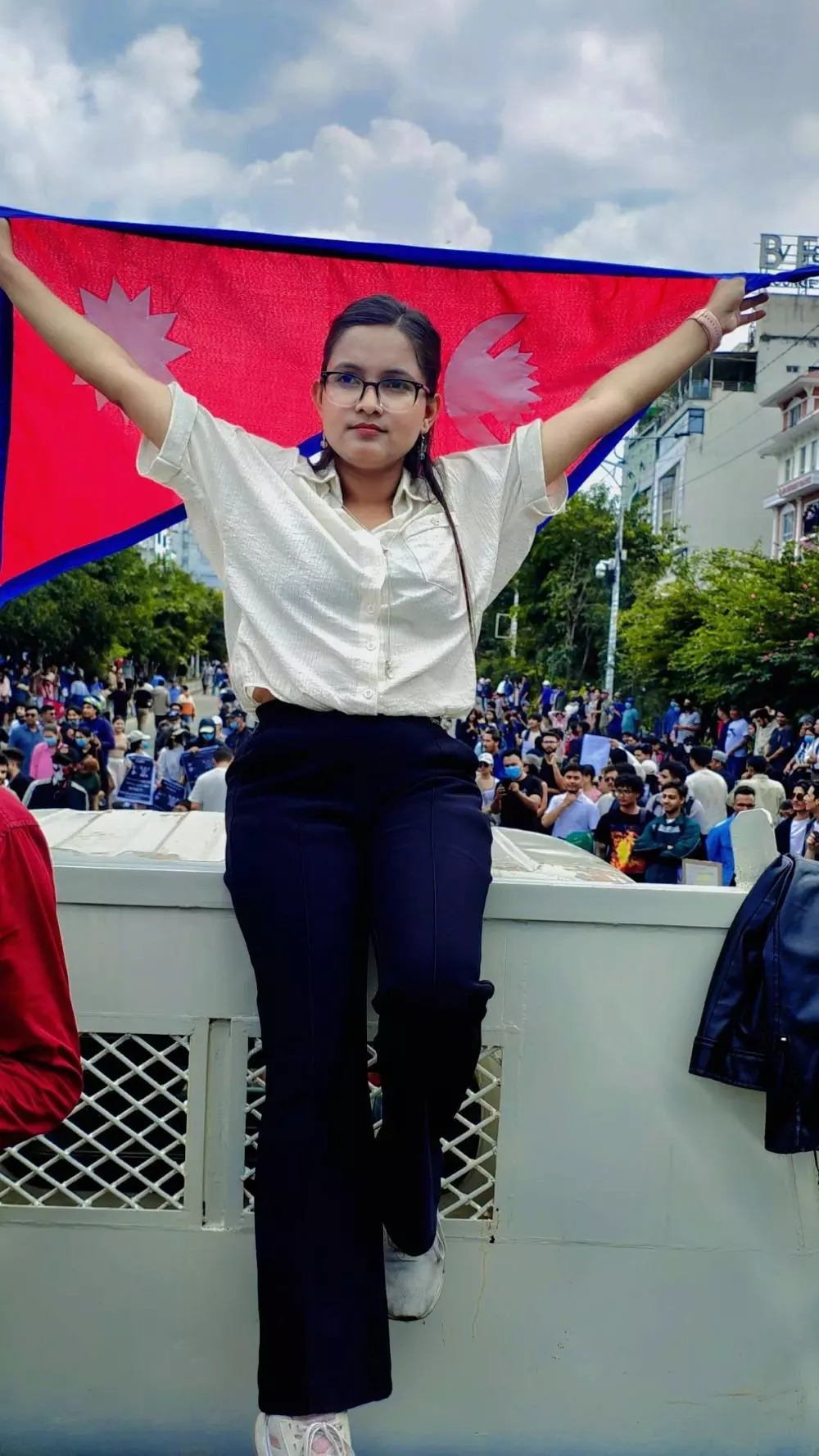
Jasmine Ojha, during the 2025 agitation. Photo: By special arrangement
In May, the RSP opened the process of appointing ambassadors to various countries to public competition. The Ministry of Foreign Affairs (MoFA) called for applications between May 28 and June 5, receiving a large volume of submissions.
Meanwhile, in a signal towards maintaining strategic balancing, Kathmandu dispatched its foreign minister Shisir Khanal to both India and thereafter to China last month.
Back in India, the country’s former ambassador to Nepal, Ranjith Rae, tells The Federal, “New political forces have emerged in response to the failure of earlier leaders. But they need to coalesce on the basis of a vision, ideology and principles. Their intentions are honourable; they have a huge mandate but it is important to use this maturely and effectively”.
He adds: “It is also important to remember the contributions of older political parties and leaders whose sacrifices have brought about multiparty democracy and a secular, republican, inclusive Nepal. Newer parties and younger leaders take these achievements for granted. They have not been through these long-drawn-out struggles.”
Rae, the author of Kathmandu Dilemma: Resetting India-Nepal Ties, further says, “The younger leaders are in a hurry to implement their agenda. Their intentions are honourable — to eliminate corruption and provide good governance — but sometimes they ride roughshod over due process. The ship of state turns slowly, and those entrusted with the responsibility of captaining it cannot afford to make errors.”
The RSP has also formed a task force to come up with a proposal on amending the Constitution.
“The core features of Nepal’s Constitution have emerged after huge struggles. A lot of blood has been shed. There should be clarity. Does implementation of the Constitution need to be improved or does the Constitution itself need to change? There should be a clear national consensus on how to move forward to address constitutional issues,” added Rae.
In Nepal, according to Bishnu Rijal, central committee member of the Communist Party of Nepal (Unified Marxist-Leninist), “People still believe that the RSP will stand up to their expectations. But what people are finding difficult to accept is their style of governance.”
While the Balen Shah government has sent its foreign minister abroad, he himself has refused to step out of the country. The ruling party chairperson Lamichhane also visited India and met Prime Minister Narendra Modi, Home Minister Amit Shah and other senior government and BJP officials.
However, the fact that this government appears not to be putting much focus on its foreign policy has become a matter of concern for many, including India. Prime Minister Narendra Modi has already extended an invitation to Shah to visit India.
The Federal tried reaching RSP chairman Rabi Lamichhane for comment, but the request was declined.
Meanwhile, the RSP government created quite a stir in the bilateral ties by seeking to settle the issue of the disputed border in the Kalapani-Lipulekh trijunction in the western Himalayas and the Susta region in the southern plains.
“For India, Nepal is a very important strategic partner. There needs to be regular interactions at the highest political levels. The visits of RSP chairman Lamichhane and FM Khanal should be viewed in this perspective. Hope there will be an early opportunity for the two Prime Ministers to meet as well,” says Rae.
India's initial border dispute with Nepal related only to Kalapani, an area of 35 square kilometre. Oli expanded it to include Limpiyadhura and Lipulekh with the result that now the area of dispute is almost 400 square kilometre.
Both India and Nepal claim a 35-square-kilometre area encompassing Kalapani, Limpiyadhura, and Lipulekh. The 1816 Treaty of Sugauli states that the Kali River acts as Nepal's western boundary with India. However, the treaty does not specify the river's exact source. India asserts that the Kali River originates from streams near Kalapani/Lipulekh. This territory lies within the Pithoragarh district of Uttarakhand and has been under continuous Indian administrative control and military deployment since 1962.
Nepal claims that the river originates further northwest in Limpiyadhura, meaning all the contested territory should belong to Nepal's Sudurpaschim Province.
The border issue turned hugely controversial in May 2020 when India inaugurated a new road to the Lipulekh Pass to facilitate the Kailash Mansarovar pilgrimage. Nepal strongly objected, subsequently releasing a new political map officially claiming Kalapani, Limpiyadhura, and Lipulekh.
Also read: Beyond mid-day meal debate, how the humble egg remains both comfort food & delicacy in Bengal
Among the GenZ in Nepal, relations with India appear to be a conflicted subject, with opinion divided.
“India never came to our assistance when we wanted. During the entire period of agitation, India stayed silent,” says a Genz leader speaking on condition of anonymity. The 24-year-old resident of Nepal’s southern Terai plains adds: “While we are now busy in bringing about a transformation in our own country, the Gen-Z is well aware of what India had done during the 2015 Madhesi protests, blockading the borders. Right now our priorities are different, but we don’t trust India like our previous generation used to.”
Ojha, however, takes a more balanced approach.
“India is Nepal's closest neighbour. We share an open border, deep cultural ties, economic interdependence and people-to-people relationships that go far beyond politics. Whether we like it or not, Nepal and India will always remain important partners. So, I don't think it is helpful to see every political development in Nepal through the lens of India,” says the activist, adding, “Whenever governments change in Nepal, there are always rumours about external influence. But as an activist, I believe in evidence, not speculation.”
Ojha adds: Among many young people in Nepal, I see a more balanced approach toward India than in the past. There is respect for the opportunities India offers in education, business, technology, healthcare, and employment. At the same time, there is also an expectation that the relationship should be based on mutual respect and sovereign equality. As for me, I would absolutely be open to studying, working, or collaborating in India if the opportunity contributes to my professional growth.”
Returning to the issue topmost on the minds of most Nepali youth now, the GenZ activist says, “Nepal's biggest political challenges are internal. Weak institutions, poor governance, lack of accountability, corruption, and political instability cannot simply be blamed on another country. We have to take responsibility for strengthening our own democracy. As an activist, my responsibility is to ask difficult questions of my own government first.”
And Ojha and her generation continue to take that responsibility seriously.