Buying a plot of land on the Moon? Here’s why it’s not really real estate investment
A building engineer from Tamil Nadu has recently made news by 'buying' an acre of land on the Moon as a wedding gift for his future wife. But international space agreements restricting ownership and exploitation of the Moon by any one country mean that any such sale is just a novelty deed or commemorative certificate, which confers no legal proprietorship.

A 32-year-old building engineer from Namakkal district in Tamil Nadu has reportedly bought an acre of land on the Moon as a wedding gift for his future wife. Private organisations sell such lunar plots as novelty deeds and commemorative certificates. For many buyers, they are romantic gestures or curiosities, purchased with the understanding that they confer no legal ownership. But not...
A 32-year-old building engineer from Namakkal district in Tamil Nadu has reportedly bought an acre of land on the Moon as a wedding gift for his future wife. Private organisations sell such lunar plots as novelty deeds and commemorative certificates. For many buyers, they are romantic gestures or curiosities, purchased with the understanding that they confer no legal ownership. But not everyone buying such certificates knows that.
That raises a simple question: can anyone actually own a piece of the Moon?
The first spacecraft to reach the Moon did not land gently.
In September 1959, the Soviet Union's Luna 2 deliberately crashed into the lunar surface, becoming the first human-made object to reach another celestial body. It was not simply a crash. The spacecraft carried two hollow steel spheres containing pentagonal metal medallions bearing Soviet emblems. Just before impact, an explosive charge scattered the medallions across the lunar surface.
In the 1960s, there were two superpowers — the capitalist USA and the socialist Union of Soviet Socialist Republics (USSR) and their respective allies. While both camps held opposing positions, they avoided direct war but competed fiercely for political influence, military power, technology, and global prestige. This was called the ‘Cold War ’. The space race, in which both sought to demonstrate the superiority of their systems, became one of the most visible arenas of this rivalry.
At the peak of the Cold War, reaching the Moon first was not merely a technological achievement; it also raised an uncomfortable question: if a country could reach the Moon and leave its national symbols there, could it then claim the territory as its own?
The answer would help shape the legal framework regulating outer space.
Also read: What NASA invitation to India to join work on planned Moon Base could mean for both
Luna 2 was part of a succession of increasingly ambitious Soviet lunar missions. The programme eventually achieved what had seemed impossible only a few years earlier. In February 1966, Luna 9 made the first successful soft landing on the Moon and transmitted the first photographs from its surface.
Meanwhile, the United States struggled with its early lunar programme. Its first four Pioneer missions in the late 1950s failed. Pioneer 0 was destroyed when its rocket exploded shortly after launch. Pioneer 1 failed to escape Earth's gravity, while Pioneer 2 and Pioneer 3 also failed to carry out their intended lunar missions.
The American programme eventually recovered. Ranger 7, launched in July 1964, became the first successful US lunar impact mission to transmit close-up photographs before crashing into the Moon. Two years later, Surveyor 1 made a controlled soft landing in the Ocean of Storms on June 2, 1966.
The race to the Moon was therefore no longer a question of whether humans could reach it. It was becoming a question of what countries could do once they got there.
The Soviet emblems scattered by Luna 2 raised a question that had been familiar on Earth for centuries. During the age of European colonial expansion, placing a flag or emblem on newly reached territory could support a claim of sovereignty. This is called ‘colonial claims’.
Could the same principle apply to the Moon? Would the Soviets use this to claim the whole Moon as theirs? The US and their allies were worried at the prospect of a ‘Red Moon’ — as a territory under the Communist USSR.
The then-Soviet leader Nikita Khrushchev tried to defuse the tension by gifting a duplicate of the Luna 2 steel sphere to then US President Dwight D. Eisenhower, assuring the world that the emblems were symbolic of scientific achievement, not a geopolitical territory grab.
Meanwhile, Venera 3, a Soviet spacecraft, crash-landed on Venus on March 1, 1966, becoming the first human-made object to strike another planet.
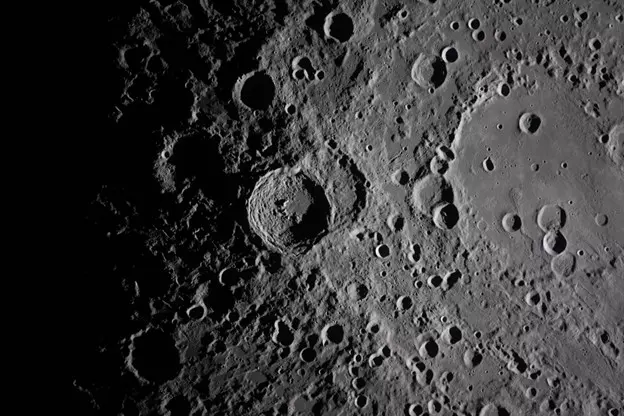
A close-up view of the Moon surface. File photo
Frantically, the US and its allies sought a treaty with the Soviets to establish an international regime over the Moon and other celestial bodies. The Soviets agreed to a treaty, provided Communist principles were applied to the Moon and other celestial bodies; no one, no nation, could own the Moon; it would be a common province of humankind.
Following this, The United Nations Committee on the Peaceful Uses of Outer Space (COPUOS) was established in 1959, the same year Luna 2 reached the Moon. As the space race accelerated, international discussions led to the Outer Space Treaty, which was opened for signature in 1967.
The treaty established two principles that remain central to space law. Outer space, including the Moon and other celestial bodies, cannot be appropriated by any country through a claim of sovereignty, occupation or any other means. At the same time, outer space is open for exploration and use by all countries on an equal basis.
In simple terms, reaching the Moon does not make it the property of the country that gets there first.
The legal questions became more complicated as scientists began considering the Moon not simply as a destination, but as a possible source of resources.
By the late 1960s and 1970s, the United States and Soviet Union were developing increasingly capable lunar spacecraft, while countries in the developing world regarded the space race with a different concern. They feared the pattern of colonialism on Earth could repeat in space, with powerful countries reaching the Moon first and controlling its territory and resources before other nations had the technological means to participate.
This led to negotiations for the Moon Agreement, which the United Nations adopted in 1979. The Soviet Union proposed a draft treaty framework that rejected national appropriation of the Moon and other celestial bodies and favoured their use for the benefit of all countries. It went further than the Outer Space Treaty, declaring the Moon and its natural resources the "common heritage of mankind" and placing stronger restrictions on ownership and exploitation.
The United States eventually agreed that no country could claim sovereignty over the Moon. However, it argued for a private property regime for the lunar resources. This remains one of the unresolved questions today: whether resources extracted from celestial bodies could be privately owned and commercially used. The Soviets argued that resources must be equitably shared among all nations, as the Moon is common property; the US demanded private ownership of resources by the extracting entity. With no agreement in sight, the Soviet Union did not sign the agreement.
Thus, the Moon Agreement did not attract the major space powers. Only a small number of countries have ratified it and none of the major spacefaring powers, including the United States, Russia, and China, is a party. Only India is a party to this agreement.
The Outer Space Treaty, however, remains much more widely accepted. Its prohibition on national appropriation means that a country cannot simply declare a portion of the Moon its territory.
That also means no legal system allows an individual to buy a plot of lunar land.
In 1980, Dennis Hope, an unemployed American going through a divorce, decided to claim the Moon. He approached a US government office in San Francisco and filed a claim covering the lunar surface and, eventually, other planets in the Solar System.
He then sent declarations to the United Nations, the US Government and the Soviet Union asserting that he owned the Moon and intended to divide it into plots for sale. When no government responded, Hope treated the silence as acceptance of his claim. He subsequently established the Lunar Embassy Corporation and began selling certificates for the lunar plots.
However, the claim had a fundamental problem. A private property deed matters only when a legal system can recognise and enforce it. A government must have jurisdiction over the property before it can recognise someone's title. Because the Outer Space Treaty prevents countries from claiming sovereignty over the Moon, no government can legally validate a private deed to lunar land.
A certificate stating that someone owns a particular piece of the Moon therefore does not create ownership under international outer space law. The same applies to claims about naming stars or asteroids.
The internationally recognised authority for assigning official names to celestial bodies and their surface features is the International Astronomical Union (IAU). It does not sell naming rights to individuals. Companies offering to name a star or asteroid after a customer are selling a symbolic certificate, not an internationally recognised astronomical name.
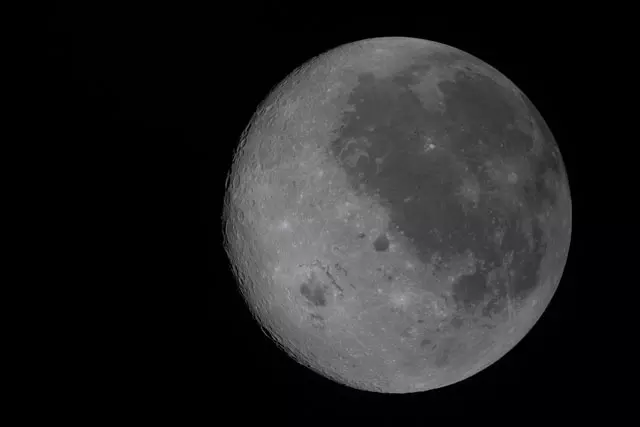
The near side of the Moon. File photo
Some people who buy lunar plots or star-naming certificates know perfectly well what they are buying. For them, the certificate may be a novelty, a gift or a symbolic gesture. (Though in practice, any certificate bought from any of these companies is as good as any designed and printed by the buyer on his laptop.)
The problem arises when such certificates are presented as proof of actual ownership.
Also read: How the Nancy Grace Roman Space Telescope, NASA’s latest eye in space, will help decode the universe
The Moon may one day become an important destination for scientific research, resource utilisation and permanent human activity. But buying a plot from a private company today does not give anyone legal ownership of lunar land.
The key debate is no longer only about imaginary lunar plots. As countries prepare for actual mining of the Moon and asteroids, the meaning of "use" and "ownership" of space resources is being contested. The United States has unilaterally adopted national laws recognising rights over resources extracted by its private companies, while arguing that this does not amount to claiming sovereignty over celestial territory. The US Commercial Space Launch Competitiveness Act of 2015 says a US citizen engaged in commercial recovery of a space resource is entitled to the resource obtained, including the right to possess, own, transport, use and sell it.
The Artemis Accords, led by the United States, take a similar position. They state that extracting and using space resources can be consistent with the Outer Space Treaty, while allowing measures such as temporary "safety zones" around operations. The US says these are needed to prevent harmful interference. However, countries including China and Russia have questioned whether such arrangements could gradually create a de facto system of control over lunar areas violating the Outer Space Treaty.
The dispute is therefore moving from science fiction to international policy. The real question is no longer whether an individual can be fooled into buying a piece of the Moon. It is whether countries that currently lack the means to reach and exploit lunar resources will again find themselves excluded from the wealth of a new frontier, and whether, in space, colonialism will once again become the policy for controlling resources.