On a low: Why Kerala's traditional toddy industry, already in decline, is facing a new challenge
The Kerala govt is discussing expanding access to low-alcohol ready-to-drink beverages such as Bacardi breezers. The aim, ostensibly, is to change drinking habits and create alternatives to stronger liquor. Ironically, the state's own naturally fermented low-alcohol beverage, toddy, deeply rooted in local culture and produced from coconut palms across the countryside, is struggling to survive, with fewer coconut trees to tap, falling production and aging workers.

At six every morning, Rajithan MR begins climbing coconut palms across the village of Elavally in Thrissur district. By the time most people start their workday, he has already climbed ten trees, sliced the flower spathes with a tapping knife, a skill perfected over generations and collected the toddy that slowly dripped through the night.He repeats the exercise again at noon and once more in...
At six every morning, Rajithan MR begins climbing coconut palms across the village of Elavally in Thrissur district. By the time most people start their workday, he has already climbed ten trees, sliced the flower spathes with a tapping knife, a skill perfected over generations and collected the toddy that slowly dripped through the night.
He repeats the exercise again at noon and once more in the evening. Thirty climbs. Nearly nine hours of physically demanding work. Less than Rs 1,000 in daily earnings.
For the 57-year-old toddy tapper, who has spent 39 years in the profession, this has become the reality of one of Kerala's oldest occupations.
“When I began, I was about 18 or 19 years old. Back then, if we asked homeowners for permission to tap their coconut trees, they were happy to let us. Today, many people almost see it as an insult to allow someone to tap their trees. We climb 30 trees every day in three shifts, but our income is still below Rs 1,000," Rajithan says. "We start around 6 am and by the time we finish the first round, we have to rush to deliver the toddy before 10 am (the morning deadline for tappers). Then we go back again for the second and third rounds. The work is hard, but the income no longer justifies it.
Rajithan’s story comes at a time when Kerala is discussing expanding access to low-alcohol ready-to-drink beverages, such as Bacardi breezers.
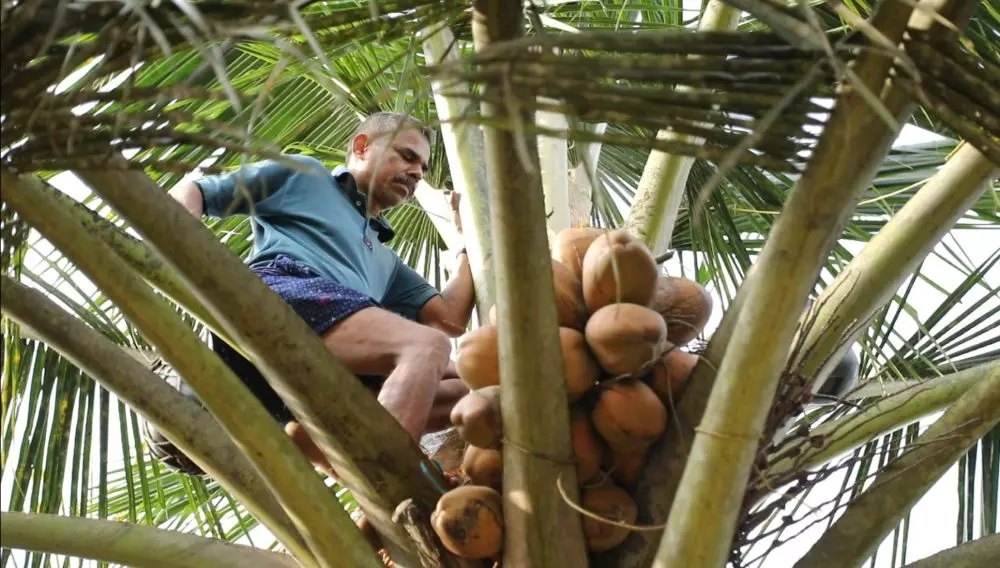
The work of toddy tapping is challenging; physically draining and involving long hours. Photo: Ima Babu
The debate has centred on changing drinking habits and creating alternatives to stronger liquor. But workers in Kerala's toddy sector argue that the state already has its own naturally fermented low-alcohol beverage, deeply rooted in local culture and produced from coconut palms across the countryside. Instead of strengthening that traditional industry, they fear the policy discussion may further weaken it. The availability of ready-to-drink low-alcohol beverages, with more sophisticated packaging and competitive pricing, will cause the demand for toddy to decline, fear industry workers.
The irony is difficult to miss. While the government explores new markets for branded alcopops, Kerala's own low-alcohol drink has been struggling to survive post ‘90s, say those in the know.
Toddy, drawn fresh from coconut inflorescences, contains around eight per cent alcohol, considerably lower than Indian Made Foreign Liquor (IMFL) and comparable to several commercially marketed low-alcohol drinks. Unlike bottled beverages manufactured in factories, toddy sustains an entire rural economy involving coconut growers, tappers, transport workers, toddy shops and thousands engaged in allied occupations. Yet industry insiders say today it stands at one of the most difficult moments in history.
The process begins when a tapper scales a palm tree and gently beats an unopened flower bud to stimulate sap flow. The tip of the bound bud is then sliced open and a clay pot is attached to collect the sweet, dripping liquid. Natural airborne yeasts immediately ferment the collected juice, transforming it into a mildly alcoholic beverage by evening.
Toddy shops in Kerala are licensed through a regulated process managed by the Kerala Excise Department. The right to run these shops is auctioned publicly by the government and granted to individual licensees or toddy tappers' cooperative societies.
Rajithan entered the profession in 1987 when toddy tapping offered a stable livelihood. Even in the late ‘90s, toddy tappers earned around Rs 500-600 a day, considered a decent salary at the time, he says.
Back then, he recalls, coconut gardens were well maintained, palms were healthier and toddy yields were higher. Today, he says, everything has changed.
"People no longer want to give their trees for tapping. They don't even plant coconut trees the way they used to. Maintaining coconut gardens has become expensive and many have simply neglected them. Only healthy trees produce enough toddy."
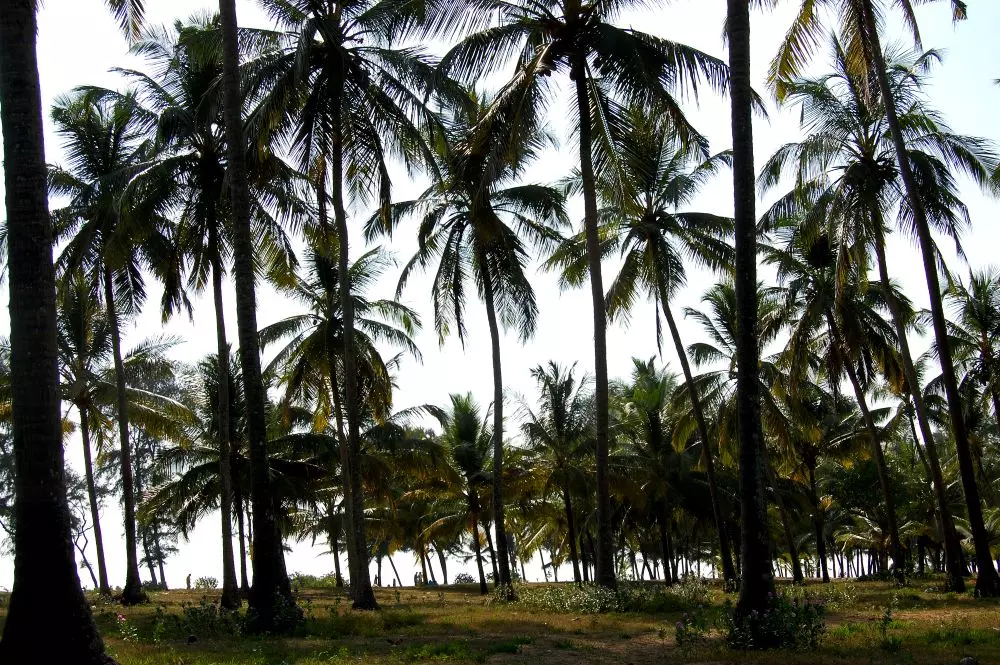
The number of coconut trees have fallen over the years and many tree owners are reluctant to let tappers access their trees. Photo: Ima Babu
Coconut growers have their own reasons for the reluctance to have their trees tapped, or even for the dwindling interest in planting and tending to coconut palms. Agricultural wages have gone up, they say, while land has been divided into smaller plots and more houses have come up, reducing the number of coconut plantations. Many landowners now see toddy tapping on the trees in their compounds as undignified. And the fee —Rs 500 per tree per month— is negligible.
P Omanadevi, 73, a retired postal department employee from Thrissur district, used to once allow toddy tappers to tap the five or six coconut trees in her compound.
"It was a custom in our village to let people who needed work tap our trees. They would come, collect the toddy and leave. We never even charged them, though there was a provision to do so. But now it's difficult to keep the gate open for them, especially since I live alone. So I stopped allowing toddy tapping about five or six years ago. The tapper who used to come has also grown old, and his children have not taken up the profession," she explains.
Meanwhile, for tappers, already burdened by a dangerous and challenging work, the search for trees proves an additional stumbling block. He may spend an entire month preparing a newly marked coconut palm before knowing whether it will produce enough sap. Sometimes the tree yields almost nothing, turning weeks of labour into a complete loss.
Then there are the occupational hazards.
"We also face attacks from hornets while climbing. There is one species whose sting is extremely dangerous. If it attacks you while you are on the tree, you may not even be able to climb down safely."
After nearly four decades in the profession, Rajithan has reached one conclusion. "I don't want my son to become a toddy tapper."
That sentiment is echoed across Kerala.
Also read: Beyond mid-day meal debate, how the humble egg remains both comfort food & delicacy in Bengal
CK Vijayan, a leader of the Centre of Trade Unions (CITU)-affiliated Toddy Workers Union from Malalur in Thrissur district, says the industry's biggest crisis is no longer demand but labour.
"The shortage of workers is our biggest problem," he says.
According to Vijayan, the Chavakkad range alone (an area of around 20-25 square kilometres) had 496 toddy workers until the 2010s. Today, that number has fallen to around 150.
"Many retired. Others left because the wages and welfare benefits are no longer attractive [Toddy workers receive welfare measures directly from the Kerala Toddy Workers' Welfare Fund Board, a statutory corporate body established by the State Government under the Kerala Toddy Workers' Welfare Fund Act, 1969]. Earlier, younger members of the family would replace retiring workers. That is not happening anymore."
The decline extends far beyond a single range. Vijayan estimates that only around 16,000 to 17,000 workers remain in Kerala's toddy sector today. A decade ago, he says, there were well over 50,000 workers. Including allied occupations such as transportation, food preparation, serving customers and bottle washing, nearly one lakh people once depended on the industry. The profession itself has become less viable. The decline has been so steep that CITU, the state's largest trade union, was forced to merge its toddy tappers' union with the liquor industry workers' union as the number of tappers dwindled.
Government rules limit a tapper to ten trees in a shift. Even after climbing around 30 trees across three daily rounds, most workers earn less than Rs 1,000, says Vijayan.
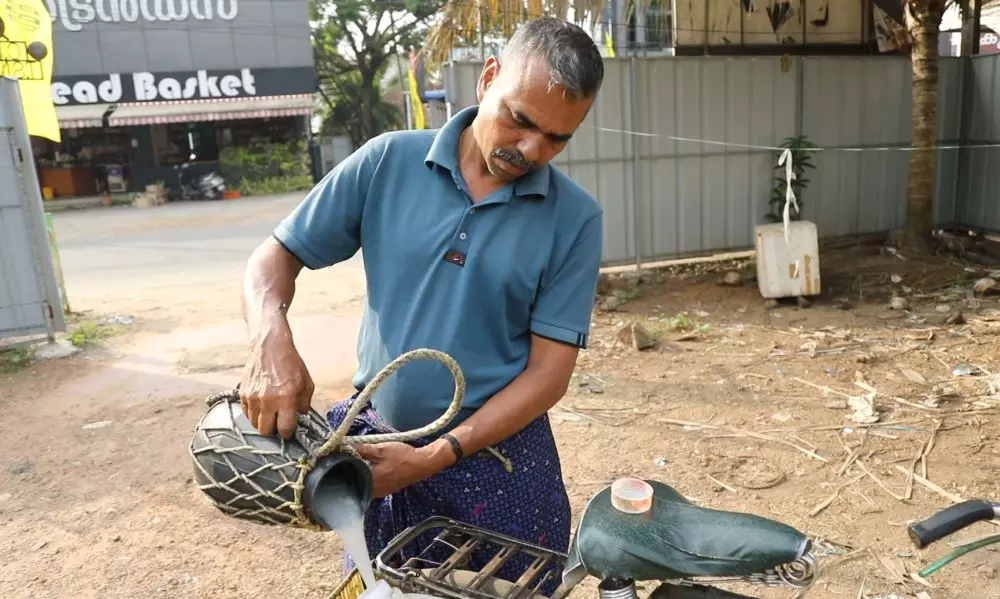
Tappers work in three shifts through the day, collecting and delivering the sap for sale. Photo: Ima Babu
Shop workers fare little better.
"They work nearly 12 hours a day and often earn even less. At the same time, they face the greatest legal risk. If there is any violation in a toddy shop, the worker often becomes the first accused."
Contrary to popular perception, workers insist that toddy consumption itself has not fallen dramatically. Instead, production has.
"The number of drinkers has not reduced," Vijayan says. "What has fallen is toddy production."
Several factors have contributed to the decline. In addition to land owners' reluctance to allow tapping, it has become difficult to find health trees, say workers. Diseases affecting coconut palms have reduced sap yields in recent years; according to locals, viral diseases affecting palm trees were not so common in the past. Workers are also scarce.
As local production across districts declines, shops increasingly depend on toddy transported from Palakkad district, particularly from Chittur.
That dependence reflects another unfolding crisis. For decades, Chittur in Palakkad has served as the backbone of Kerala's toddy industry. Almost every district, except Kannur and Thiruvananthapuram, receives toddy from the region. The Kerala Excise Department issues permits for transporting toddy out of Palakkad based on the freshness of the beverage and travel viability. Kannur and Thiruvananthapuram are at the northernmost and southernmost tips of the state, making daily, fresh delivery logistically impractical before the toddy ferments and goes sour.
The licensed capacity remains impressive. Authorities permit tapping of around 1.9 lakh coconut palms with a sanctioned production of nearly three lakh litres a day. Reality tells another story. Workers estimate that actual daily production in Palakkad now struggles to cross 40,000 litres.
The collapse in productivity has transformed labour migration in unexpected ways. For nearly four decades, toddy workers from Tamil Nadu travelled into Kerala seeking better wages.
Today the flow has reversed. Experienced tappers are increasingly crossing into Tamil Nadu, where wages are higher, work is more stable and there are fewer restrictions on the number of trees they can tap in a day. Workers say Chittur once had around 2,500 Kerala tappers and nearly 3,000 workers from Tamil Nadu, largely from the Nadar community. Those numbers have reportedly fallen to around 150 Kerala workers and about 400 Tamil Nadu workers.
"The migration has been driven by better prospects across the border. Here, many of us are outside the government welfare system and work as daily wage labourers without any real security. In Tamil Nadu, wages are higher, so it makes more sense to cross the border. Earlier, workers from Tamil Nadu came here in search of jobs. Now the trend has reversed," said K.P. Arumughan, a 63-year-old toddy tapper with four decades of experience who is a member of the Indian National Trade Union Congress (INTUC)-affiliated workers’ union.
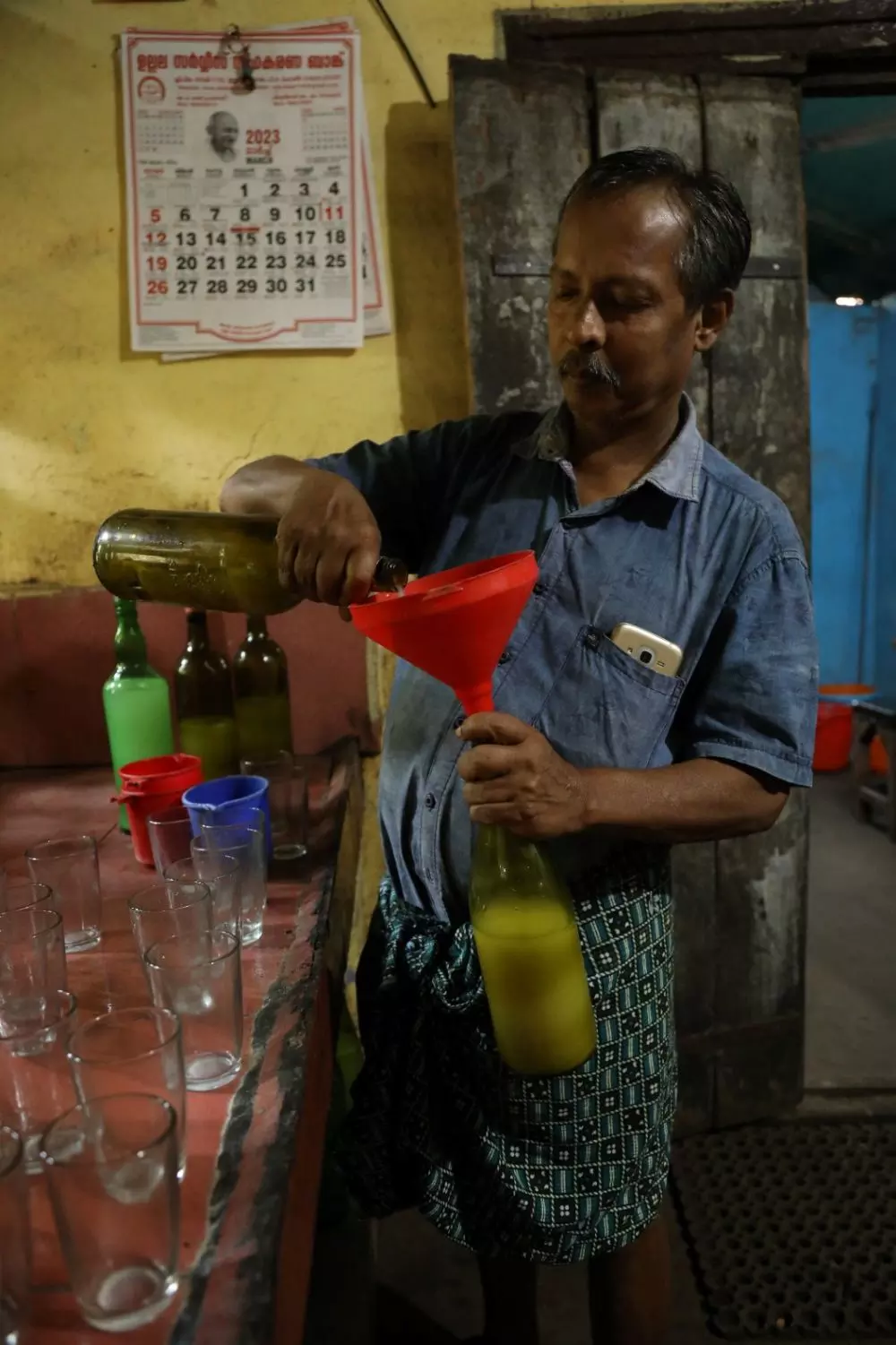
Toddy tappers are not the only ones impact by the decline in the business. Shop workers too are impacted. Photo: Ima Babu
PK Kunjumon, a toddy workers' union and CITU leader from Malappuram district, says the industry faces pressure not only from falling production but also from competition within the toddy trade itself. According to him, nearly 2.5 lakh litres of toddy are transported every day from Palakkad to districts across Kerala.
Not all of it, he says, comes through organised channels.
"There are genuine producers who employ registered workers and provide welfare benefits. But there is also a parallel system where workers are outside welfare schemes and receive no protection."
He alleges that a substantial portion of toddy entering the market is diluted or adulterated before reaching consumers.
"There are traders who purchase toddy, alter it and sell it. That affects the reputation of the entire industry."
The economics are equally troubling. According to Kunjumon, producing one litre of locally tapped toddy costs around Rs 120 after accounting for wages and welfare contributions. It sells for around Rs 140 to Rs 150, leaving only a narrow margin.
By contrast, toddy sourced cheaply from outside the government-monitored system with recognised workers can cost traders nearly half as much. "That is how many shops survive today."
Also read: World Chocolate Day: How entry of craft chocolatiers has changed cacao cultivation in India
The Excise Department, however, maintains that reviving the toddy sector remains a policy priority. Excise Minister M. Liju told the Kerala assembly earlier this month that the government was working on a comprehensive overhaul of the industry to restore consumer confidence while protecting the livelihoods of toddy workers. "Kerala's toddy industry is one of the State's surviving traditional occupations, and it is imperative that we preserve its credibility by ensuring that only pure, unadulterated toddy reaches consumers," he said. Acknowledging the sector's multiple challenges, including the shortage of new workers, the physically demanding nature of the job and concerns over adulteration, Liju said the department had launched 'Operation Shuddhi' to curb the manufacture and sale of spurious toddy. The drive has intensified inspections in major toddy-producing centres such as Chittoor in Palakkad and toddy shops across the State, with 1,457 samples collected from more than 2,740 shops for laboratory analysis. He said the government's long-term plan includes improving toddy tappers' welfare, promoting better coconut varieties to increase production and framing the upcoming Excise policy in consultation with all stakeholders, including the Kerala Toddy Industry Development Board, with the objective of reviving the traditional industry.
Even as the government considers reopening toddy shops closed over the years, workers argue that existing regulations continue to make revival difficult. One of the biggest hurdles is the relocation rule. A toddy shop can be shifted only if another approved location (in case the landlord asks the property to be vacated) is available at least 400 metres away from specified institutions, like schools, places of worship etc. Bars, by comparison, require far smaller distance restrictions (200 metres).
"The 400-metre rule has become a major obstacle," Kunjumon says. "Many shops remain closed simply because they cannot find another approved location."
Vijayan agrees.
"If a landlord asks a licensee to vacate, there is often nowhere else to relocate the shop."
Though the rule was always there, the restriction became an additional worry when the industry began to decline.
Agrees Stephen Thomas, 54, who has been working at a toddy shop in Ernakulam district for nearly 35 years and earns "around Rs1,600-Rs 1,800 a day". "It has become difficult to find cooks and food handlers. Even when someone is willing to work, they are discouraged by frequent inspections and licensing requirements from the Excise and Health Departments. Many simply don't want to take up the job anymore," he says.
Against this backdrop comes Kerala's latest discussion on expanding access to low-alcohol beverages. Workers say the proposal raises an uncomfortable question. If the objective is to encourage consumption of beverages with lower alcohol content, why is Kerala overlooking toddy? Toddy naturally contains around 8.3 per cent alcohol. Many commercially marketed alcopops contain slightly higher alcohol levels.
Yet workers fear that branded products with aggressive marketing and lower prices (while breezers are yet to be available in Kerala, in Bengaluru, a 275 ml bottle comes for about Rs 100) could quickly eat into toddy's already shrinking customer base.
"If products like Bacardi become popular in the low-alcohol segment, toddy will be affected more than anything else," Vijayan says.
Kunjumon shares the concern.
"They may be promoted as low-alcohol drinks, but if they are sold at lower prices, they will directly hurt toddy shops. Young consumers prefer products they see as more sophisticated. They can carry those bottles around discreetly, something toddy can never offer."
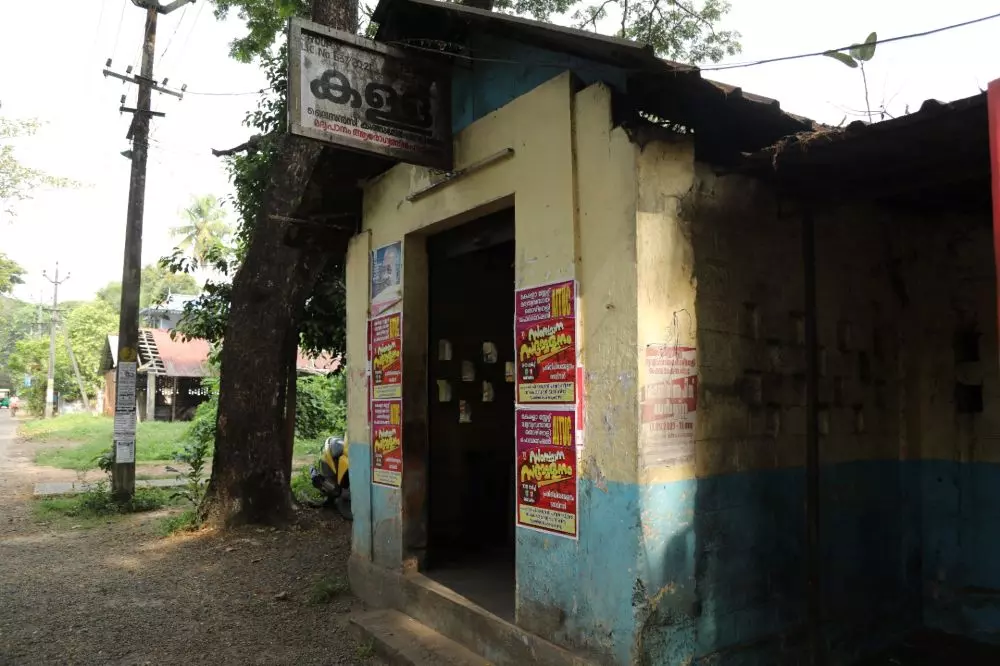
For toddy shops, one challenge is that it needs to be at least 400 metres away from specified institutions, like schools, places of worship etc. Bars, by comparison, require far smaller distance restrictions, 200 metres. Photo: Ima Babu
For workers, the debate is not simply about alcohol. It is about whether policy will support an indigenous rural industry or imported commercial brands.
There have been attempts to promote toddy and local drinks. The Tourism and Excise Departments earlier proposed promoting toddy parlours catering to tourists. The idea was to create cleaner, better-designed establishments offering quality food alongside toddy.
Pilot efforts showed promise. Some toddy shops in Thrissur successfully transformed themselves into attractive dining destinations serving traditional Kerala cuisine. Yet the broader initiative stalled. Applications for new parlour licences attracted little interest, while regulatory hurdles involving local bodies, parking requirements and health clearances discouraged investors.
Workers believe the concept still holds promise.
They argue that toddy can become part of Kerala's culinary tourism, much like wineries in Europe or sake breweries in Japan.
But that would require coordinated support rather than fragmented regulation. For generations, toddy has represented far more than an alcoholic beverage.
It has supported thousands of rural households. It has sustained coconut cultivation. It has preserved specialised skills passed from one generation to another.
Every decline in toddy production affects not just tappers but transport workers, cooks, shop employees, coconut growers and small local economies built around the industry. Today many of those links are weakening simultaneously. Young people no longer enter the profession.
Trees are fewer. Production is falling. Workers are ageing.
Alternative employment is more attractive. Now the prospect of new low-alcohol beverages has added another layer of uncertainty.
For Rajithan, the debate taking place in government circles feels distant from the reality of life on a coconut tree. Tomorrow morning he will again leave home before sunrise. He will climb thirty trees.
He will work nearly nine hours. He will return home with less than Rs 1,000. And like thousands of others still holding on to Kerala's oldest alcoholic beverage, he wonders whether the state is preparing to embrace new low-alcohol drinks while allowing its own traditional one to slowly disappear.