JCBs, tractors at Bharatpur Bird Sanctuary spark outrage in peak season
Dozens of heavy machines are clearing invasive weeds across 400 hectares of the Unesco World Heritage Site as migratory birds flock to its wetlands

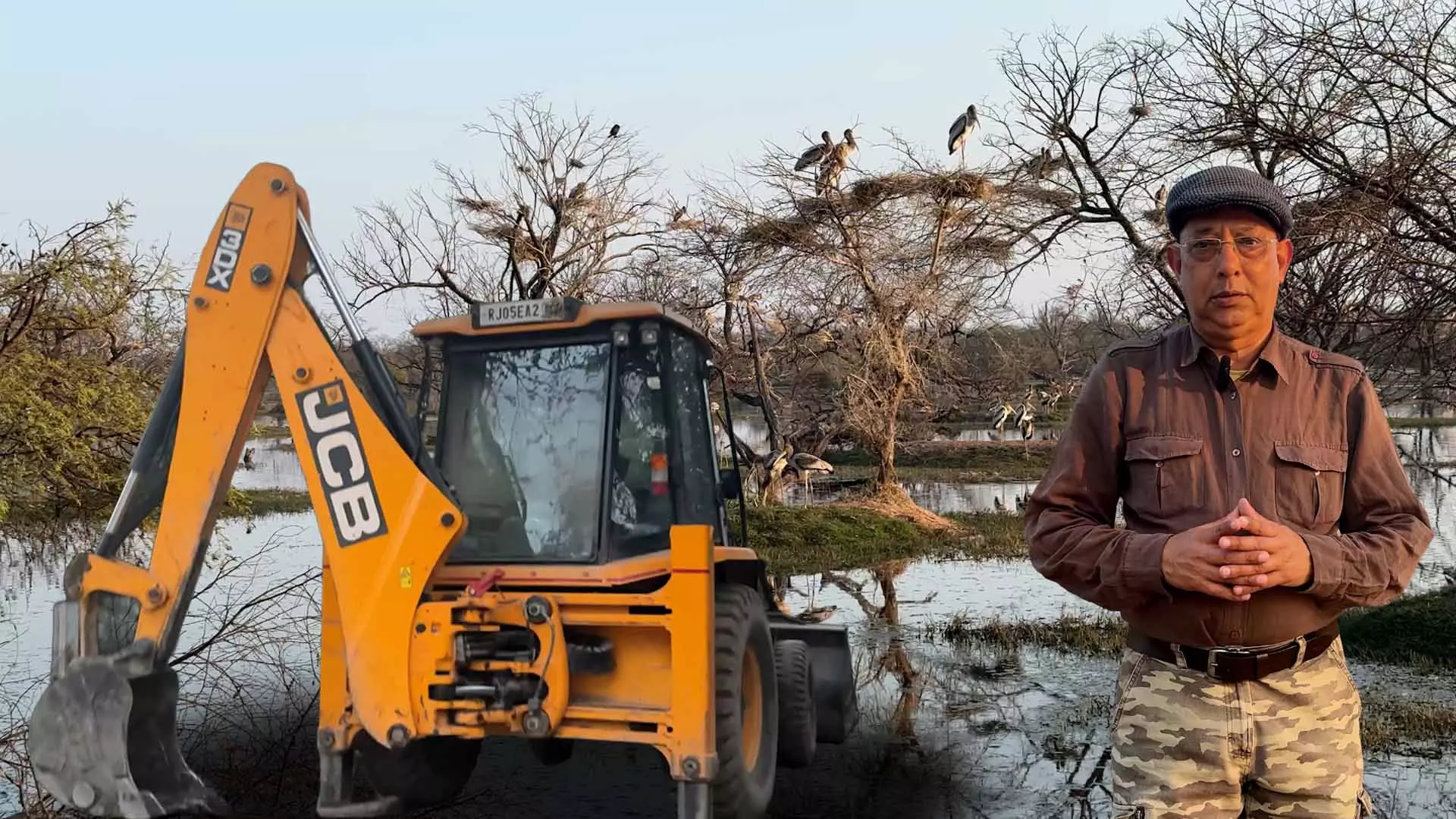
The world-famous Keoladeo National Park in Rajasthan, also known as the Bharatpur Bird Sanctuary, is witnessing an unusual disturbance. Dozens of JCBs and tractors have entered the protected area during peak migratory season, breaking its calm and unsettling both birds and visitors.
February is when the sanctuary is teeming with lakhs of indigenous and migratory birds across its wetlands and woodlands. It is also a peak period for birdwatchers, photographers and nature lovers from around the world.
This year, however, the sudden arrival of heavy machinery has disrupted Bharatpur’s tranquility, with machines moving through prime birding areas.
Visitor outrage
“It's the tractors… There are JCBs going around. I've seen six JCBs today. So that's definitely not a small number,” said Mohit, a bird photographer who travelled from London.
He added that during migratory season, when birds are nesting, such activity should not be happening. “If you see, there are very less birds right now in Bharatpur,” he said, questioning the rationale behind bringing heavy machinery into a designated silent zone.
Birds vs bulldozers
♦ Peak migration season, birds nesting and highly sensitive
♦ Six JCBs spotted in a single day by one visitor
♦ Noticeably fewer birds seen since machines moved in
♦ Disrupted birds may abandon habitats and not return
♦ Juliflora weed is destroying native vegetation, say officials
♦ Rains pushed the schedule from August to now
♦ Officials say this is the only viable window
Other visitors echoed similar concerns, saying the machines disturb bird life and the overall experience, though some admitted they were unaware of the exact motive or duration of the operation.
Official explanation
Spread over 29 sq km, the Unesco World Heritage Site hosts over 370 bird species between November and early March, including painted storks, pelicans, bar-headed geese and marsh harriers.
Also read | From 10 to 42: How a Telangana forest quadrupled its tiger count in 9 years
Assistant Forest Conservator Chetan Kumar BV acknowledged the disturbance but said the operation is necessary to remove an invasive plant species known as Juliflora or Prosopis juliflora.
“Prosopis juliflora happens to be a very troublesome weed,” Kumar said. “In these woodlands what we observe is Prosopis juliflora is a major weed. If we can get rid of all the mother trees at one go, it will help address this.”
Weed removal drive
Forest officials explained that the aggressive species destroys surrounding vegetation, outcompetes native plants and disrupts the natural habitat. The current drive targets removal across 400–500 hectares.
“We need at least four working months even with JCB, labour and all,” Kumar said, adding that the exercise has been ongoing for years but with a larger target this year.
The work was originally scheduled for August–September, but heavy rains and muddy terrain made vehicle movement impossible. Now that the ground is accessible, officials say this is the only available window to carry out the operation.
Ecological impact
While removing invasive Juliflora could benefit the park’s long-term ecological health, the presence of heavy machinery during migratory season remains contentious.
Also read | Cheetahs in tiger territory? Experts warn against using Nauradehi sanctuary as third site
Many bird species are extremely sensitive to disturbance. Once disrupted, they may abandon their preferred habitats and choose not to return.
“I personally believe that they could have chosen a better time. Not now, not when all the migratory birds are coming in,” the reporter noted, leaving viewers to weigh both sides of the debate.
The content above has been transcribed using a fine-tuned AI model. To ensure accuracy, quality, and editorial integrity, we employ a Human-In-The-Loop (HITL) process. While AI assists in creating the initial draft, our experienced editorial team carefully reviews, edits, and refines the content before publication. At The Federal, we combine the efficiency of AI with the expertise of human editors to deliver reliable and insightful journalism.