



Diktats by khap panchayats unconstitutional, undermine rule of law: Rajasthan HC
The court directed the state to frame a policy and consider a dedicated law against social ostracism, citing violations of equality, liberty and dignity in multiple districts

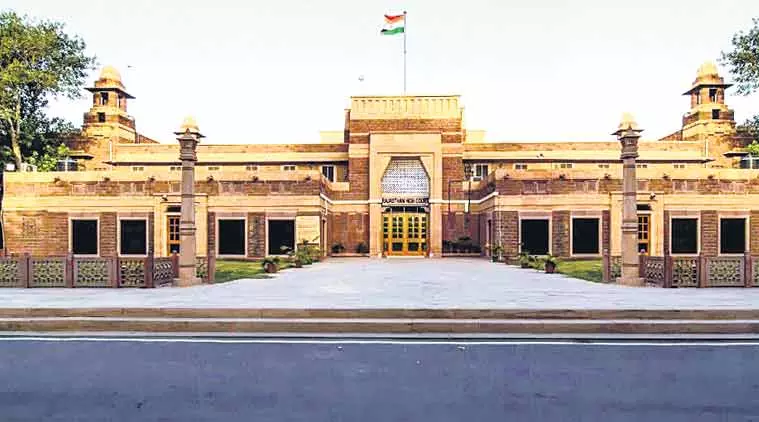
Jodhpur, Apr 11 (PTI) In a strong rebuke to extra-legal community bodies, the Rajasthan High Court has held that diktats issued by self-styled caste and khap panchayats ranging from social boycott to steep monetary penalties are unconstitutional and undermine the rule of law.
Calling the issue a serious social concern, a single bench of Justice Farjand Ali on Friday directed the Rajasthan government to frame a clear policy backed by a standard operating procedure (SOP) to tackle complaints of social boycott.
The bench was hearing a batch of 11 petitions highlighting instances of coercion and ostracism across districts such as Sirohi, Barmer, Nagaur, Balotra, Jalore and Jodhpur.
The petitioners contended that despite complaints, authorities often failed to act decisively against such informal bodies.
Taking note of recurring patterns, the court observed that these caste forums function as parallel adjudicatory systems, issuing binding orders without any statutory authority.
Measures like declaring a person's 'hukkaa-paani bandh' effectively sever individuals and families from community life, the court said, adding that such practices erode dignity and violate core constitutional protection including equality, liberty and the right to life.
The judgement draws on findings from a court-appointed panel that documented instances where families were punished for exercising personal freedoms, including choosing their partners or speaking against entrenched customs.
In some cases, families were fined heavily and excluded from community networks for actions as routine as conducting wedding processions with traditional celebrations.
The court emphasised that these guidelines must be uniformly implemented across districts and adequately publicised to ensure awareness among citizens and officials alike.
Significantly, the court flagged the absence of a dedicated legal framework in Rajasthan to directly criminalise social boycott.
It urged the state to consider enacting a law on the lines of the Maharashtra Protection of People from Social Boycott Act, 2016, noting that a specific statute would enable targeted prosecution and stronger victim protection.
In a set of operational directions, the court instructed the police leadership to designate a senior officer, not below the rank of Additional Superintendent of Police, to oversee investigations into all pending cases related to social ostracism, with a mandate to complete probes within 90 days.
It also ordered the appointment of nodal officers in each district, functioning under the joint supervision of district collectors and police chiefs, to handle complaints and ensure timely redressal. PTI