



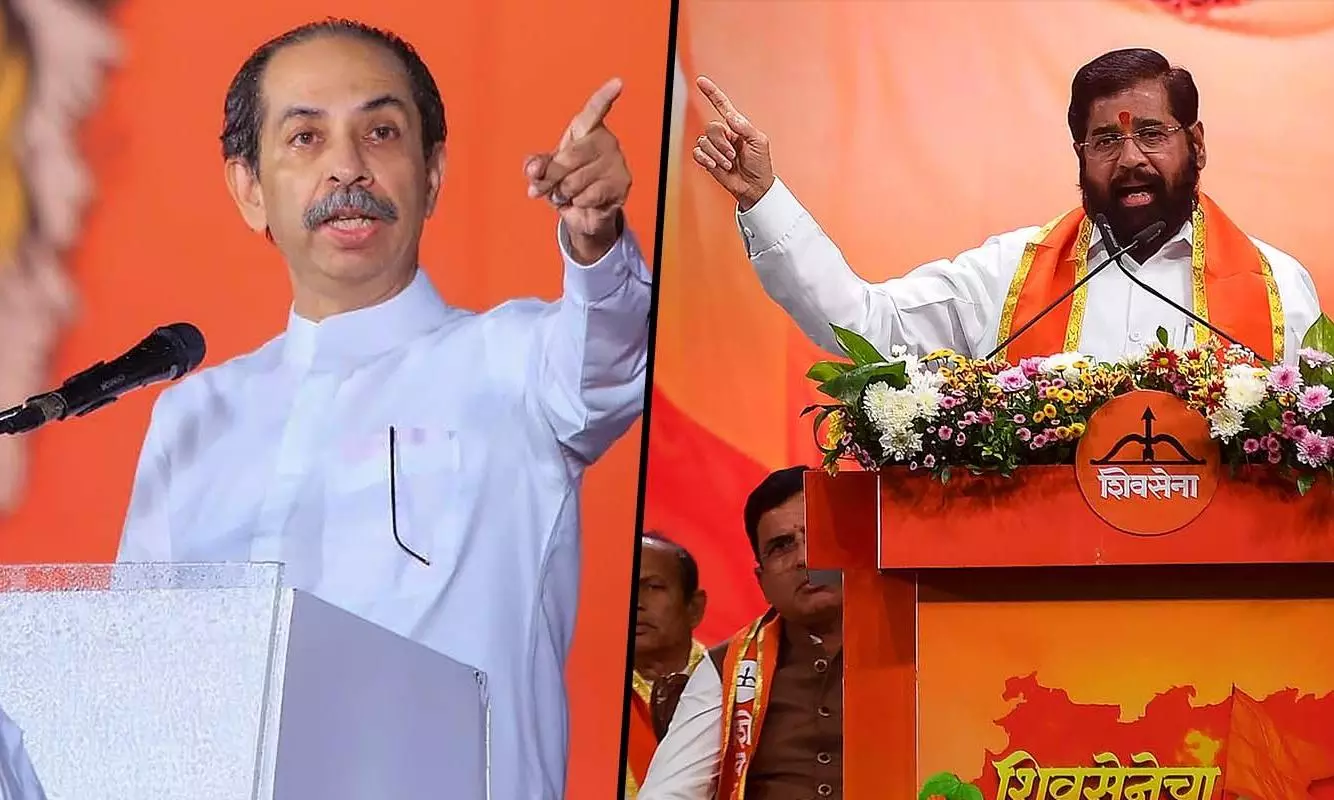
SC asks EC if both Shiv Sena factions could have been denied bow-and-arrow symbol
The court proceedings concern pleas filed by the Uddhav Thackeray-led faction challenging the EC's recognition of the Shinde faction as the original Shiv Sena

New Delhi, Sep 17 (PTI) The Supreme Court on Thursday questioned whether the Election Commission adequately considered the possibility of denying the reserved bow-and-arrow symbol to both the Eknath Shinde and the Uddhav Thackeray factions of the Shiv Sena and asking them to contest elections on separate symbols.
A bench comprising Chief Justice Surya Kant and justices Joymalya Bagchi and V Mohana resumed hearing petitions challenging the Election Commission's decision recognising the Shinde-led faction as the real Shiv Sena and allotting it the party's bow-and-arrow election symbol.
Senior advocate Neeraj Kishan Kaul, appearing for the Shinde faction, said that the legislative majority test adopted by the EC was legally valid and appropriate to the circumstances of the dispute.
During the hearing, Justice Bagchi said the pendency of disqualification proceedings against the MLAs of the Shinde faction, when the decision with regard to whom Shiv Sena party and its symbol belong was being taken, cannot be "brushed aside".
"Although finally, as you rightly said, the consequence (of decision on disqualification proceedings) no longer exists. But a declaration can also be made in respect of whether the (EC's) order was correct or not. A relief in the nature of a declaration is maintainable," Justice Bagchi told Kaul.
On Wednesday, Justice Bagchi questioned whether a legislative majority could be considered a "safe test" to determine the ownership of a political party, particularly when disqualification proceedings were pending against the very MLAs who constituted that majority.
Kaul said 40 MLAs of the Shinde faction had secured 76 per cent of the votes polled in favour of the 55 winning Shiv Sena MLAs in the 2019 Maharashtra assembly elections.
In contrast, the 15 MLAs supporting Thackeray had secured 23.5 per cent of those votes, he said.
Referring to the total votes polled by Sena candidates in the 2019 assembly elections, including losing candidates, Kaul said the 40 MLAs supporting the respondents accounted for approximately 40 per cent of the party's total votes, while the 15 MLAs supporting the petitioners accounted for 12 per cent.
He also cited the 2019 Lok Sabha election figures, saying that the 13 MPs supporting Shinde had secured 73 per cent of the votes polled in favour of the party's 18 elected MPs, compared with 27 per cent for the MPs supporting Thackeray.
Kaul said that pending disqualification proceedings against legislators could not, by themselves, prevent the EC from determining the dispute under Paragraph 15 of the Election Symbols (Reservation and Allotment) Order.
He said that the disqualification proceedings against members of the Shinde faction had been dismissed, while the top court had issued notice in the special leave petition challenging that decision but had not stayed the order.
He further said the pending petition has become infructuous as the 2019 Maharashtra assembly had since been dissolved and a fresh assembly constituted following the 2024 elections.
Relying on the constitution bench judgement in Subhash Desai v Principal Secretary, Governor of Maharashtra, the senior lawyer said that the EC's decision under the Symbols Order need not necessarily be consistent with the Speaker's decision under the Tenth Schedule, as the two authorities perform different functions and apply different considerations.
He said that the judgement had left it to the EC to determine which test or combination of tests was appropriate in the circumstances of a particular dispute.
Justice Bagchi then asked whether the poll panel had considered the possibility of denying the reserved symbol to both the factions.
The judge said that judicial review does not permit the court to substitute its discretion for that of the EC.
However, the court could examine whether relevant considerations and possible outcomes had been properly explored, he added.
Kaul said that the legislative majority test remained a valid and relevant consideration under the Symbols Order, citing the top court's earlier decision in Sadiq Ali vs Election Commission of India.
He said that disregarding legislative strength entirely whenever a disqualification petition was filed could create opportunities for frivolous proceedings aimed at preventing the poll panel from examining the elected representatives' support.
The hearing would resume on September 22.
The proceedings concern pleas filed by the Uddhav Thackeray-led faction challenging the EC's recognition of the Shinde faction as the original Shiv Sena.
The dispute also involves challenges to the Maharashtra speaker's decision not to disqualify MLAs belonging to the Shinde-led camp.
The Thackeray faction has maintained that the Shinde group's use of the Shiv Sena name and election symbol is illegitimate and has urged the Supreme Court to restore the symbol or restrain the Shinde faction from using it. PTI