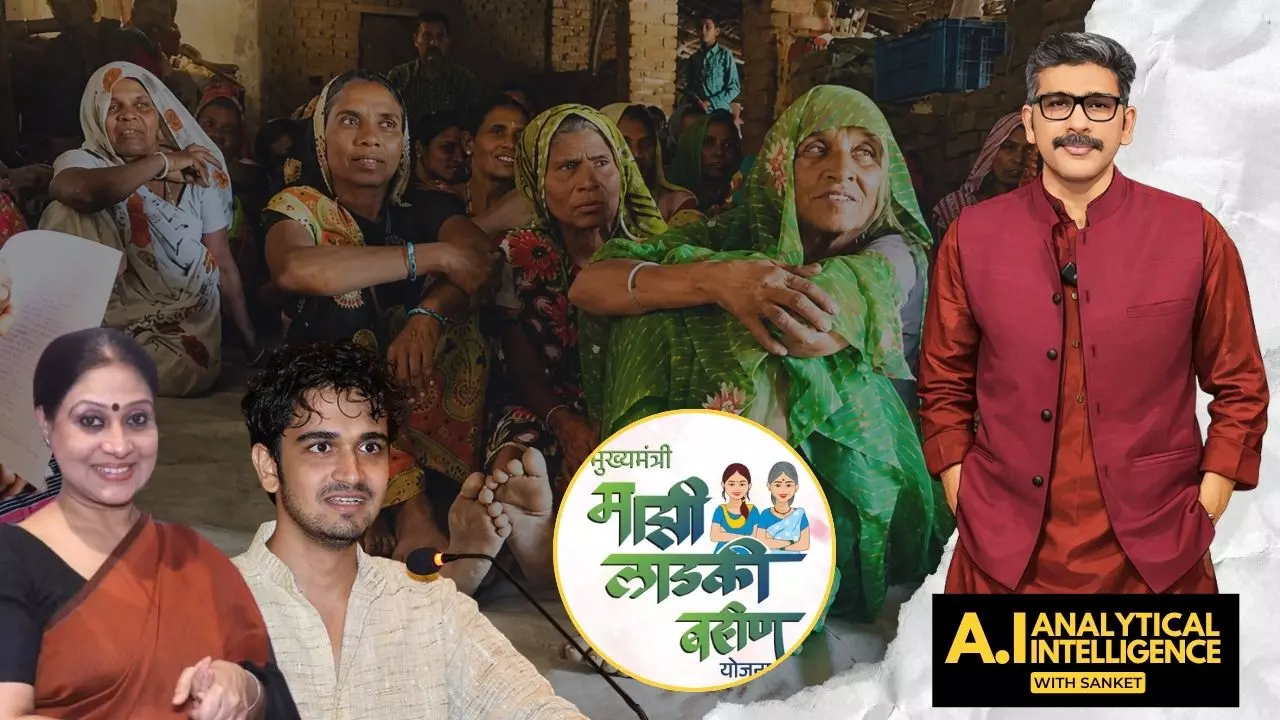
Ladki Bahin scheme scam: 'Biggest bribe paid in history of Maharashtra'
AI with Sanket | 92 lakh women lose Maharashtra's Ladki Bahin benefit post-polls. Rushed rollout, or a bribe for votes?

It was, in the words of writer and NCP (SP) spokesperson Anish Gawande, possibly "the biggest bribe paid in the history of Maharashtra." Months after the state's Ladki Bahin Yojana helped propel the Mahayuti government back to power, a sweeping verification drive has stripped over 92 lakh women — nearly four in 10 beneficiaries — of the monthly benefit they were promised.
On the latest episode of AI With Sanket, The Federal spoke to Gargi Nandi Roy, political analyst, and Gawande, on whether the scheme was a hurried welfare rollout gone wrong, or a calculated ploy to win an election.
The Mukhyamantri Majhi Ladki Bahin Yojana was launched ahead of the November 2024 Maharashtra Assembly elections, promising Rs 1,500 a month to eligible women. It was widely seen as a "revdi" scheme — even by a political dispensation that had long criticised freebie culture — and it delivered results at the ballot box.
Also read: CAG flags Rs 3,541 crore excess spending in Maharashtra govt’s Ladki Bahin scheme
But after the win, then Finance Minister Ajit Pawar began flagging the scheme as a strain on state finances. A rationalisation drive followed, and it has since become the largest beneficiary-verification exercise of its kind in the country: over 92 lakh names removed, with the Comptroller and Auditor General (CAG) also flagging gaps in the scheme's implementation.
A rushed rollout
Roy's defence began with the scheme's timing. "It happened in a hurry. It was done hastily," she said, arguing the scheme was announced just before the model code of conduct kicked in, leaving little time for proper screening.
She acknowledged that local officials processing the forms may have shown favouritism towards "close aides or families" — but called this a pattern seen "irrespective of government". Of the roughly 62 lakh names cut specifically for failing eKYC verification, she argued many could be rural women who lacked the digital literacy to complete the process, rather than fraudulent claimants. Separately, around 29,000 male beneficiaries who had wrongly received the benefit will have to return the money, she noted.
The 'biggest bribe'
Gawande's rebuttal was sharper. He called the scheme's 2024 verification process — conducted through a Google Form — "illogical" and carried out "without any scrutiny", and questioned how men and people above the income threshold were approved for the scheme in the first place.
Also read: NCP leader challenges Sunetra Pawar's election as party chief, seeks fresh polls
Eighteen months on, he said, "You still have not fixed the leakages." His conclusion: incompetence alone should be grounds for the government to resign — and if it isn't incompetence, it's corruption.
Marginalised, cut out
Gawande turned next to the human cost of the eKYC clean-up. He pointed to a broader, familiar pattern where Aadhaar-linked verification has failed India's poorest — fingerprints unrecognised by sensors, and no time to spare travelling to Setu centres for re-verification.
The women being removed now, he argued, are the ones who had built their monthly budgets around this payment. He linked the episode to a wider erosion of government promises — pensions, government jobs, farm loan waivers, crop insurance — comparing the state to a telecom company that offers a free trial before quietly starting to bill customers.
Not Maharashtra alone
Roy pushed back with a wider lens. Karnataka's Congress-run Gruha Lakshmi scheme, she pointed out, has faced its own CAG audit, with crores credited to deceased beneficiaries' accounts. Pre-election doles, she argued, are "great politics, but bad economics" practised by every party — not a Mahayuti-specific failing.
Even the Congress-led UPA's 2009 farm loan waiver, she noted, was widely credited with the party's re-election that year. Her broader point: voters need to stop treating the state like their "baap," expecting handouts as an entitlement.
An unethical practice?
Gawande's counter: whatever the cross-party precedent, timing payouts — including, in some states, crediting two months' benefit at once, right before an election — is a documented global tactic to inflate turnout, backed by political science research from the US, Pakistan and Honduras. His question to Roy: Shouldn't that still be treated as unethical, even by her own party's standards?
On the scale of Maharashtra's specific cuts — one in four beneficiaries — he called it unprecedented, and criticised the Centre for deploying agencies like the CAG and Enforcement Directorate selectively against opposition-run states, rather than auditing every welfare scheme nationally on a comparable scale.
Scam or welfare?
Pressed directly on whether this amounted to a "bribes for votes" scam, Gawande said yes — pointing to repeated assurances from the Maharashtra Chief Minister, made on the floor of the Assembly, that no beneficiary would be dropped, before roughly a quarter of them were. He argued this warranted not just a CAG probe but an Election Commission inquiry into electoral malpractice — while cautioning that voters "can't be fooled" indefinitely.
The conversation also turned to the Centre's own "revdi culture" framing — coined in the context of Arvind Kejriwal's Delhi government — with Gawande arguing that cash transfers to women aren't inherently the problem. Citing an SBI study valuing unpaid homemaker labour at roughly Rs 8,000 a month, contributing nearly 20 per cent of India's GDP, he said the real issue was timing and intent: welfare done right can be genuine economic stimulus; welfare timed for elections and quietly rolled back after isn't.
Calling for a probe
Both panellists ultimately converged on one point: the scale of the deletions demands scrutiny. Roy conceded that the 62 lakh women cut for eKYC failures "should really be scrutinised again", calling them "the ones who are really needy."
Gawande closed by invoking the BJP's old campaign slogan — "party with a difference" — arguing that 12 years on, the party has "acknowledged, if not anything else, that they are just as bad as everybody else." He called for a fair investigation into whether the scheme's flaws were by design or genuine administrative failure — with accountability for the ministers and bureaucrats involved either way.