Could El Niño make 2028 assembly poll Hyderabad vs Rest of Telangana?
Deficient rains, shrinking water reserves, and crop worries raise fears of prolonged farm distress — and a possible political reckoning in 2028

Telangana Chief Minister A Revanth Reddy’s high-profile international and domestic engagements to position Hyderabad as a global hub for industry and education occupy the prime slots in the media almost every day.
Massive investment assurances, mega infrastructure projects, Future City, the Musi rejuvenation project, industrial corridors, foreign delegations, and global university tie-ups have created a constant narrative of a rapidly transforming Hyderabad.
The Chief Minister is expected to showcase this transformation at the Invest Telangana Global Summit scheduled for December 2026. The message is clear: Hyderabad is being projected as the engine of Telangana’s future.
Looming farm crisis
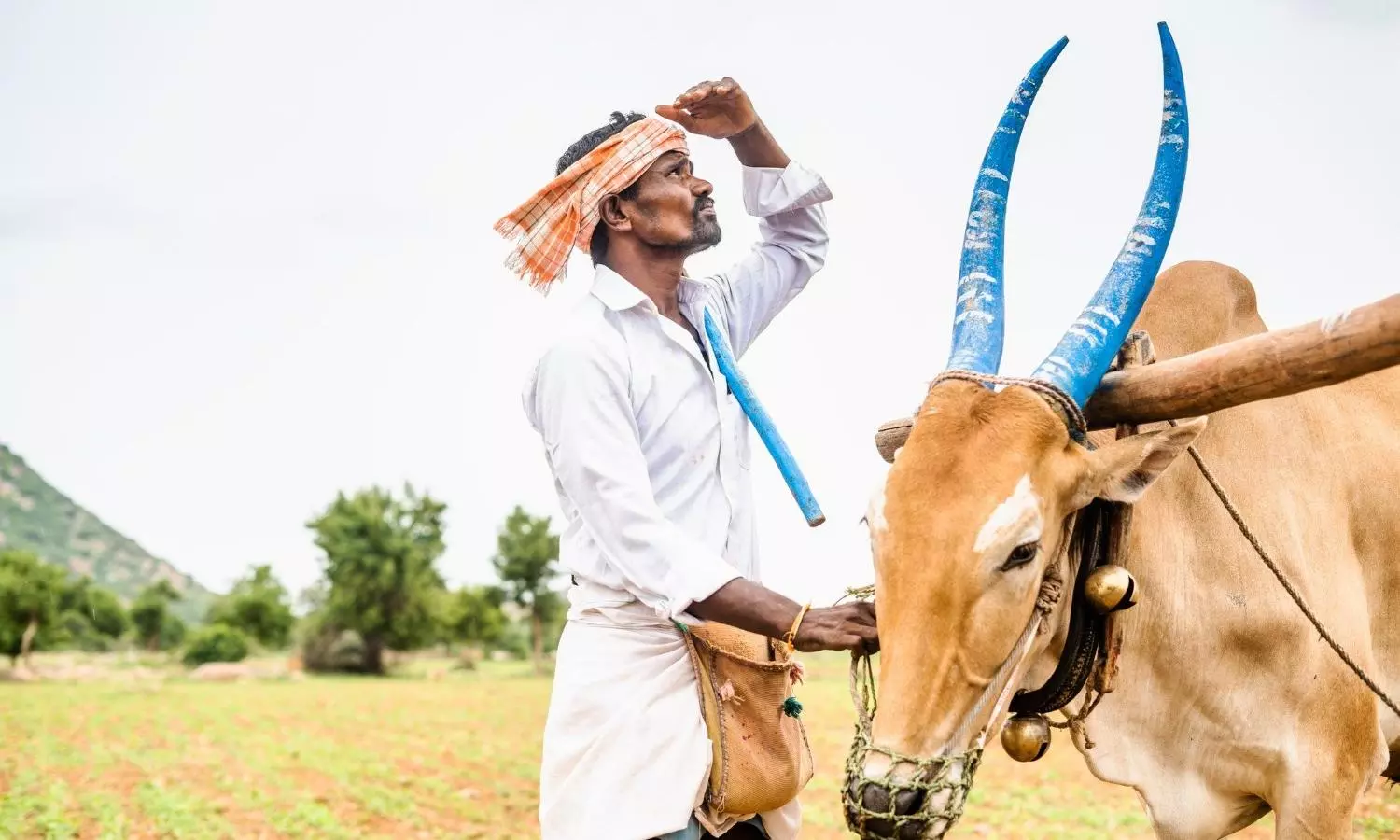
But this hyper-marketing of Hyderabad has not been able to hide a looming crisis in rural Telangana. More than half of the state has received below-normal rainfall during the Kharif season. Experts fear that the agricultural crisis could become more severe and extend into 2027. If that happens, the farm crisis could become an important issue in the 2028 Assembly elections.
Telangana’s politics has historically been sensitive to distress in the farm sector. This has been particularly evident when the development narrative of Hyderabad has appeared to move ahead while rural Telangana has struggled.
Also Read: How one move by Telangana govt has left state's rich textile belt sinking
According to the Telangana Irrigation Decision Support System, rainfall deviation was minus 26 per cent as of September 22. Against a normal rainfall of 731.5 mm for the season, the state received only 540.54 mm. According to the India Meteorological Department’s weekly report, 20 of Telangana’s 33 districts had recorded deficient rainfall by September 22.
The expected rains last week also failed to make up for the deficit accumulated during the previous months. The seriousness of the situation can be gauged from discussions about a possible crop holiday for paddy during the Rabi season.
Anxious farmers
Madanu Ravi and Sunanda, software engineers who turned to farming, are worried about their cotton crop in Koutala mandal of Kumuram Bheem Asifabad district. The crop germinated after early showers in August, but its future depends on September rains.
“We expected rains this week according to the forecast. If we don’t receive rains by the end of September, the crop will wither,” they told The Federal.
Also Read: Telangana’s 'Future City': New economic growth engine or real-estate dream?
Similar anxiety is being reported from other parts of the state. Katakam Bucchanna of Bhainsa mandal in Nirmal district has planted cotton on 12 acres. He is hoping for at least one more rain in the first week of October.
“The plants have grown with the earlier scattered rains. We need one more rain for flowering. A delayed rain will affect the yield,” he said.
Priority for drinking water
The situation is no better in areas dependent on irrigation projects. Irrigation Minister N Uttam Kumar Reddy has said that water cannot be released for agriculture as conserving it for drinking water is the priority. Combined storage in Telangana’s Krishna and Godavari basins had fallen to 241 TMCFT by mid-September, compared with 497 TMCFT during the same period last year.
The shortage has already created tension in villages under the Jurala project in Jogulamba Gadwal district. The BRS organised an agitation demanding water for standing crops. State Excise Minister Jupalli Krishna Rao, who represents the district, ruled out releasing water for crops, saying the available water had to be preserved for drinking needs.
El Nino's impact on rural families
Weather scientist Dr Abhilash Sukumar Pillai, Director of the Advanced Center for Atmospheric Radar Research (ACARR), CUSAT, also paints a worrying picture. A combination of high temperatures and deficient rainfall is particularly harmful to agriculture, he says. The impact of El Niño could become more severe in October and November, he warns, adding that Telangana needs to conserve every drop of water from the coming North-East Monsoon to prepare for the summer of 2027.
Farm scientist Dr Repalle Naganna sees the signs of a wider rural crisis: falling reservoir and tank levels, shrinking crop area, and uncertainty over standing crops.
Also Read: How Ganesh idols on a dry Andhra riverbed reflect southern India’s water crisis
“Failure of one crop will affect the next season as well. Farmers will have no money to invest in the next crop. Agricultural labourers may lose employment for two or three seasons. With a large majority of farmers being small and marginal, the impact could financially devastate rural families,” he said.
Puli Raju, an independent researcher who studies farmer suicides, fears that crop losses could increase the debt burden on farming families. Many farmers planted paddy expecting the monsoon to revive, encouraged by MSP and bonus payments. With standing crops now facing water shortages, farmers cannot suddenly shift to alternative crops, he said.
Less priority for agri sector
Dr Ramanjaneyulu of the Hyderabad-based Centre for Sustainable Agriculture sees a clear Hyderabad-versus-rest-of-Telangana divide, which he believes could have political consequences.
Hyderabad and Rangareddy districts, where much of the state’s rapid industrialisation is concentrated, account for a substantial share of Telangana’s economy, while agriculture contributes a much smaller share to GSDP. This, he argues, reflects the priorities of successive governments.
“Crop diversification was not seriously encouraged despite the rice glut. Telangana has no systematic policy to promote water conservation. There is no effective crop insurance system. A rainfall deficit therefore quickly turns into a crisis,” Ramanjaneyulu said.
Rural distress and elections
Telugu-state politics has been sensitive to agrarian distress, particularly since the late 1990s, when Hyderabad became the centrepiece of the development narrative.
The contrast was particularly visible in the 2004 elections. Congress leader YS Rajasekhar Reddy made agriculture and farmers central to his campaign against TDP Chief Minister Chandrababu Naidu, whose government was identified strongly with Hyderabad’s software and urban development. YSR presented himself as the champion of farmers and attacked the government for neglecting agriculture. Congress returned to power.
Also Read: Telangana panchayat polls: Is BRS staging a quiet comeback?
The pattern was visible again in Telangana in 2023. The BRS government faced rural discontent over several issues, including the exclusion of tenant farmers from Rythu Bandhu, delays in farm-loan waivers, land acquisition and displacement, and grievances surrounding the Dharani land-records system. The Congress successfully turned several of these issues into a broader pro-farmer campaign.
The pattern of electoral outcome of the 2023 result was also revealing. Of the 39 seats won by the BRS, a substantial number came from the Hyderabad urban region, while the Congress swept much of the rural state followed by the BJP. The contrast strengthened the impression of a political divide between Hyderabad and the rest of Telangana.
Hyderabad’s development story vs rural crisis
The question now is whether the same divide could emerge again.
The rural economy is already under pressure from rising cultivation costs and uncertainty over water. Rural households also face the growing burden of expensive healthcare and education. A prolonged agricultural crisis could therefore affect not only farmers but agricultural labourers and rural households more broadly.
At the same time, the Revanth Reddy government is aggressively promoting Hyderabad as a global city through Future City, the Musi project, Metro expansion, industrial investment, and global university tie-ups.
If the rural crisis extends into 2027, will these two narratives collide in the 2028 Assembly election? Could Telangana once again see an election fought between Hyderabad’s development story and the distress of the rest of the state?