



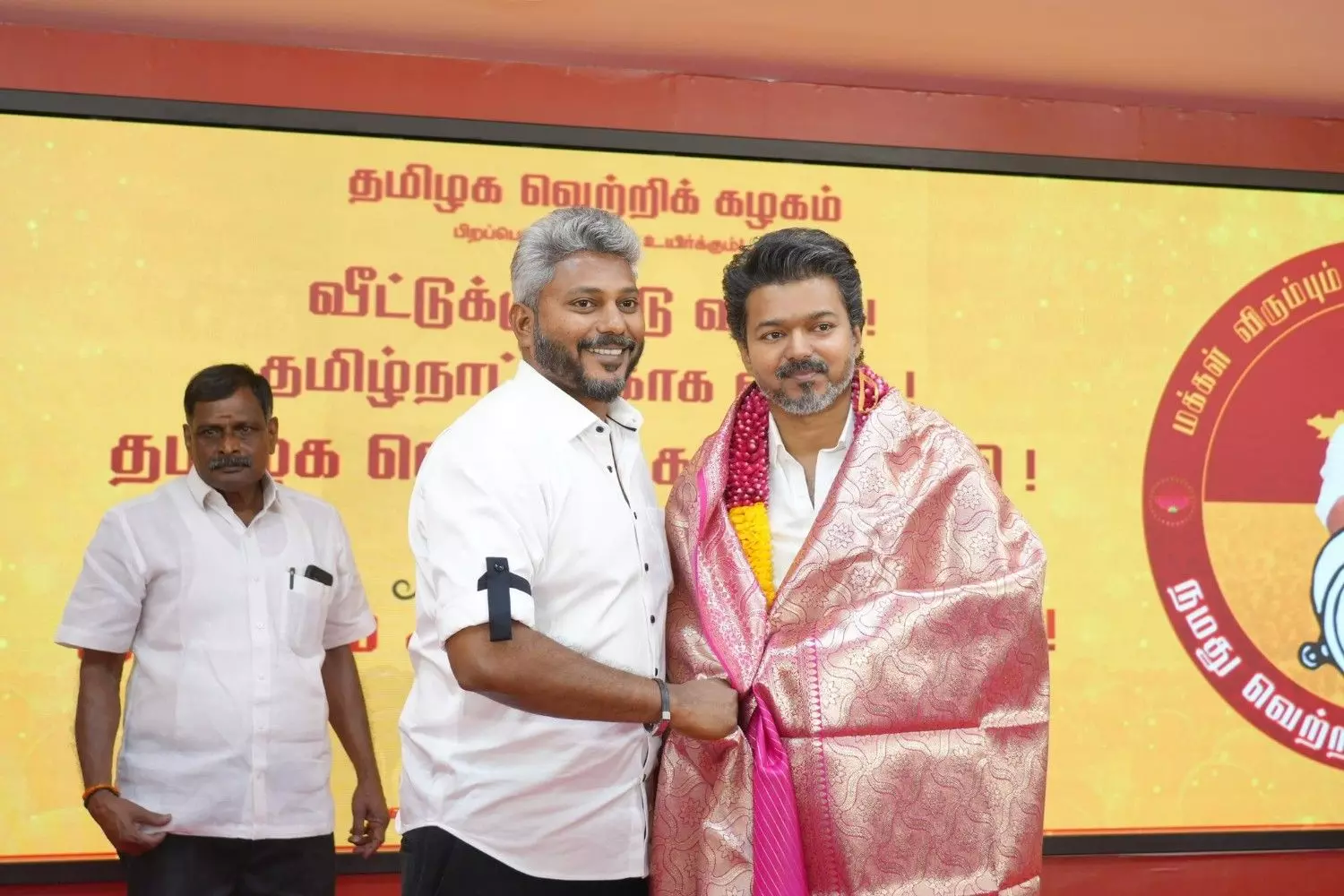
TN Budget 2026-27: Vijay govt likely to bet big on women's welfare and youth
Vijay-led TVK govt's first Budget will show how far welfare ambition can stretch against mounting debt

Tamil Nadu’s newly formed Tamilaga Vettri Kazhagam (TVK) government will present its first full Budget for the 2026-27 financial year in the State Legislative Assembly on Wednesday (August 5).
Finance Minister N Marie Wilson is expected to table the document at 10 am, marking a significant milestone for the administration led by Chief Minister C Joseph Vijay.
Historic Budget
This Budget carries historic weight: It is the first comprehensive fiscal statement of a neo-Dravidian party government in Tamil Nadu in nearly six decades. The Budget, it is learnt, will feature new schemes aligned with TVK's election manifesto and its five-year vision plan, Vetri Thamizhagam. A major focus is expected on women and their welfare.
Also read: Udhayanidhi’s alleged Trisha jibe: When does a double entendre become crime?
The previous DMK government, under then Chief Minister MK Stalin, had presented an interim Budget for 2026-27 in February. That exercise, handled by then Finance Minister Thangam Thennarasu, projected revenue receipts of approximately Rs 3.44 lakh crore and a fiscal deficit of around Rs 1.22 lakh crore.
After assuming office, the TVK administration released a White Paper on the state’s finances, painting a more strained picture. It highlighted an outstanding debt of Rs 13.18 lakh crore and warned of significant fiscal pressures inherited from the previous regime.
CM Vijay’s review meetings
Over the past month, Chief Minister Vijay personally chaired extensive department-wise review meetings. The Finance Department prepared the Budget after consulting industrialists, traders, and a panel of economic experts. Officials indicate the document will prioritise women, youth, students, the elderly, and infrastructure development in backward districts, while addressing the state’s fiscal challenges.
Also read: Cauvery row: TN moves SC to secure due share of water
Focus on women
A major focus is expected on women. The manifesto promised free travel for women on all government buses.
Currently, the scheme operates only on city buses, with the transport corporations receiving about Rs 16 crore monthly as reimbursement. Women constitute 62-64 per cent of passengers.
Transport officials have submitted a detailed report on the additional financial requirements and revenue augmentation measures if the scheme is extended statewide. Chief Minister Vijay held discussions with officials on July 16. An announcement expanding the scheme is widely anticipated.
Other women-centric measures may include enhancements to the Magalir Urimai Thogai (women’s rights assistance), increased milk procurement prices benefiting women dairy farmers, and significant support for self-help groups. Under the “Vetri Thamizhagam” plan, interest-free loans totalling Rs 7,000 crore for women’s self-help groups are expected. Sources also point to loans of up to Rs 5 lakh per group.
Also read: Udhayanidhi arrested: AIADMK, Left slam speech; DMK, allies cry vendetta
In the school and higher education sectors, several incentives are on the cards. An annual incentive of Rs 8,000 for students from government schools who pursue higher education and raising the internal reservation for government school students in medical and engineering courses from 7.5 per cent to 10 per cent. Also, collateral-free education loans of up to Rs 20 lakh for students entering higher education. Also, there is a possibility of establishment of a new technology university.
New industrial parks
The government is also expected to push for bringing education onto the State List and continue advocacy in Parliament against the National Eligibility cum Entrance Test (NEET).
Backward districts are likely to see new industrial parks and industrial estates to boost economic growth. Self-employment schemes for youth and women are expected. Infrastructure focus will centre on drinking water, roads, and basic amenities. E-governance improvements may enable citizens to obtain essential documents such as ration cards and caste certificates within 15 days.
The Budget assumes special significance as the TVK government seeks to generate additional revenue to fulfil key electoral promises while reducing expenditure across departments. The previous DMK government’s interim Budget for 2026-27 had projected revenue receipts of Rs 3.44 lakh crore and expenditure of Rs 3.93 lakh crore, resulting in a revenue deficit of Rs 48,686 crore; however, the White Paper released in June revised this deficit upward to Rs 90,500 crore, underscoring the fiscal challenges.
The government has already rolled out several welfare measures, including 200 units of free electricity for consumers using up to 500 units, waiver of crop loans up to Rs 75,000 irrespective of landholding size, and a one-gram gold ring for every child born in government hospitals from September 15 under the ‘Thaai Maaman Thanga Mothiram Thittam’ has already received a Rs 700 crore allocation, with tenders invited.
Agriculture Budget on August 6
As the first Budget of the TVK government, observers expect a strong emphasis on transparency. There is speculation that the Budget speech or accompanying documents may address alleged irregularities under the previous regime, including the so-called “party fund” collections across departments. Sources suggest the administration may explain how it has curtailed such practices and the positive impact on state treasury revenues.
The Budget is also likely to outline measures for fiscal consolidation while fulfilling welfare commitments. Recent data from the first quarter of FY 2026-27 showed robust tax collections, though capital expenditure had declined and debt levels remained elevated.
Wednesday’s presentation will be followed by the Agriculture Budget on August 6.
