



Rs 8,000 for TN women in 3 months: Is Stalin copying the Bihar model?
Opposition parties slam the 'summer special allowance' and promised hike of monthly payout to Rs 2,000 as a desperate, populist election stunt to secure women's votes

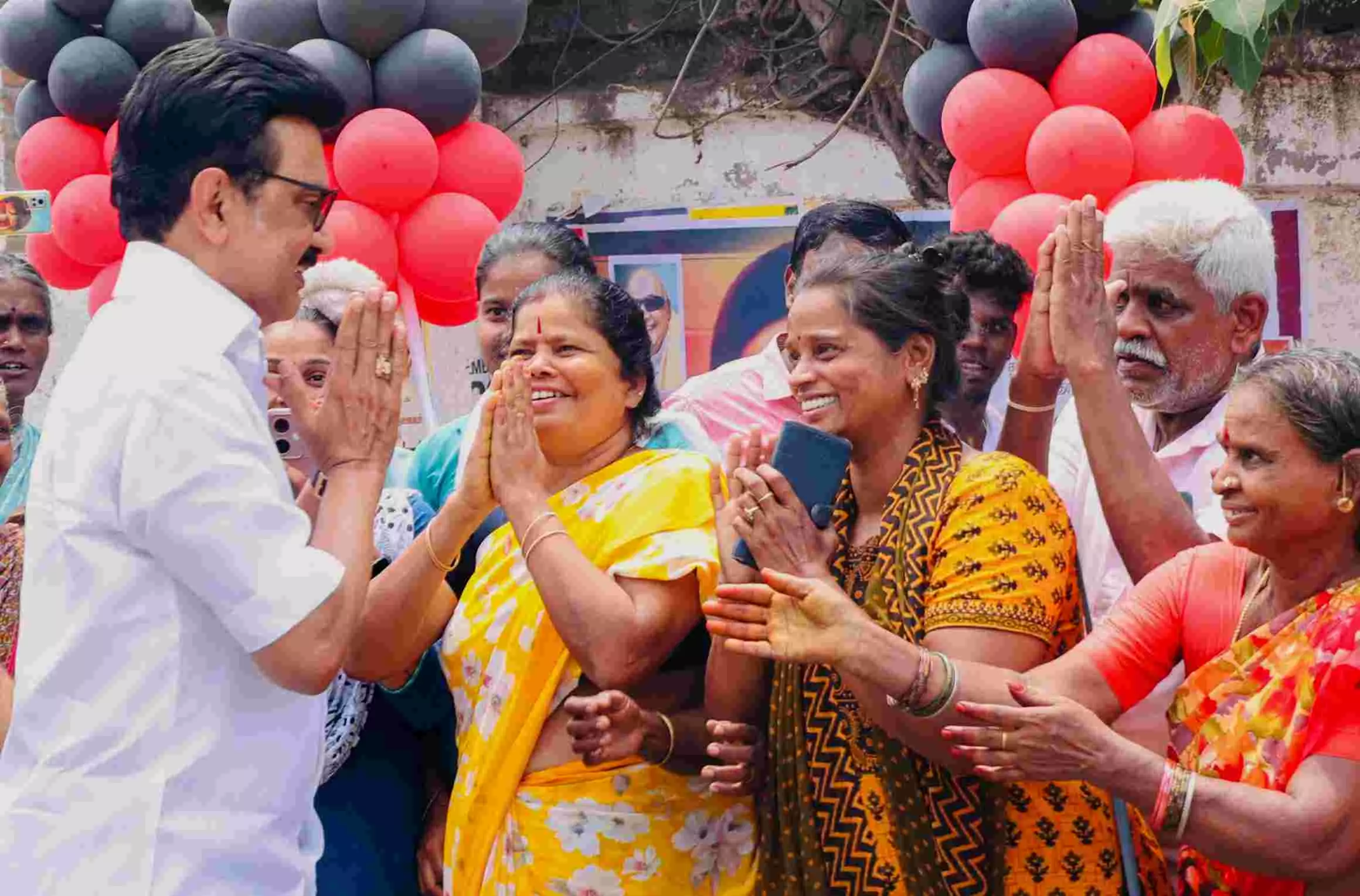
Tamil Nadu Chief Minister MK Stalin on Friday (February 13) announced a surprise credit of Rs 5,000 to 1.31 crore women beneficiaries under the Kalaignar Magalir Urimai Thittam, merging three months’ regular Rs 1,000 entitlement with a Rs 2,000 “summer special allowance”. This, plus his promise to raise the monthly payout to Rs 2,000 if re-elected, have intensified accusations of populist imitation from opposition ranks.
While the DMK portrays the move as a shield against alleged Central interference, critics across parties and analysts are calling it a desperate election tactic that borrows heavily from cash-transfer models successfully deployed by BJP-led governments, notably in Bihar.
Also Read: PM Modi to credit Rs 10,000 each to 75 lakh women in Bihar ahead of polls
Reacting to Stalin's announcement, senior journalist TK Arun said it's "an unfortunate turn inaugurated in the rest of the country by the BJP in Maharashtra, in Chhattisgarh, and most visibly in Bihar recently by the Prime Minister himself”.
"This is not a trend that should be encouraged," Arun told The Federal.
Panic-driven vote-buying, says Oppn
In his video message, Stalin alleged that forces in Delhi and their local allies were plotting to stall the scheme for three months ahead of the Assembly polls, prompting the bulk payment to ensure that women face no hardship during the summer. Opposition leaders, however, were united in dismissing the announcement as panic-driven vote-buying.
Senior AIADMK leader Vaigai Selvan accused the DMK of directly plagiarising his party’s manifesto.
“In our election manifesto, we clearly stated that we would raise the existing Rs 1,000 women’s entitlement to Rs 2,000 if AIADMK returns to power. The DMK has simply copied it verbatim and announced the same Rs 2,000. This is nothing but empty vote-bank politics, and the people will reject the DMK outright,” he said.
Also Read: Freebies and fiscal discipline: Can Bihar afford a revdi culture? | Capital Beat
The charge adds to earlier criticism from AIADMK general secretary Edappadi K Palaniswami, who had promised Rs 2,000 monthly assistance for women if his party wins. A pledge Stalin has now topped by the same announcement.
Senior journalist Tharasu Shyam noted that combining regular payments, the summer allowance, Pongal bonus, and other benefits effectively amounts to Rs 8,000 for women this year, still Rs 2,000 less than the one-time Rs 10,000 payout under a similar scheme in Bihar. He questioned the credibility of the Rs 2,000 monthly promise, and described Stalin’s attack on the Centre as “pure anti-BJP political manoeuvring” to rally the DMK base.
BJP state leader Karu Nagarajan called the Rs 5,000 credit “a blatant election stunt”. “The same Chief Minister has been in power for over four years. Why no summer special allowance in previous years?” he asked.
‘Fear of women’s support for whistle symbol’: Vijay
Actor and TVK chief Vijay mocked the sudden invention of a “summer special” and the advancement of the credit date from the usual 15th to the 13th, attributing it to “fear of the massive women’s support for the whistle symbol”.
PMK president Anbumani Ramadoss contrasted the lavish cash transfer with unpaid pension arrears for thousands of retired government employees. AMMK leader TTV Dhinakaran asserted that “even Rs 50,000 won’t prevent DMK’s defeat”.
The Communist Party of India welcomed the Rs 5,000 disbursement.
‘Unhealthy trend’
C Lakshmanan, national convenor of the Dalit Intellectual Collective, sharply criticised the scheme. He told The Federal that it is unclear whether the money reaches everyone equally, and that the government has reached a stage of openly giving cash for votes, adding that the trend is deeply unhealthy. He highlighted the state’s failure to pay adequate salaries to sanitation workers, nurses, school staff on equal work-equal pay principles, and university employees as per Supreme Court orders.
Also Read: Stalin takes jibe at Modi, says 'double engine' will not run in TN
“This is a de-politicisation of politics with no dignity for labour,” said Lakshmanan, describing cash handouts of Rs 1,000 or Rs 2,000 as “open corruption”. With Assembly elections just three months away, he argued that unrestricted freebies are unnecessary, and unsolicited freebies constitute a “political crime”. He stressed the vital distinction between genuine welfare schemes and mere giveaways.
‘Finance Commission strongly criticised cash transfers’
TK Arun echoed the concern.
"You may recall that the 16th Finance Commission had strongly and roundly criticised this trend, and said that such cash transfers have risen from 3 per cent of state subsidy to as much as one-fifth of the total state subsidy over the last 7-8 years," he told The Federal. "This will undermine their attempts to improve governance."
Also Read: Jan Suraaj alleges ₹14,000-crore World Bank funds diverted for Bihar elections
"This just shows that even a strong leader like Stalin cannot resist the new national trend of politicians buying votes in state elections by transferring cash to their voters preemptively ahead of elections, and promising to send even more money after the elections. This is a kind of fiscal expenditure that will undermine the state's ability to do meaningful expenditure that will enhance the productive potential of people as individuals and the attractiveness of the states as investment destinations," added Arun.
With direct cash-transfer schemes for women now a proven electoral strategy across BJP-ruled states, Bihar frequently cited as a benchmark, critics argue that Stalin’s timing, bulk payment structure and escalated monthly promise closely mirror tactics used elsewhere to consolidate women voters.
