Tamil Nadu's flagship Makkalai Thedi Maruthuvam scheme has come under scrutiny owing to diverse challenges.
TN claims 2.5 crore beneficiaries under MTM but reality check reveals inflated numbers
The issues of staff shortages at the PHC to cater to the needs of patients under the Makkalai Thedi Maruthuvam scheme have already been raised by several councillors at the Greater Chennai Corporation council meet as well, pointing to a lack of staff and inadequate visits

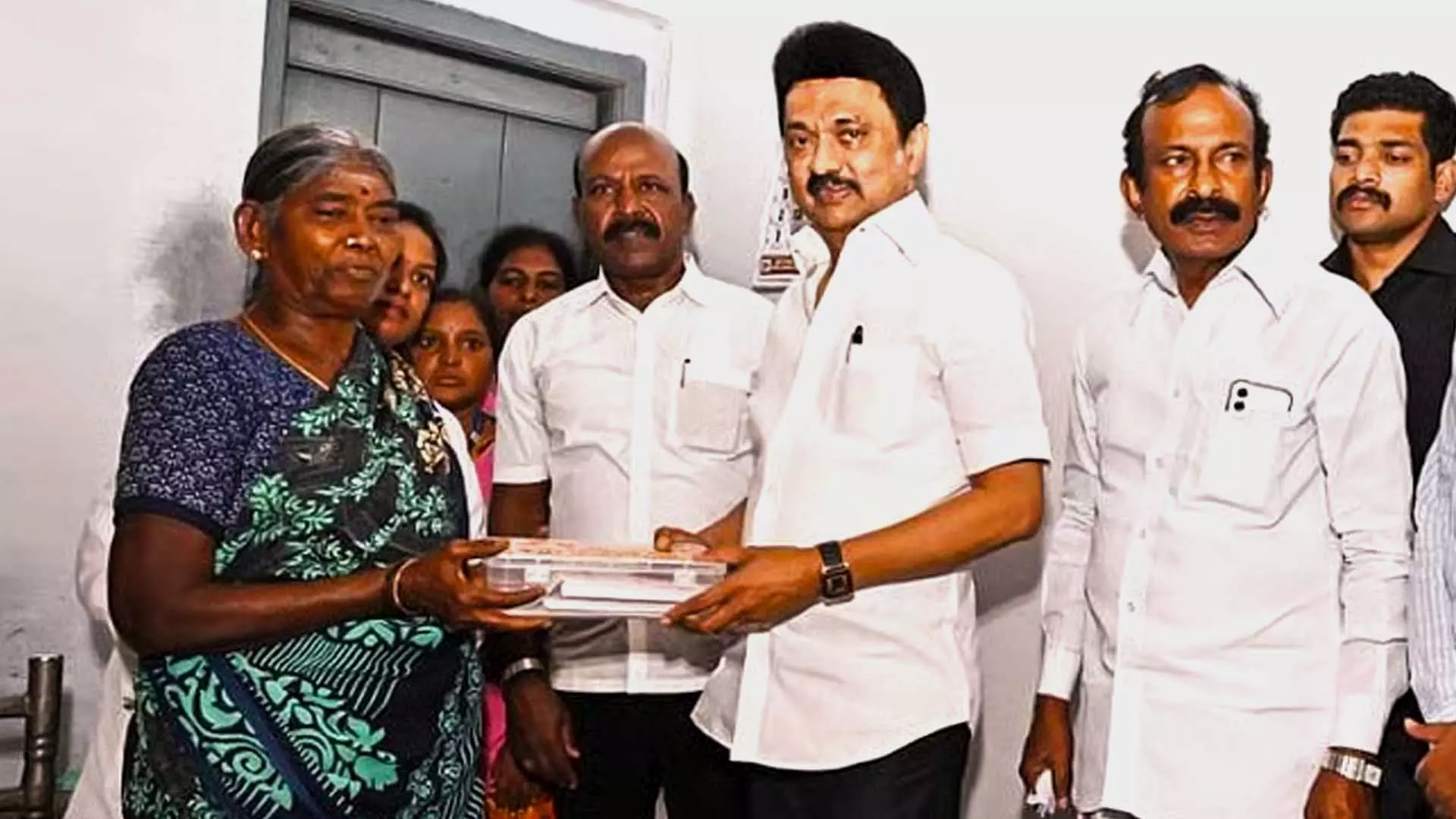
Tamil Nadu's flagship Makkalai Thedi Maruthuvam – or MTM – scheme promises healthcare at the doorstep, screening thousands of people for diabetes, hypertension and other healthcare support while delivering free medicines right to homes.
Scheme on paper
Launched in 2021, the state health department claims that the scheme has reached over 2.5 crore people in four years, as of now. However, many people, not just in the urban settings of Chennai, but upon visited even the rural parts of Thanjavur, Trichy, Madurai and other neighbouring districts, the residents told The Federal that the healthcare workers didn't reach them, but instead they had to visit the hospitals. The contrary of ground reality questions the scheme's efficacy.
Patients say the "door-to-door" promise is a door left ajar, as the number of beneficiaries listed only seems to be inflated numbers, as the names are being added to the beneficiary list even for patients visiting Primary Health Care (PHC) on their own. The issues of staff shortages at the PHC to cater to the needs of patients under the Makkalai Thedi Maruthuvam scheme have already been raised by several councillors at the Greater Chennai Corporation council meet as well, pointing to lack of staff and inadequate visits.
Also read: When antibiotics fail: Why common infections are turning fatal | Second Opinion
"The UPHCs (Urban Primary Health Centres) and Health and Wellness Centres in the area do not have an adequate number of volunteers to do the door-to-door screening and follow up with them for treatment of the patients. The visits are limited to a few households wherever it is being done and residents, including senior citizens, are asked to visit the nearby UPHCs to get their medicines. Initially a few medical camp vehicles came to visit the residents but after initial promotions, the practice stopped. Now elderly persons have to go to PHCs on their own because there is no follow up. What is the purpose of the Makkalai Thedi Maruthuvam scheme in that case?" said John James, AIADMK Councillor, Ward 84, Chennai.
Even a 2024 study by the Directorate of Public Health (DPH) titled 'Challenges in implementing community-based interventions for non-communicable diseases: experiences from Tamil Nadu Makkalai Thedi Maruthuvam (MTM) programme, 2021-22’ said multiple data entries in the MTM portal, population health registry and national portal made by women's health volunteers using multiple sources such as excel sheets, spreadsheets and were “ending up in duplication of entries and (were) not helpful for appropriate follow-up.”
Voices of resdients
While the scheme is expected to alleviate the burden on tertiary care hospitals by ensuring door-to-door screening and provision of medicines, even the elderly, listed as beneficiaries, wait in vain for home visits. The people are forced to visit the tertiary care government hospitals due to staff shortage.
"They marked me as covered after one visit to the PHC but no volunteer comes home. My legs swell from hypertension; how can I keep going like this. I am 65 years old, they told me that they cannot visit me because they don't have adequate staff to go around doing door-to-door screening. It would be good if they can visit me,” said Vimla, a resident of Chennai.
Her story is not the only one but many others patients do not see visits by health workers despite requests. "I have diabetes and hypertension both. Some volunteers visited me about two years ago, and they used to ask me to visit the hospital after 2-3 months. I complied with that for over 7-8 months but then they stopped visiting me. Now I go to the hospital but I miss my medicines also sometimes," said Madurai’s Chithra.
The residents say that such huge numbers of beneficiaries remain different in reality because many of them are told they will be given free medicines at PHCs and government hospitals near them but no one visited them in their home. The hospital visitors padded into stats during facility check-ups are flouting the scheme's core vow of proactive outreach.
"I am not able to go on my own and they ask me to call them if I need the medicines instead of visiting home. I cannot visit hospitals on my own because my legs have a lot of pain. They say I am a beneficiary, but I have to go by myself for regular checkups," said another resident in Chennai.
Residents also say that despite their requests, they are asked to visit the healthcare facility and it is not an initiative from the health workers.
Shortage of workers
The state health department also has health workers and volunteer shortages and they are overburdened with unachievable targets, while patients are forced to travel despite disabilities. However, Women Health Volunteers, earning a meagre Rs 5,000 monthly, were told that they will have work only for 2-3 hours but they are now asked to screen 25-30 homes daily.
Also read: Silent crisis of men’s mental health and the need to break stigma | Second Opinion
"We coordinate with the patients on a regular basis and screen them. We were hired for only two hours of daily work but are expected to screen 25 houses. The testing and medicine kits are not of standard quality and even show wrong health parameters, making our work even more difficult and sometimes we get worried if the patient is not well or if the machines are not showing correct parameters," a health worker said, on condition of anonymity.
Officials from the DPH say that the data entry work, which was hindering the regular work of health workers, was later regularised by launching a dedicated portal to prevent duplication. However, workers told The Federal that the data entry work consumes most of their time and they cannot screen 25-30 houses in a day.
The nurses are also burdened with documentation work on the MTM portal.
"We have to make 100 entries every day. Besides screening of at least 15 houses, we have to make these entries and our work gets very hectic. Sometimes these kits show wrong glucose levels or blood oxygen levels, it worries us. We request that we should be given a proper salary for full day's work and should also be granted leave, at least for emergency," said nurses.
The issue of such discrepancies have been pointed out by doctor's associations and even ward councillors but there has been no solution to it.
"We have seen that only about 60-70 per cent population in my ward must have been covered under MTM. It is a good scheme, but everyone needs to benefit from it. The duplication and exaggeration of numbers will not help the people. We have raised the issue of patients not being attended by workers and also talked about the concerns of workers of being burdened with work, and we hope these are addressed," said ward councillor Jeevan.
Data duplication
With only a limited number of about 11,000 health workers engaged in screening, they say it is not possible for them to cover the population of the entire state. Dr. Shanthi from Doctors' Association for Social Equality states that there is data duplication and number of beneficiaries listed are not the actual number of people benefitted.
"The volunteers were told it's just two hours of work but they are expected to cover a huge population. There is data duplication and the number of beneficiaries are not covered properly. What is the impact of the scheme on how numbers should be calculated, like if there is a drop in incidence and if a larger number of new cases have been identified? The numbers are exaggerated and there are many flaws in its implementation that need to be corrected if the scheme aims to provide medical services to people with NCDs," said Dr. Shanthi.
Former Director of Public Health Dr. K Kolandaisamy hails the attempt of MTM's outreach, with screening for NCDs, home drug kits and palliative care, but he flags the gaps: Too few hands for eight crore people.
"Despite all efforts for maximum reach, house-to-house visits by the health workers and volunteers seem difficult. The numbers also include the ones added to the list as a beneficiary. People should also come forward for screening. We can see that awareness and willingness to come forward for screening is low and the coverage remains patchy. With 11,000 volunteers for eight crore population, it's difficult," said Dr. Kolandaisamy.
Meanwhile, the state health department officials say they are working to address the gaps by ensuring that data is collected on a single portal and outreach is being improved gradually. MTM is a hopeful scheme for the people and efforts should be made to reach more people, more doors. The state health department officials say that the scheme has limitations, and they are making attempts to further strengthen the scheme.
Agreeing to the concerns of publication, a senior official from the Directorate of Public Health and Preventive Medicine told The Federal that the new portal is aimed at preventing any duplication issues so that the actual figures can be registered.