



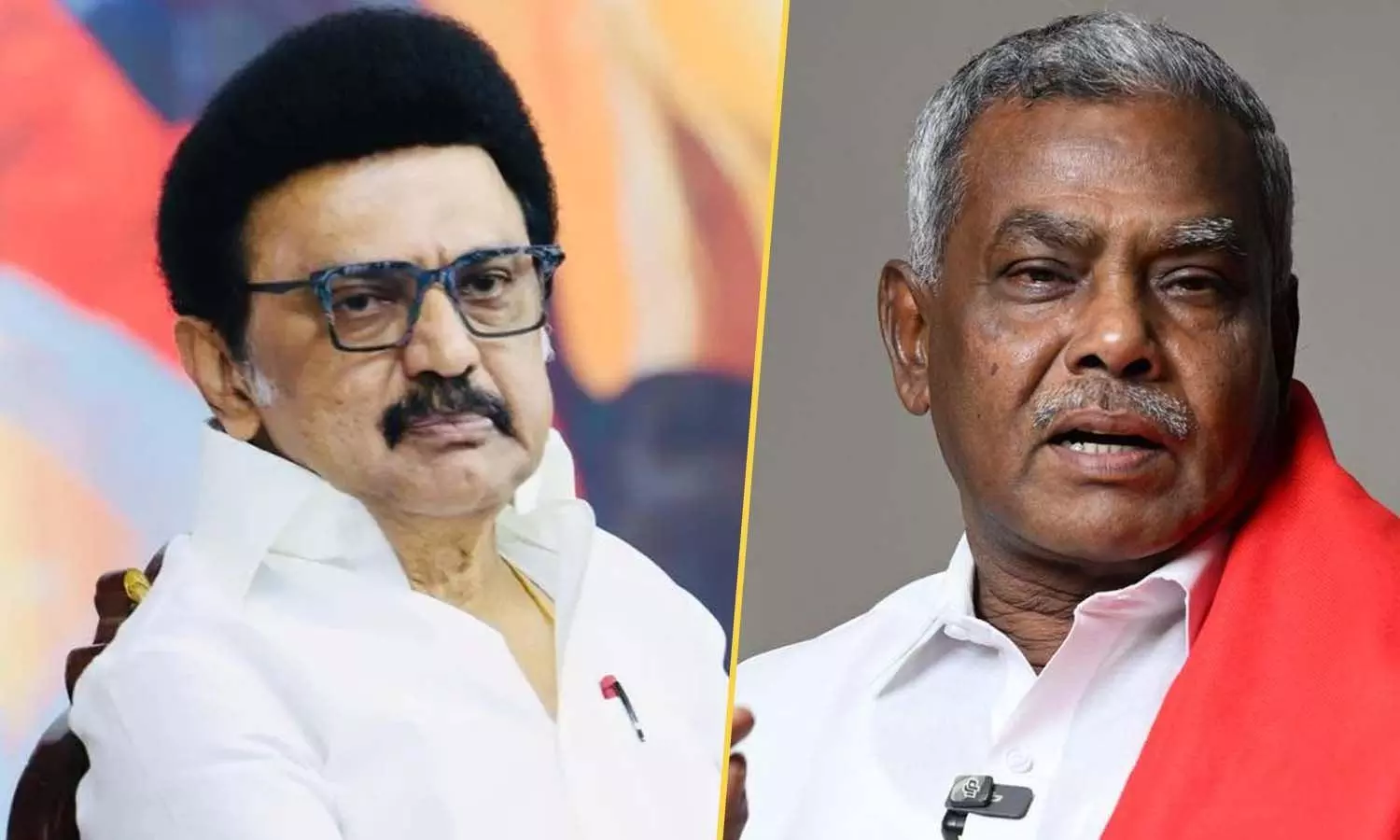
DMK-CPI(M) feud escalates; A Raja urges Stalin to contest alone
The collapse of the party's coalition has sparked a debate over whether the DMK should rebuild through alliances or return to a go-it-alone strategy.

Once a party that projected itself as a committed Left-leaning force under M Karunanidhi, the DMK, led by his son MK Stalin, is now sharply turning its guns on Left parties.
In the aftermath of the 2026 Assembly election results, which left the DMK isolated after several key allies walked away, a bitter and escalating war of words has broken out between the DMK and Left parties, particularly the CPI(M).
Alliance fallout gathers pace
Senior DMK leader and MP A Raja has publicly urged party president MK Stalin to announce that the DMK will contest all future elections independently, without any alliances. His call comes amid the exit of several former coalition partners and a sharp escalation in the exchange of accusations between the DMK and the CPI(M).
Also read | Stalin eyes solo revival of DMK after crushing defeat; will it help?
This political churn within the main Opposition is unfolding against the backdrop of the TVK government under Chief Minister Vijay stepping up its anti-corruption campaign, including a major FIR and raids against former DMK Highways Minister EV Velu in the Karur road projects case.
The 2026 Tamil Nadu Assembly elections delivered a fragmented verdict. The TVK won 108 seats but fell short of a majority. DMK’s earlier coalition partners, including the VCK, IUML, CPI and CPM, have since distanced themselves or formally exited the alliance, and extended support to the TVK government. The MDMK has also shown signs of moving away. The TVK, led by actor-turned-politician Vijay, formed the government and has made fighting corruption its flagship agenda.
DMK-CPI(M) tensions escalate
Speaking amid reports of unrest among DMK cadres over the departure of allies, A Raja appealed to Stalin to make a clear public declaration: “DMK has no alliance with anyone… DMK will contest alone… We will stand in all 234 constituencies. DMK doesn’t rely on anyone.” He highlighted Stalin’s continued popularity, noting the large number of people who meet him daily, and invoked historical figures such as CN Annadurai and C Rajagopalachari to argue against judging a leader solely by one election result.
Raja also questioned those claiming there is “no DMK alliance”, asserting that DMK workers have the right to seek clarity. His statement reflects frustration over the collapse of the previous broad anti-BJP or secular front and points to a possible strategic shift towards projecting self-reliance.
At the same time, a bitter exchange is playing out through party publications and social media.
Murasoli, the DMK mouthpiece, has published sharp critiques of CPI(M) Tamil Nadu state secretary P Shanmugam. An article by Dravidian scholar P Thirumavalavan accuses him of hypocrisy, pointing out that he had previously praised Stalin’s governance record, including welfare schemes such as Magalir Urimai Thogai, the breakfast scheme, social justice measures, opposition to NEET and infrastructure initiatives, but now attacks the DMK for “neo-liberal policies”.
Feud exposes ideological divide
The CPI(M) has responded strongly. Through its mouthpiece Theekkathir and public posters, the party has accused the DMK of being “different outside, different inside”. It slammed DMK for taking contradictory positions and rejected the DMK’s narrative on alliances. CPI(M) leaders maintain that their past support in certain situations was intended to prevent instability or President’s Rule, not to support anti-Dravidian forces. They accuse the DMK of short-term politics and abandoning ideological consistency after electoral setbacks.
Also read | DMK announces exit from INDIA bloc, hints at new anti-BJP alliance
The CPI(M) has also faced counter-accusations from the DMK over its own political compromises. The feud has spilled onto social media, with the CPI(M) condemning personal attacks on its leaders. Meanwhile, DMK chief Stalin faces calls from within his party to contest elections without allies.
Risks of going solo in elections
A Raja’s intervention appears aimed at consolidating the party’s core Dravidian base and reducing dependence on allies that have since exited. By emphasising Stalin’s personal appeal and the idea of political independence, the DMK hopes to rally cadres demoralised by the collapse of its alliances. However, contesting alone carries risks, including potential vote-splitting in a multi-cornered contest and reduced bargaining power in any future realignments.
The DMK-CPI(M) dispute highlights fundamental differences between the two parties: the DMK’s pragmatic, power-oriented Dravidian politics and the CPI(M)’s emphasis on ideological consistency. While the CPI(M) presents itself as exposing contradictions within the DMK, its own past tactical support to non-DMK forces has invited accusations of opportunism. In Tamil Nadu’s Dravidian-dominated political landscape, such public feuds could further reduce the Left’s influence.
