How a Puducherry Muslim’s Murugan temple became a symbol of religious harmony
A Muslim devotee’s unwavering faith in Lord Murugan helped build a unique Puducherry temple that continues to unite people across religions

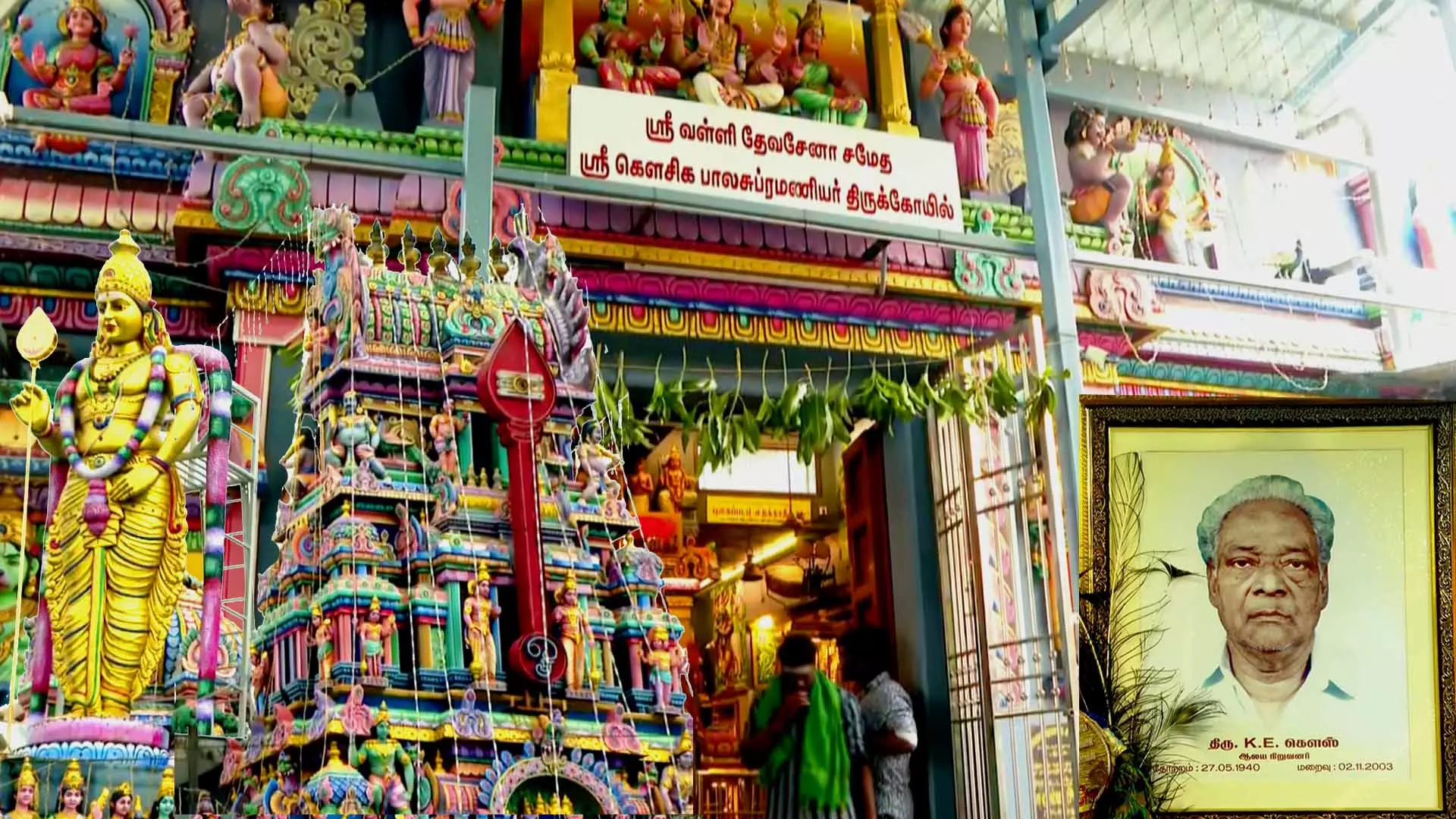
In Puducherry, the Kausika Balasubramanian Temple stands as a striking symbol of communal harmony — built by a Muslim devotee, supported by a Christian mayor, and worshipped daily by people of all faiths. Located opposite the Puducherry railway station, the temple appears like any other Murugan shrine, yet its origin story sets it apart.
Mohammed Ghouse Bhai, born in 1940, was a Muslim by birth but a devoted follower of Lord Murugan. He frequently travelled to Tiruchendur and Palani, believing that Murugan guided him throughout his life. According to his family, the turning point came when Murugan appeared in his dream, instructing him to build a temple.
Acting on that vision, he placed an image of Lord Murugan on a vacant municipal plot opposite the railway station and began worshipping there daily.
Building the temple
Ghouse’s unwavering devotion caught the attention of Puducherry’s then Chief Minister Edouard Goubert who was a Christian. Moved by his faith, Goubert officially allotted the municipal land for the construction of a Murugan temple.
To raise funds, Ghouse Bhai sold his property and even pledged his wife’s jewellery. Local residents also contributed generously. Once the temple structure was completed, the head of Mailam Adheenam named the deity “Kausika Balasubramanian” in honour of Ghouse’s devotion.
Over the years, the temple grew into a spiritual hub for people across religions — Hindus, Muslims, and Christians. A devotee, Kasthuri, says, “People come here because the temple represents devotion that transcends religion.”
Carrying the legacy forward
After Ghouse passed away in 2003, his brother Ali took over the temple’s management. In 2016, the responsibility shifted to Ghouse’s son, Mohammed Kader, who organised a major Kumbhabhishekam in 2018.
Among the temple’s regular visitors is Apsara, originally from Nepal and now settled in Puducherry. She says she visits the temple daily and feels a deep personal connection to Balasubramanian.
For 37 years, the temple has attracted thousands of devotees, especially during the Kanda Sashti festival. Every Tuesday, annadhanam, a free meal shared by people of all religions, is offered.
Tradition beyond identity
Temple priest Jnanasekaran Gurukkal says the temple’s growth is rooted in collective faith rather than identity. During Kanda Sashti, the Ghouse family continues a cherished tradition by carrying the Sapparam themselves — a gesture driven by devotion, not religious background.
In an age when differences often dominate public discourse, the Kausika Balasubramanian Temple stands as a living reminder of unity. A Muslim devotee built it. A Christian official supported it. Hindu priests consecrated it. And people of every faith worship here today — together.
The temple proves that when devotion is pure, religion poses no barrier.
The content above has been transcribed from video using a fine-tuned AI model. To ensure accuracy, quality, and editorial integrity, we employ a Human-In-The-Loop (HITL) process. While AI assists in creating the initial draft, our experienced editorial team carefully reviews, edits, and refines the content before publication. At The Federal, we combine the efficiency of AI with the expertise of human editors to deliver reliable and insightful journalism.