Why Mammootty is facing backlash online from Keralam Left cadre
The resentment within sections of the CPM support base reveals that expectations around Mammootty stem from his long-standing association with the Left establishment

Malayalam actor Mammootty has triggered an unusual political storm in Keralam following his recent public interactions with BJP leaders, prompting demands from sections of CPI(M) cadres and Left sympathisers for him to resign as chairman of the party-backed Kairali TV channel.
Although Mammootty is not an outspoken Leftist who publicly broadcasts his political preferences, he has long been perceived as close to the CPM establishment, particularly former Keralam Chief Minister Pinarayi Vijayan. His association with the party extends beyond personal friendships, most notably through his leadership role as chairman of Kairali TV.
The recent discontent among party supporters did not originate solely with his latest interactions with BJP figures. The friction can be traced back to his visit to the Wayanad rehabilitation township for landslide survivors, where he asked CPM Wayanad district secretary K Rafeeq to step aside so the visit would not be viewed as a party programme.
Initial online friction
That brief exchange in Wayanad sparked a wave of online attacks from CPM cyber supporters accusing the actor of disrespecting the district secretary and distancing himself from the party. Although Rafeeq and Mammootty later patched things up and Vijayan apologised to the actor over the online abuse, anger among a section of cyber cadres persisted.
Also read: Mammootty’s visit to BJP leader's house invites online backlash; CPM disowns trolls
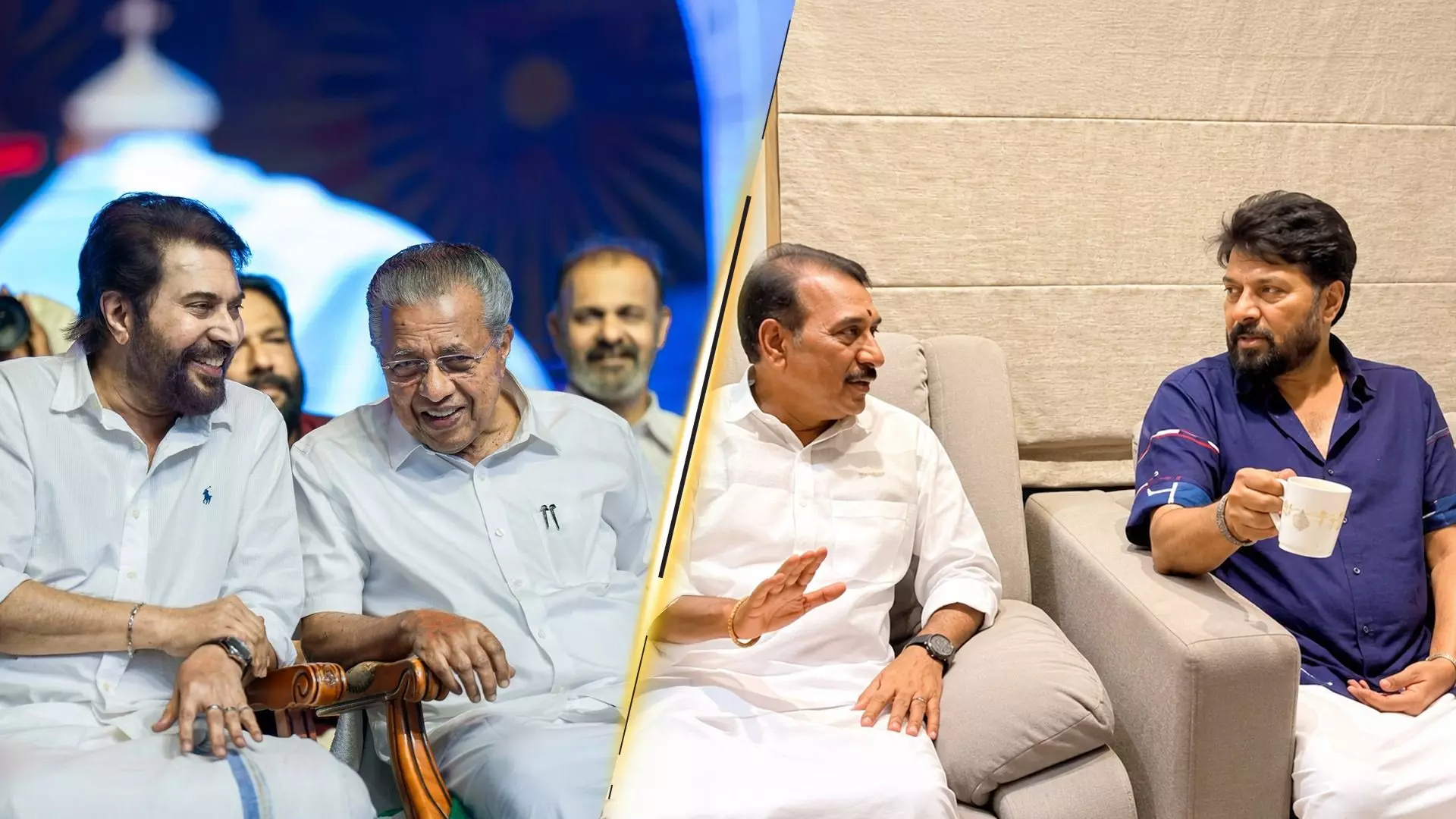
The controversy escalated further after Mammootty visited the Thrissur residence of BJP leader B Gopalakrishnan to bless his newly married daughter after missing her wedding. While such a gesture is consistent with Mammootty’s long-standing practice of maintaining personal friendships across political lines, critics began viewing it within a broader political context.
Critics also pointed to visits by DYFI and SFI leaders to Mammootty's residence a week earlier, which had already drawn backlash from online supporters questioning their association with the actor. Furthermore, his recent visit to the Statue of Unity, dedicated to Sardar Vallabhbhai Patel, in Gujarat during the National Film Awards ceremony, and photographs with BJP leaders added fuel to the ongoing debate.
Speculation and defence
Some critics have linked these public appearances to speculation regarding his growing proximity to the BJP, noting the coincidence of him receiving his fourth National Film Award after being overlooked for national recognition for several years, while contemporary Mohanlal received the Padma Vibhushan and Dadasaheb Phalke Award.
Despite these theories, there is no evidence suggesting that national honours or personal interactions indicate any political realignment by the veteran actor. Senior CPM leader Thomas Isaac defended Mammootty against the cyberattacks, while the CPM party leadership formally rejected attempts to read his personal friendships as a political shift.
Also read: Keralam’s ‘participatory economy’: Growth engine or quiet policy reset?
However, the ongoing controversy acquired a new contrast with the presence of actor Prakash Raj, who visited Kerala for the 'Jantar Mantar @ Kochi' protest rally against the Special Intensive Revision (SIR) of electoral rolls. During his visit, Prakash met with striking students at Sree Sankaracharya University of Sanskrit in Kalady to express solidarity against their suspension and examination bans under the UDF government.
Mammootty and Prakash Raj: Contrasting political stances
For Mammootty’s critics, Prakash’s open participation in protest movements highlights a stark contrast with Mammootty, who has remained silent on the anti-SIR agitation while maintaining visible interactions with BJP leaders. Critics argue that despite heading a CPM-backed channel, Mammootty has refrained from publicly backing Left struggles.
This dynamic raises fundamental questions about whether heading a party-backed channel or maintaining proximity to Vijayan obligates an actor to endorse party positions publicly. It also questions whether personal visits to political opponents should automatically be interpreted as political statements.
Ultimately, the resentment within sections of the CPM support base reveals that expectations around Mammootty stem from his long-standing association with the Left establishment. While Prakash demonstrates how visibility can be used for explicit political positions, Mammootty's choices highlight the fine line between personal relationships and political symbolism.