







Amid rising offences by minors, Kerala HC says it’s time to lower juvenility age to 16
Citing the growing maturity of children and offences involving minors, the judge says the law needs to reflect changing realities

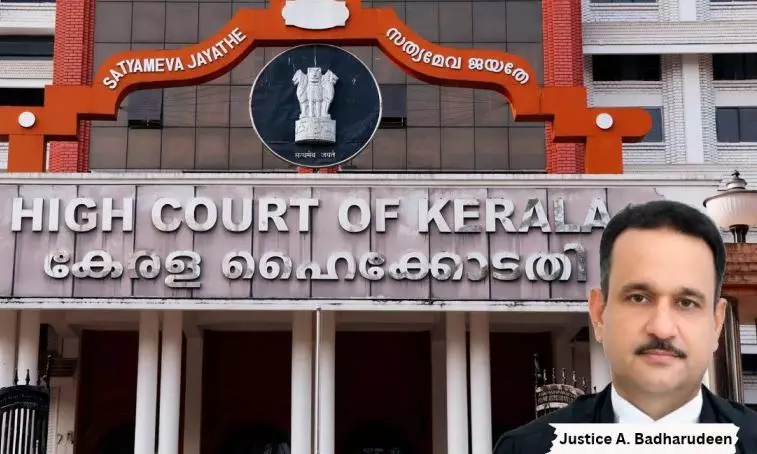
The Kerala High Court has observed that it is time for the legislature to consider reducing the age of juveniles from 18 to 16 years, citing the nature of offences committed by children and their growing maturity.
Justice A Badharudeen made the observation while hearing a writ petition filed by journalist Vinod Vikraman Pillai, which raised concerns over the alleged failure of Kerala’s Excise Department to prevent bars from serving alcohol to people below the age of 23.
The petition cited the October 11 Nedumbassery accident involving a Mini Cooper allegedly driven by a 19-year-old, Suhail Sajeev, under the influence of alcohol. The car collided with a scooter carrying three people, killing all of them. The petitioner alleged that the driver and his companions had been served alcohol at multiple bars in Ernakulam before the accident, despite the statutory prohibition.
“It is high time for the legislatures to consider appropriate amendments in the statutes which deal with the ‘juveniles and child in conflict’ with law to reduce age to 16 years, taking note of the present trend showing sufficient maturity by children when they reach the age of 16,” Justice Badharudeen observed, as reported by LiveLaw.
Fatal accidents by juveniles
The judge also noted that the petition required consideration in light of recent incidents in which people below 18 had allegedly caused fatal road accidents.
The observation comes amid a series of road accidents involving minors in Kerala. On October 25, a Mercedes-Benz allegedly driven by a 17-year-old rammed into a scooter in Cheranalloor, Kochi, killing 55-year-old Jayabalakrishnan. The Juvenile Justice Board subsequently granted bail to the teenager, a decision that the victim’s family has challenged before the Kerala High Court.
Also read: Keralam Mercedes crash: Victim's family moves High Court against bail to minor accused
In another incident in Kozhikode, 16-year-old Ajal Praveen died after a scooter he was riding met with an accident near Meppayur. Police registered a case against his father for allegedly allowing his unlicensed minor son to ride the vehicle.
What is the petitioner seeking?
The petition primarily concerns the enforcement of Sections 15A and 15B of the Kerala Abkari Act, which prohibit serving alcohol to people below 23 years of age.
Pillai has alleged that commercial bars in Ernakulam have been serving alcohol to underage customers without verifying their ages. He has also accused excise officials of colluding with bar establishments, alleging that the failure to enforce the statutory restrictions has compromised public safety.
Among the reliefs sought are an independent vigilance investigation into the alleged collusion between excise officials and bar managements, mandatory electronic ID verification systems at bars, and suspension or cancellation of licences of establishments found violating the law. He has also sought criminal prosecution against such establishments and a dedicated 24-hour public whistleblowing helpline under the Excise Intelligence Branch.
The petitioner said he had previously submitted representations to the Excise Minister, Excise Commissioner and the Director of the Vigilance and Anti-Corruption Bureau, seeking these measures. Since no action was taken on the representations, he approached the High Court.
The court has directed the Excise Commissioner to file a statement detailing the steps taken to enforce the statutory restrictions. The matter is posted for November 24.
The debate over the age of juvenility
The Juvenile Justice Act provides a separate legal framework for dealing with children accused of offences, emphasising rehabilitation and reform.
The age of juvenility in India has undergone changes over the years. Under the Juvenile Justice Act, 1986, boys below 16 and girls below 18 were considered juveniles. The Juvenile Justice (Care and Protection of Children) Act, 2000, replaced the 1986 legislation and brought the age of juvenility to a uniform 18 years for both boys and girls, in line with India’s obligations under the United Nations Convention on the Rights of the Child.
Under the 2000 Act, juveniles could be sent to a special home for a maximum period of three years, irrespective of the gravity of the offence. They could not be tried or sentenced as adults under the ordinary criminal justice system.
The Nirbhaya case
The December 2012 Delhi gang rape and murder, popularly known as the Nirbhaya case, reignited the debate over the age of criminal responsibility. One of the accused was a minor aged around 17 at the time of the crime. His eventual release after serving the maximum three-year term permitted under the juvenile justice law triggered widespread demands for stricter provisions.
Also read: Out on bail, still locked in: The gap in Keralam’s juvenile justice
Following this, Parliament enacted the Juvenile Justice (Care and Protection of Children) Act, 2015, retaining 18 as the age of juvenility but introducing a provision allowing children aged 16 to 18 accused of heinous offences to potentially be tried as adults.
Under Section 15 of the Act, the Juvenile Justice Board must first conduct a preliminary assessment of the child’s mental and physical capacity to commit the alleged offence, ability to understand its consequences, and the circumstances in which it was committed. The Board can seek assistance from psychologists and other experts. Based on this assessment, it may transfer the matter to a Children’s Court, which independently decides whether the child should be tried as an adult.