







Arikomban gone, enter Chakkakomban: Why chasing elephants won’t end Kerala’s crisis
Removing tuskers from the ecologically fragile and touristy Idukki district has not stopped the conflict, says a panel that points to blocked corridors, plantations, resorts and highways

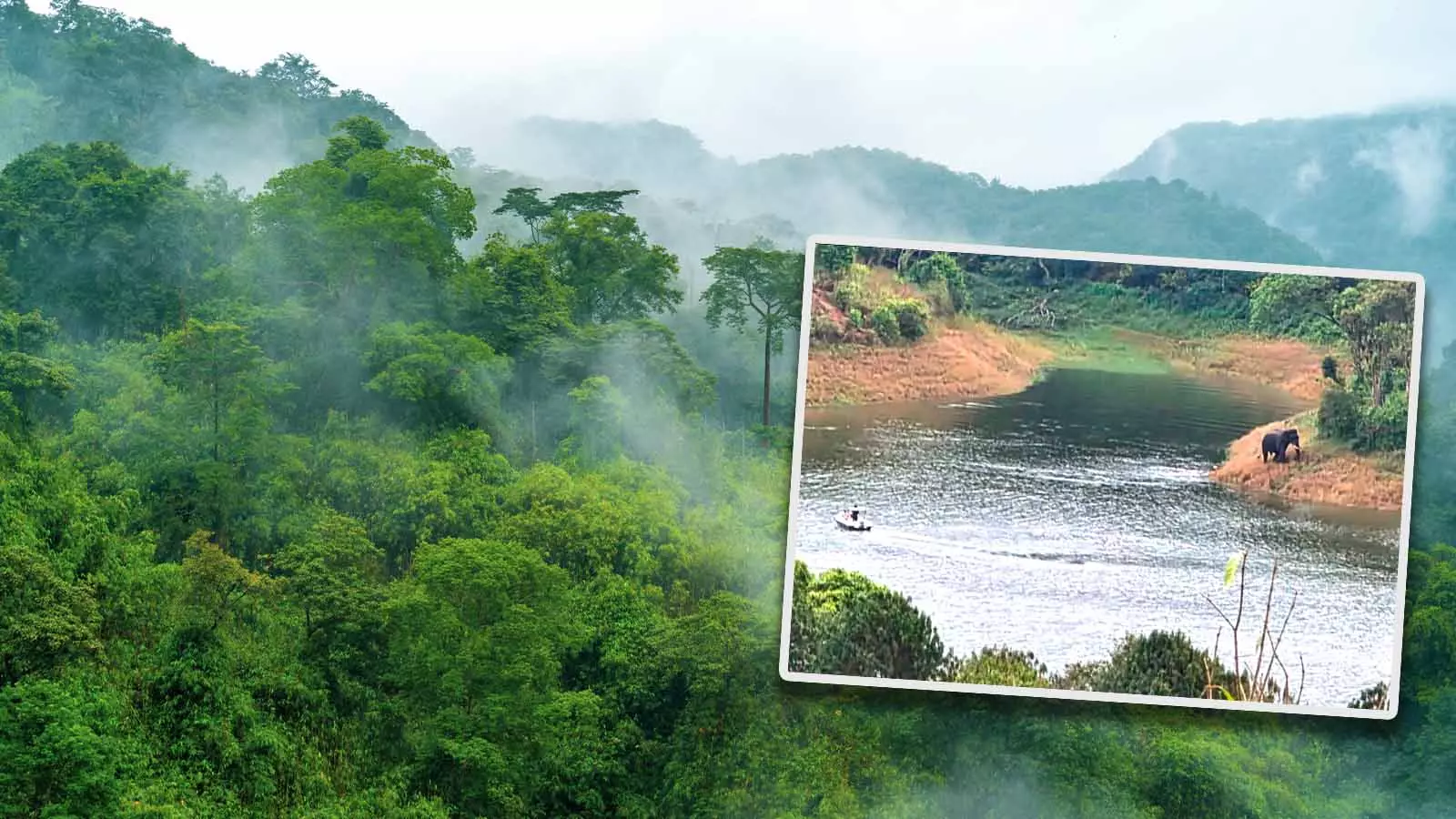
As Keralam foresters huff and puff through the dense, foggy forests of Idukki to capture their latest “problematic” tusker, the million-dollar question returns: Who is the intruder? Is it the animal that is intruding into human territory? Or is it the human, in its never-ending quest for more space to house its ever-expanding population, intruding into the elephant’s territory? And, is there space for both?
Chakkakomban — the jackfruit-eating tusker — is only the latest in a string of Keralam’s “problematic” tuskers that keep returning to public discourse, media headlines, and even the courts. Arikomban, Chakkakomban, Padayappa, Murivalan have become familiar names for locals and those who keep track of happenings in the region.
Idduki’s (in)famous tuskers
Arikomban, a 'rogue' that got its name for notoriously raiding shops and homes in search of rice (ari), had turned into a nightmare for people in Chinnakanal and Santhanpara areas, around the initial years of this decade. Following a high-profile legal battle and protests, Arikomban was ordered by the Kerala High Court to be relocated but even its relocation turned into a controversial two-state operation.
In April 2023, he was first released into the Periyar Tiger Reserve with a GPS collar, but within weeks, Arikomban crossed into Tamil Nadu, wandered into Cumbum town, damaged vehicles and caused one death. In June 2023, Tamil Nadu foresters tranquillised him again and shifted him again, more than 200 km to the remote forests of the Kalakkad Mundanthurai Tiger Reserve, where he has, as it seems till now, found his forever home.
Also read: Arikkomban: An elephantine problem for India's hard-pressed judiciary
Arikomban is not the only Idukki tusker that became notorious for “raiding” humans for food. Another well-known elephant is the “King of Munnar”, Padayappa. Though he is not known to be aggressive, he has gained viral fame for peacefully blocking traffic and raiding roadside stalls or farms for fruits and vegetables.
Another well-known tusker was Murivalan, who was incidentally gored to death by the latest “villain” of Idukki, Chakkakomban, whom the foresters are desperately trying to tranquillise.
Hide-and-seek
The wild male has been involved in repeated crop raids and encounters with people, including fatal ones, in the Chinnakanal-Munnar region, and demands are growing for his relocation too. If foresters can eventually tranquilise him, the initial plan is reportedly to radio-collar him, though even translocation is under consideration.
A 140-member team, which began the mission to tranquilise the elephant at 4 am on Wednesday (November 25), reportedly hit him with a tranquilliser dart, but Chakkakomban was not fully sedated and moved deeper into the forest. The day-long operation was called off due to rain and thick fog and the operation will resume on Thursday.
Also read: Shivamogga elephant mishap: District Dussehra processions must stop, says wildlife activist
But the elephant in the room remains unaddressed: Is tranquilising or translocating elephants the answer to the recurring human-elephant conflict? Arikomban’s relocation did not end the problem. Neither did the death of Murivalan.
‘We are the problem, not elephants per se'
A committee of experts has questioned the effectiveness of removing elephants from conflict zones. Its report says that capturing and relocating wild elephants does not solve human-elephant conflict in the region. Unless the reasons driving elephants into human habitations are addressed, other animals are likely to occupy the space left behind.
“The Forest Department first chases the elephant out of one place. Then it goes to another place, where there are other people, and they chase it back. It isn’t given any chance to stand anywhere quietly and eat. It is forced to keep running for its life. Basically, we are the problematic ones for them,” said Dr PS Easa, former director of the Kerala Forest Research Institute and a member of the IUCN’s Asian Elephant Specialist Group.
Easa is a member of the committee, constituted by Idukki district collector Dineshan Cheruvatt. Other panel members include scientist Rajan Pilakandy, retired professor Jomy Augustine, and Chinnakkanal tribal community member Murukesan.
Speaking to The Federal, Easa said relocating a so-called “problematic” elephant would not resolve human-elephant conflict in Munnar or anywhere at all. “The problem is perception per se. I disagree with the term "problematic elephant" itself. It is like we are branding some people as goondas. Another elephant will come, because the space will be left vacant, especially in an area without enough resources (for wildlife). Capturing and moving them has no meaning. If there are 17 elephants, you would have to remove all 17,” he said, pointing out that there had been no human fatalities recently.
Also read: SC asks Kerala to take custody of its tallest elephant Raman: 'Duty towards voiceless'
Why elephants enter settlements
The committee’s report identifies several reasons why elephants enter human habitations. Solar and barbed-wire fences around cardamom plantations obstruct traditional movement routes and divert elephants towards settlements. Grasslands have been turned into eucalyptus and cardamom plantations, while encroachments have reduced the space available to elephants around the Anayirangal reservoir. About 611 hectares of the reservoir catchment area is largely unavailable to them.
Resorts north of Chinnakanal also act as barriers, with intense lighting and noise disrupting elephant movement. The report says some resorts have been built within a prime elephant movement area. The four-lane Munnar-Theni Gap Road is another barrier, with the committee identifying specific points where elephants cross.
The report also records the views of tribal residents in several colonies, who say they generally coexist with elephants. They do not want fences around farmland but want protection around their homes. Their concern is particularly about encounters with elephants on school routes in the early morning.
Easa added, ''We spoke to 'real' Adivasis as part of our study, and all of them have no issues per se with elephants and theiir movements. They believe in co-existence.''
Restore habitats and corridors
So, what does the expert committee recommend?
Easa said the report had flagged encroachments on government land, revenue land and the Kerala State Electricity Board (KSEB) catchment area. He said these encroachments need to be cleared and the land restored.
The report calls for removing fences that obstruct elephant movement and restoring traditional routes. It recommends clearing encroachments in the Anayirangal reservoir catchment, leased tribal land and revenue land to make these areas accessible to elephants once again.
It also suggests removing the fence around the Thachangari estate to reopen a route towards upper Suryanelli through a 60-acre shola.
Also read: Arkavathy River's polluted waters claim elephant's life; calf mourns by her side
The committee has called for fencing to be planned strategically around human settlements rather than indiscriminately along plantation boundaries. It has also recommended that Kerala adopt power-fence regulations similar to those introduced by Tamil Nadu in 2023.
Radio collars and early warnings
The panel considers radio-collaring a possible alternative to capture and relocation, provided it is carried out scientifically. Easa said tracking an identified problem elephant could help monitor its movements and alert residents.
But he cautioned that the measure had limitations when several elephants were involved. “With many elephants, you collar and monitor a few, but others can show up here or somewhere else, so it won’t work as a warning system,” he said.
The report also recommends restoring Mathikettan Shola National Park as a more suitable habitat for elephants. Although elephants frequently visit the park, a rapid habitat assessment found a shortage of food. The committee has suggested planting reeds in the valleys to improve food availability and encourage elephants to spend more time inside the park.