Adoor Prakash’s dissent exposes fault lines within Satheesan-led UDF
The Congress leader’s public criticism comes amid growing questions over appointments, coalition management and the UDF government’s handling of controversies

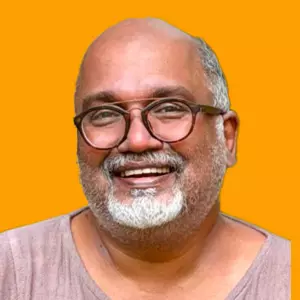
Adoor Prakash is no small fry in Keralam. He is the convener of the UDF, a Congress MP and a senior leader who has long been seen as having ambitions for the KPCC president’s post. So when he chooses to publicly question a chief minister only four months into a government, it cannot be dismissed as an ordinary disagreement within the Congress.
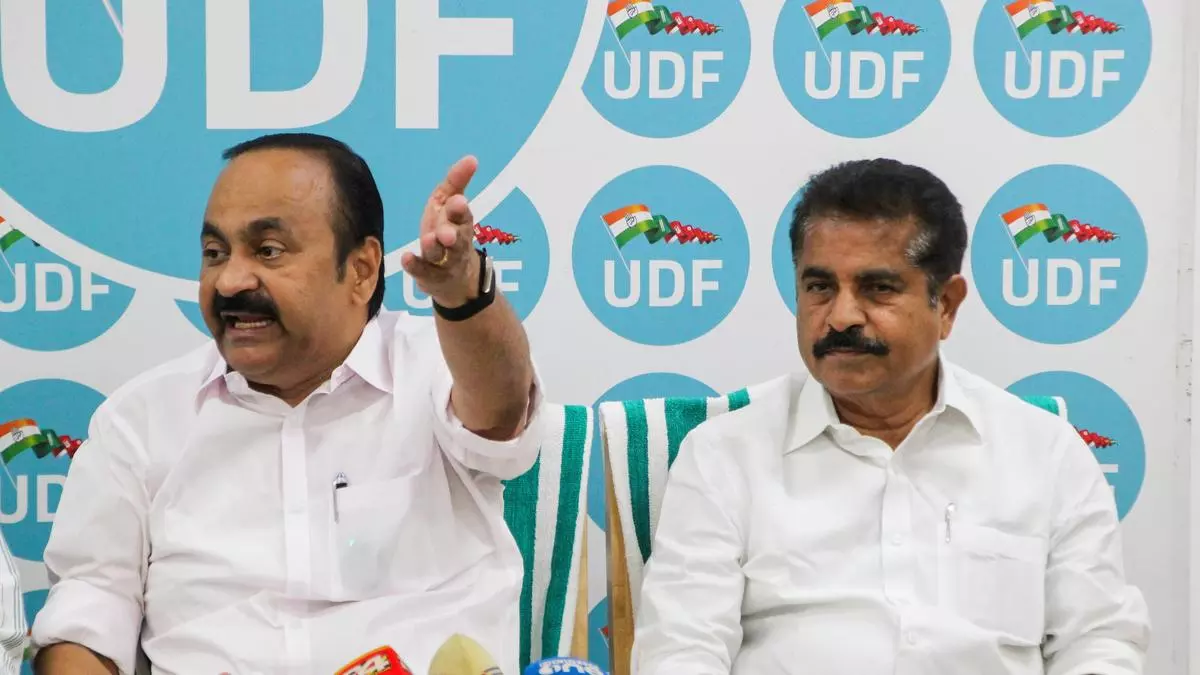
Prakash’s intervention has brought into the open the first serious internal challenge to VD Satheesan since the UDF returned to power with a sweeping mandate. His immediate target was the appointment of IUML leader MK Muneer as chairman of the Administrative Reforms Commission and Forward Bloc leader G Devarajan as the government’s special representative in Delhi, both with Cabinet rank. Prakash said he came to know about important government decisions through the media and complained that the UDF had not met in recent months.
UDF faces early strains
The appointments are politically significant. Muneer's elevation gives the IUML its sixth Cabinet-rank position in the government, while sections of the Congress had expected the party itself to get another such position. Leaders close to Satheesan, however, maintain that the appointments had been discussed earlier and that Muneer’s position was part of the understanding with the Muslim League.
Also read | Left blasts UDF as Satheesan defends state's PM SHRI stance: 'Congress-BJP deal'
Behind the immediate dispute over consultation lies a more familiar Congress question: who is gaining political space inside the new government?
The UDF came to power promising a different style of governance. But within months, the government has found itself defending a series of decisions and reversals that have given both the Opposition and its own critics ammunition. Take PM SHRI. The Congress had opposed the Centre’s school modernisation scheme while in Opposition, as had the CPI(M), arguing that it could facilitate the saffronisation of education. The new UDF government initially agreed to implement it with conditions, including retaining control over the curriculum and schools. It later put the rollout on hold after resistance from the IUML and set up a Cabinet sub-committee to review the decision.
The UDF government’s willingness to reconstitute the state Waqf Board in accordance with the 2025 Central amendment put its ally IUML in an awkward position, since the League had challenged the legislation in the Supreme Court. The issue exposed an immediate tension between the government’s position and that of one of its most important coalition partners.
Education has produced another set of questions. Controversy surrounding a Savarkar-related question in a school examination paper put the government on the defensive. The episode was particularly uncomfortable because several of the decisions being questioned came from departments controlled by the IUML. The latest was the handling of the state school athletics meet, which also came under criticism.
Power optics fuel scrutiny
There are also complaints within the government about the handling of departments and senior officials. Frequent changes of IAS officers in the Education Department have raised concerns about continuity, while the wider question of how far the Chief Minister's Office should involve itself in portfolios held by other ministers has become part of the political conversation.
But perhaps the most damaging controversies have come not from policy, but from the optics of power. The chief minister’s privately sponsored chartered flight to Malappuram, ministers travelling abroad with sponsorship and Local Self-Government Minister KM Shaji’s use of a friend’s luxury vehicle have all put the government under scrutiny. Satheesan has defended these arrangements, arguing that they did not burden the state exchequer and that there was nothing wrong with ministers accepting travel facilities from organisers or friends.
Also read | Half Pinarayi, half Satheesan: 100 days of balancing act
The recent incident in which Yuva Morcha workers blocked Minister KM Shaji’s vehicle has also raised questions over the government’s handling of protests. Critics have pointed to the relatively lenient treatment of those involved, contrasting it with the cases registered against DYFI workers who staged a similar protest against Minister OJ Janeesh. The perceived difference in the police response has added to criticism that the government is applying different standards when dealing with protests by groups aligned with different political camps.
Significantly, the unease was not confined to the Opposition. Senior Congress leader MM Hassan publicly cautioned ministers that the UDF should not create circumstances that allow the Opposition to make the same allegations against it that Congress had made when it was in Opposition. He also called for ministers undertaking foreign trips to explain their purpose.
Unease grows within Congress
It is against this backdrop that Adoor Prakash’s rebellion assumes greater significance. Because this is not simply one Congress leader objecting to one appointment. It comes after a string of issues that have exposed the difficulty of translating an expansive electoral coalition into a functioning government.
Satheesan’s election strategy had been built around precisely that expansion. The UDF reached beyond its traditional voters and successfully attracted a section of Left voters who had become disenchanted with the CPI(M). Satheesan emerged from the campaign as the central figure of that coalition, after five years of leading the Opposition against Pinarayi Vijayan. Now, four months into his tenure, the first political test is coming from within.
Also read | A chartered flight, 3 foreign trips and a Range Rover put UDF govt under scrutiny
However, senior party leader KC Venugopal has distanced himself from any attempt to link him to Prakash’s criticism, saying he did not want internal party matters turned into a public discussion. At the same time, the Congress high command has indicated that it may intervene to address the differences.
The IUML, meanwhile, has taken exception to Prakash’s remarks, while some Congress leaders have backed his concerns. Others have rallied behind Satheesan and argued that the appointments were already settled and that the chief minister cannot be accused of keeping the party in the dark when several senior Congress leaders are part of the Cabinet and government structure.
For now, there is no organised challenge to Satheesan’s leadership. But something has clearly changed.