Satheesan’s first phase marred by govt-party discord
From the PM SHRI scheme and liquor tax debate to the Tata shipbuilding row and KSU rebellion, internal rumblings have defined the government’s first few days

The first few days of Chief Minister VD Satheesan's government in Kerala have been marked less by Opposition attacks and more by rumblings from within the Congress party itself, a pattern of controversies suggests.
While the Left Democratic Front has raised its share of criticism, the more striking story has been a growing disconnect between the government and the Congress organisation, with one row after another laying bare the friction.
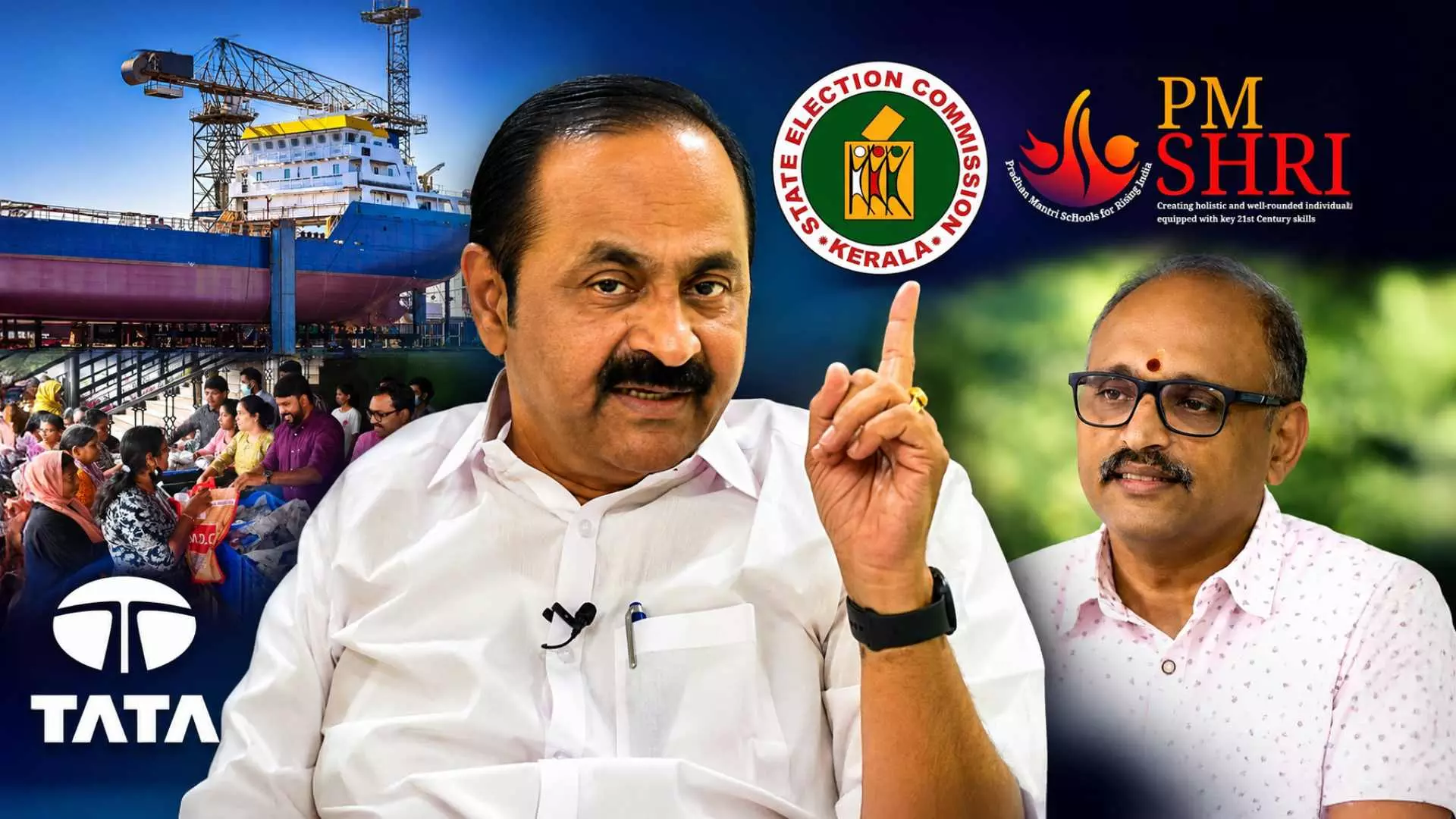
The trouble began with the appointment of a Special Government Pleader in the Devaswom Department. It continued with the government's decision to implement the PM SHRI scheme, a politically sensitive call given the Congress's past opposition to it, though the government defended it as necessary to secure central funding for schools.
Early flashpoints
Questions were also raised over the appointment of the State Election Commissioner, while a move to cut tax on low-alcohol beverages sparked debate over whether the government was softening Kerala's liquor policy stance.
Also read: Exiting PM Shri can cost Kerala Rs 2,000 Cr, says education minister
Adani Ports' decision to transfer its stake in the Vizhinjam Port to Mediterranean Shipping Company added to the political heat.
Health Minister K Muraleedharan then triggered a controversy with what many called a knee-jerk move, announcing that the DYFI should stop distributing free midday meals in government hospitals. Facing criticism that patients shouldn't be caught in political rivalry, the minister backtracked within days.
The Tata confusion
The most recent episode involves the Tata Group. Satheesan announced that Kerala would see a shipbuilding project worth around Rs 10,000 crore, presenting it as a major investment involving the group.
The Tata Group, however, clarified it had made no such investment announcement, raising questions over whether any formal commitment existed at all. It also emerged that the shipbuilding project was not new, having been under discussion since the previous LDF government's tenure, with Tata Technologies as one of several participants in the larger plan.
As the controversy grew, the Chief Minister's Office clarified that Satheesan had not meant that the entire Rs 10,000 crore would come from the Tata Group, but was referring to a broader project in which a Tata subsidiary was one of several stakeholders. The clarification eased the confusion, but the political damage over messaging and the tendency to oversell early-stage proposals had already been done.
KSU rebellion within
Perhaps the most telling controversy has come from the Congress's own student wing, the KSU, which accused the government of overlooking loyal party workers in appointments to government bodies, alleging that people with little connection to the party, and even political opponents, were being accommodated instead.
Also read: Why Kerala’s LDF is struggling to emerge as effective Opposition after its poll defeat
Satheesan dismissed the criticism bluntly, arguing that a student organisation had no locus standi in matters of government appointments, and that such decisions were the government's prerogative.
Rather than ending there, the row escalated. Senior Congress leaders, including AICC General Secretary KC Venugopal and veteran leader VM Sudheeran, publicly backed the KSU's concerns, turning a student wing protest into a message from influential sections of the party leadership. The issue was no longer just about appointments, it became about consultation, coordination, and whether the government was listening to its own party.
A party divided
This may be the defining feature of the Satheesan government's first three months: While most governments face Opposition fire, this one faces growing criticism from within its own ranks.
There is a perception inside the Congress that key decisions are being taken without adequate consultation with the party organisation, leaving ministers to defend policies before their own colleagues. This weakens political messaging and hands the Opposition ready ammunition.
The Congress in Kerala has long been known for internal factionalism, but what is unusual is how early these differences have surfaced after the government took office. The customary grace period new governments enjoy appears to be running out fast.
Also read: CPI(M) releases 'White Paper of Facts' to counter govt's fiscal report
For Satheesan, the challenge now goes beyond administration; he must reassure his own party that it has a stake in governance. Governments, after all, rarely stumble because of the Opposition alone, they stumble when internal disagreements go public and start to define the government's image. Three months in, that may be the biggest test facing the Satheesan government.