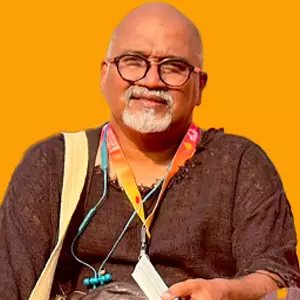
Dileep verdict closes a long chapter, but closure and justice elude survivor
For the survivor, justice has become elusive, not only because the crime was denied, but because the web of influence was too dense for the legal process to unravel in full

On Monday (December 8) morning, Malayalam actor Dileep walked out of the Ernakulam Principal Sessions Court a free man. The judge ruled that the prosecution had failed to prove beyond reasonable doubt that Dileep was part of a criminal conspiracy behind the 2017 abduction and sexual assault of an actress. Instead, the court found six other accused, including MS Sunilkumar aka Pulsar Suni, a former driver associated with the Malayalam film industry, guilty of carrying out the rape, abduction, and related offences.
The verdict brings to a close nearly eight years of public attention, courtroom drama, and intense debate in Kerala’s film industry and beyond. But even as some welcomed the outcome, many voices rose to argue that for the survivor, justice remained incomplete, that acquitting Dileep, a powerful figure, represented a failure to hold influential people fully accountable.
The state government has decided to file an appeal against the trial court's verdict in the case, said Law minister P Rajeev, after a discussion in this regard with the Chief Minister. ''The govt stands firmly with the survivor,'' he added.
Also read: Nana Patekar, Dileep are 'narcissistic psychopaths': Tanushree Dutta on 'useless' Hema report
“Yes, there was a conspiracy. The conspiracy was against me. It started when Manju Warrier spoke about a conspiracy behind the crime,” said Dileep coming out from the courtroom. “Some criminal police officers led by a senior woman officer who was at the helm then, along with a section of the media, hunted me with false stories for almost nine years. Their false narrative has now been shattered in the court,” he added.
Split reactions
Judge Honey M Varghese concluded that the prosecution had failed to meet the standard of proof required to convict Dileep of conspiracy. As a result, Dileep, along with a few other co-accused whose roles were less direct, were acquitted. The court held that though the assault had unquestionably occurred and that six accused had carried it out, the evidence did not convincingly show Dileep’s involvement in planning or arranging it.
Outside the court, reactions were sharply split. Those welcoming the verdict insisted that justice had been served since the immediate perpetrators had been found guilty. Supporters identifying themselves as fans, however, turned their anger towards the media, with a group attempting to heckle reporters within the court premises. It mirrored the hostility and online targeting that has persisted for eight years against those who publicly stood with the survivor.
Also read: Dileep case: Survivor meets Kerala CM, says 'satisfied with the probe'
Others, however, expressed deep disappointment and frustration. For many, the decision to clear Dileep, who was once a powerful star, of conspiracy charges struck at the heart of accountability. Many questioned whether the survivor truly saw justice served. They pointed out that while six individuals would face punishment, the alleged mastermind walked free and, along with him, an entire structure of power and privilege that had for years shielded the accused.
The next step
“To wipe a cruel and depraved crime clean and erase it from record, all it takes is money, privilege and a criminal mind. Even in a case where on the other side there is a state government and the vigilance of the public. Now the crime has been reduced to something the six convicted men committed out of their own personal desire for rape alone,” said Athira PM, a senior lawyer based in Kozhikode.
“The survivor, those who stood with her and vowed they were with her, and the Kerala government must explore every possibility to overturn a verdict that has disappointed everyone. The struggle must continue until justice is achieved without weakening and without giving in to despair,” she added.
Also read: Dileep case: Survivor moves HC alleging political pressure to dilute case
“The government stands firmly with the survivor and will continue to do so. We will study the judgment, consult legal experts and decide on the next steps,” state Cultural Affairs Minister Saji Cherian said.
Justice elusive
This verdict closes a long chapter, but for many, it leaves open critical questions. Will the sentencing of those convicted satisfy the calls for justice that echoed across Kerala in 2017? Will this outcome dissuade future abuse of power, or will it reinforce cynicism about the accountability of the powerful?
For the survivor, justice has become elusive, not only because the crime was denied, but because the web of influence and uncertainty was too dense for the legal process to unravel in full. The acquittal of Dileep after nearly a decade of accusations, evidence, hearings, and public outcry may offer relief to some. But for those who believe in institutional justice and systemic reform, it remains a moment of reckoning—a test of whether the legal system can deliver justice, not only to victims but also against those who wield privilege.
As sentencing looms on December 12, the public’s attention remains fixed. The coming days may bring relief for the survivor of the assault, and closure for the guilty. Yet the larger question—whether true justice has been served—will likely linger for a long time.
The crime
On the night of February 17, 2017, the actress was travelling by car when men forced their way in. According to the prosecution, she was abducted under the guise of a staged accident, taken into a moving vehicle, subjected to brutal sexual assault, which was filmed on video. The first accused in the case was Suni, a driver working in the film industry.
Also read: Closed all 35 cases lodged on basis of Hema report: SIT to Kerala HC
The investigators argued from early on that the assault was not a random crime, but part of a chilling, premeditated conspiracy. They laid out a theory: the survivor had allegedly informed Dileep’s then-wife about his relationship with another actress, which provoked resentment. That resentment, they claimed, led to the orchestration of the crime. Dileep was accused of hiring Suni and others to carry out the attack and record it.
After several arrests and a long, gruelling investigation, charges were later extended. Dileep was named as the eighth accused. He was formally arrested in July 2017 after being questioned for hours. He spent nearly three months in jail before bouncing back on bail in October that year. A supplementary chargesheet was filed, and the number of accused rose to 10.
The trial
The trial began in January 2020. Over the following years, the court heard from a staggering 261 witnesses. The prosecution submitted some 833 documents and 142 pieces of evidence in its bid to establish that the assault was plotted and ordered.
But the proceedings were plagued with difficulties. Key evidence, which was the video footage of the assault recorded by Sunilkumar, became controversial. Forensic reports showed that the memory card storing the visuals had been illegally accessed while under court custody, at least three times (twice in 2018 and once in 2021). The security of this crucial evidence was compromised, raising serious doubts about its integrity.
Also read: Hema report fallout: New Malayalam film body championing change, inclusivity launched
Witness testimony added to the complexity. Several persons, including those from the film industry, retracted earlier statements or turned hostile over the course of the trial. Among them were actors who, in earlier hearings, had claimed to have witnessed or known about threats and conspiratorial discussion. By the end, a significant chunk of testimonial evidence that the prosecution had relied upon had been undermined.
The arguments
Throughout, the prosecution argued that conspiracy charges were difficult but vital. Their case rested on reconstructing a chain of communications, digital footprints, payments, and testimonies.
The defence, however, maintained these links were circumstantial, unconvincing. They argued that no direct proof tied Dileep to the crime, with no eyewitness, no confession, no solid documentary evidence. Over the long years, as witnesses recanted and evidence came under question, the prosecution’s narrative began to lose firmness.
It was one of the few cases in which the survivor moved the Supreme Court expressing a lack of confidence in the then presiding judge, although that request was ultimately dismissed. The present judge was appointed after she requested that a woman judge hear the trial, a development that later became a point of discomfort for the survivor herself.