



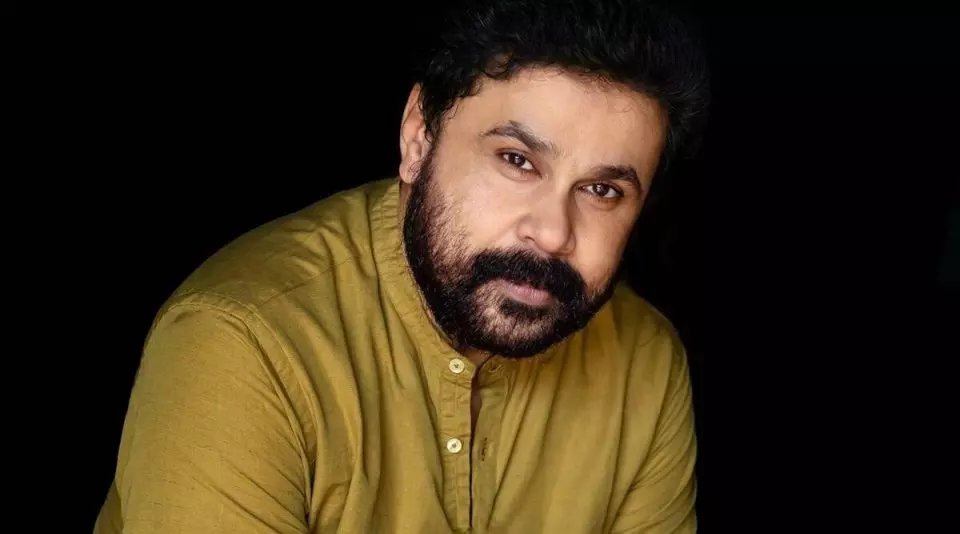
Eight years later, Kerala court set to rule in assault case involving actor Dileep
A Kerala court will deliver the long-awaited verdict in 2017 actress assault case involving actor Dileep, after years of delays, twists and nation-wide scrutiny

For nearly eight long years, a key question has hung over the glittering world of Malayalam cinema: Could one of its own biggest stars, actor Dileep, have orchestrated a horrific attack on a fellow actress?
On Monday (December 8), a court in Kerala is expected to answer that question, delivering a verdict in a 2017 assault case that changed from a terrible crime into a sensational legal saga - a trial of extraordinary twists, agonising delays, and a battle over narrative that has extended years beyond its original deadline.
Also Read: Actor assault case involving Dileep: Court verdict on December 8
Following the incident and actions towards Dileep, Mollywood industry witnessed a lot of changes to protect the dignity, rights and interests of women artists, technicians and other workers. The allegations against the actor led to the 'Me too' movement in the industry, followed by the formation of the Women in Cinema Collective (WCC).
The founding members of WCC met Kerala Chief Minister to form a committee to study the challenges women face in the industry.
Sexual assault case
The long-awaited verdict of the sexual assault case against actor Dileep and his associates, will be delivered by the Ernakulam District and Principal Sessions Judge Honey M Varghese, after the completion of the trial proceedings, which began in January 2020.
The actress-survivor, who has worked in Tamil, Telugu and Malayalam films, was abducted and allegedly molested in her car for two hours on the night of February 17, 2017. The attackers forced their way into the vehicle and later escaped in a busy area of Kochi.
As many as 10 accused who faced trial are: Sunil NS (alias Pulsar Suni), Martin Antony, Manikandan B, Vijesh VP, Salim H, Pradeep, Charly Thomas, actor Dileep (real name P Gopalakrishnan), Sanil Kumar alias Mesthri Sanil and Sharath.
Also Read: Nana Patekar, Dileep are 'narcissistic psychopaths': Tanushree Dutta on 'useless' Hema report
They were charged under sections 120A (conspiracy), 120B (criminal conspiracy), 109 (abetment of offence), 366 (kidnapping or abducting a woman), 354 (assault or criminal force to a woman with an intent to outrage her modesty), 354B (use of criminal force to disrobe a woman), 357 (use of criminal force to wrongfully confine a person), 376D (gang rape), 201 (causing disappearance of evidence), 212 (harbouring an offender) and 34 (common intention) of Indian Penal Code.
Section 66E of the Information Technology Act (capturing or transmitting images of private areas without consent) and 67A (transmitting sexually explicit material electronically). Dileep faces an additional charge under Section 204 of the IPC (destroying evidence to prevent its production).
Dileep's arrest
Police arrested the accused soon after the incident and filed the first chargesheet against seven persons in April 2017. Following the further investigation into the matter, police arrested Dileep on July 10, 2017, after they found that the prime accused Suni had allegedly sent a letter to him from jail. Dileep was granted bail on October 3, 2017.
In November 2017, police filed a supplementary chargesheet against seven more persons, including Dileep. Five of them were later discharged or turned approvers.
Also Read: Dileep case: Survivor meets Kerala CM, says 'satisfied with the probe'
Although the mobile phone used to record the assault could not be traced, police relied on the memory card containing the videos, which was submitted in court by a lawyer.
The prosecution claimed that the complainant informed Dileep’s first wife, Manju Warrier, of his affair with another actress. There was a fight between the complainant and Dileep over this during the rehearsal of a stage event in 2016.
Prolonged proceedings
The conspiracy was hatched in the aftermath of the fight at a hotel in Kochi. Like the case, the trial too witnessed several twists and turns.
In 2019, Dileep approached the Kerala High Court seeking a CBI probe, but the plea was dismissed. In 2019, the Supreme Court directed that the trial be completed in a six-month period.
However, frequent petitions before higher courts by the accused, the prosecution and the complainant delayed proceedings, and the trial finally began only in January 2020. The Covid-19 pandemic halted proceedings for several months.
Also Read: Freedom of speech not a licence to abuse justice system: Kerala HC
Later, Special Prosecutor A Suresan resigned, and the prosecution approached higher courts seeking transfer of the trial to another court in December 2020.
On December 29, 2021, when the investigation officer was to be examined as the last witness, the prosecution informed the court that new information had emerged and sought further investigation, halting the trial again.
Additional cases against Dileep
The further probe was based on revelations by film director B Balachandra Kumar that Dileep possessed visuals of the survivor. Another allegation was that Dileep conspired to harm the investigation officers, leading to another case against him and five others.
When the trial resumed, V N Anilkumar was appointed Special Public Prosecutor. He resigned in December 2021 and was replaced by V Ajakumar. Another major twist emerged in 2022 when police moved the trial court seeking an inquiry into the illegal access to the memory card kept in court custody.
Though the petition was dismissed, the Kerala High Court later ordered a fact-finding inquiry after the complainant alleged tampering. It was revealed that the memory card had been accessed by a magistrate and later by officials at the district sessions court.
High court guidelines
This led the High Court to issue detailed guidelines on handling sexually explicit evidence in December 2023. A total of 261 witnesses were examined during the trial, including several from the film industry. Many actor-witnesses turned hostile. The investigation officer alone was examined for 109 days. The court admitted 834 documents and two defence witnesses.
Also Read: Rape of south Indian actress: Three years on, survivor seeks transfer of case
Meanwhile, two key witnesses - former MLA PT Thomas and director Balachandra Kumar- died during the trial stage.
"We are hopeful of the judgment, as all possible evidence was presented before the court. The delay was due to various developments during the trial," an officer who was part of the investigation told the news agency PTI.
Me Too movement
Right after the incident triggered unrest within the industry, many women who had faced sexual harassment, assault, a hostile working environment, and demands for sexual favours in exchange for opportunities came forward to share their harrowing experiences. With no union to address workplace harassment in the Malayalam film industry, prominent female figures, including Dileep's ex-wife Manju Warrier, formed the Women in Cinema Collective (WCC).
WCC members met Kerala Chief Minister Pinarayi Vijayan on May 18 of the same year, urging him to form a committee to study issues related to safety, working conditions, remuneration, and gender equality, and recommend measures to make the industry safer for women. Following the meeting, Vijayan formed a committee chaired by former Kerala High Court judge K Hema.
Also Read: Assault case: Actor Dileep's friend arrested for destroying evidence
The committee submitted its report to the CPI(M)-led UDF government. However, the report remained unpublished for another five years, citing various reasons. Eventually, in August 2024, the 295-page report was released to the public, albeit with several pages omitted.
A Special Investigation Team (SIT) was formed after the report was published to investigate the matters mentioned within it.
The government urged survivors to come forward and file complaints against the perpetrators. So far, the SIT has begun investigating 35 cases, and chargesheets have been filed in several of them.
The upcoming verdict in the case against Dileep Kumar is expected to encourage survivors to step forward and share their experiences, helping to bring about collective change within the industry.