


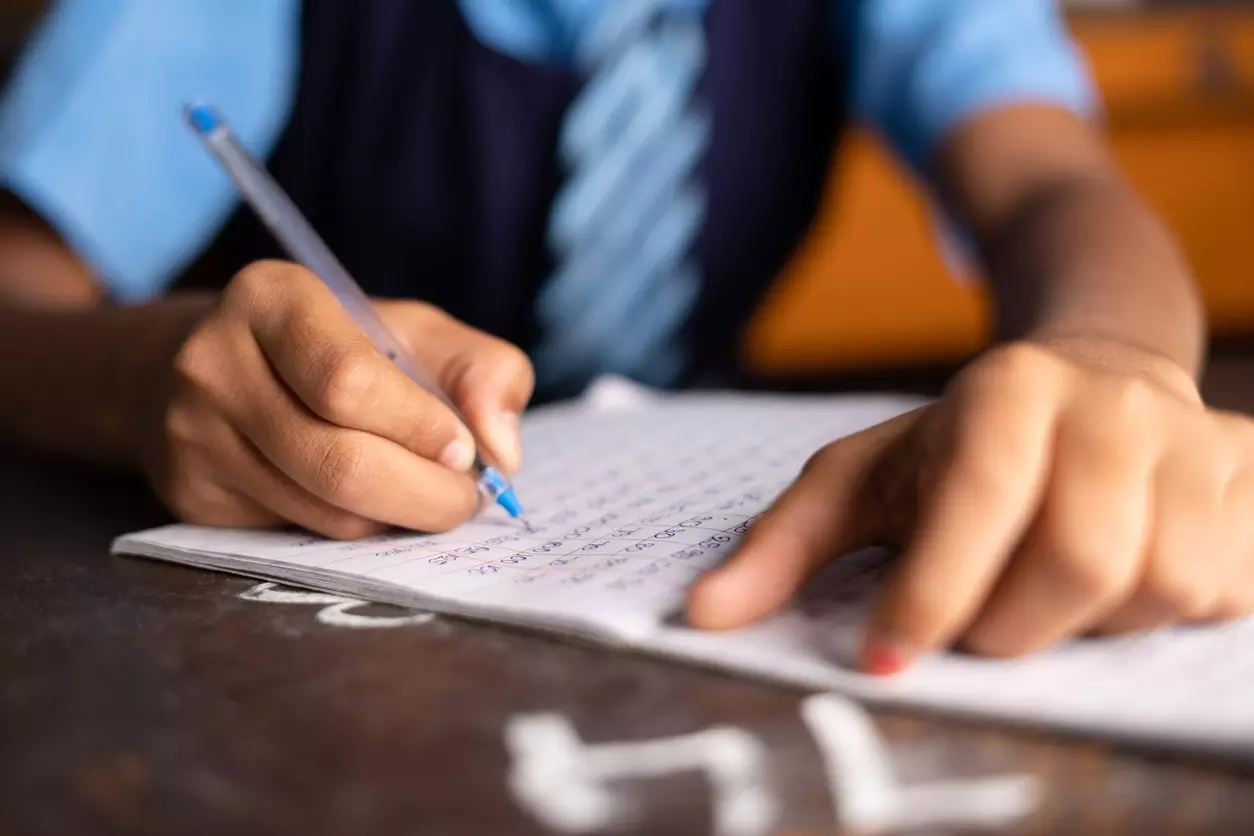
Who will run Karnataka’s rural, govt schools? Experts fear corporate takeover
State government’s proposal to let private institutions adopt rural schools spark allegations of backdoor privatisation and neglect of teacher vacancies

The Karnataka government’s move to merge government schools, especially Kannada-medium schools, with private educational institutions has invited a huge backlash from educationists in the state.
Soon after Chief Minister DK Shivakumar officially proposed the scheme, the All India Save Education Committee (AISEC) and education experts in the state launched a strong attack on the government, alleging that this is an attempt to privatize the public education system through the back door.
CM’s announcement
Speaking about the project, Shivakumar said that for the first time in the country, private institutions are being allowed to “adopt” government schools. About Rs 8,000 crore will come from the CSR fund, and only rural schools have been suggested to be adopted, not urban schools.
Also read: 933 schools, one big fear: Is Bengal opening doors to PPP in govt schools?
The government's aim is to provide good education to rural children and prevent migration. He explained that it is feared 70 per cent of the population will migrate to cities by 2047, and this decision has been taken so that rural children can get quality education there.
Government ‘begging without doing its work’
Aishwarya CM, a state committee member of the AISEC, has strongly slammed Shivakumar’s statement. “If you cannot run government schools, then leave your chair. The people voted you to power believing you would provide good government schools, hospitals and jobs. Today, lakhs of young people are waiting for jobs after completing BEd. If they are appointed as teachers, the quality in government schools will automatically improve,” she said.
She alleged that the government was “going to private companies and begging without doing its work”. She demanded that government schools should not be dropped in the lap of private companies in the name of CSR funds and that the KPS Magnet Scheme should be stopped from “being brought through the back door”.
Is it about ADB loan?
Save Education Committee state vice-president VN Rajashekar also strongly condemned the government’s decision.
Also read: Plight of Bengaluru govt schools: Stinking toilets, teacher shortage | The Federal reality check
“The chief minister, who made a speech about Kannada on the occasion of Kannada Rajyotsava, is now going to kill government schools in broad daylight. The state government is not only financially but also morally bankrupt. Teachers in government schools are highly qualified, having passed BEd, MEd, CET, TET. But private schools hire only those who have completed PUC or graduation. In such a situation, it is a big illusion that private schools have quality education,” he fumed.
He also made a serious allegation that the government, which has taken a loan of Rs 2,500 crore from the Asian Development Bank, is planning to close 40,000 government schools on the latter’s terms and as part of the Centre’s National Education Policy (NEP).
Against the ideals of welfare state
Education experts have also opposed the government’s move. Under Article 21(A) of the Constitution, the government has a duty to provide free, quality education to every child. But turning to private companies for infrastructure and teaching runs counter to the ideals of a welfare state. If corporate logos appear on government schools, there is a risk of instilling inferiority among poor children.
Also read: Bihar’s teachers caught in schooling system that asks more, gives little
Under the general CSR fund, companies provide only physical infrastructure and cannot interfere in administration. But under this new scheme, private schools will send teachers and directly participate in the administration. Experts fear that this will destroy the identity of public schools.
Attempt to cover up teacher shortage?
More than 25,000 permanent teacher posts are lying vacant in primary and high schools in the state. If the government appoints permanent teachers, it will incur a financial burden of hundreds of crores of rupees in salaries and pensions. To avoid this, the government is considering using private teachers at zero cost.
However, no scientific study has been done on this. If private institutions suffer financial losses or lose interest later, they may withdraw teachers and facilities mid-year. This will put students' futures in doubt, and education experts have warned the government that education should be a continuous government commitment, not dependent on the generosity of private individuals.
(This article was originally published in The Federal Karnataka.)