



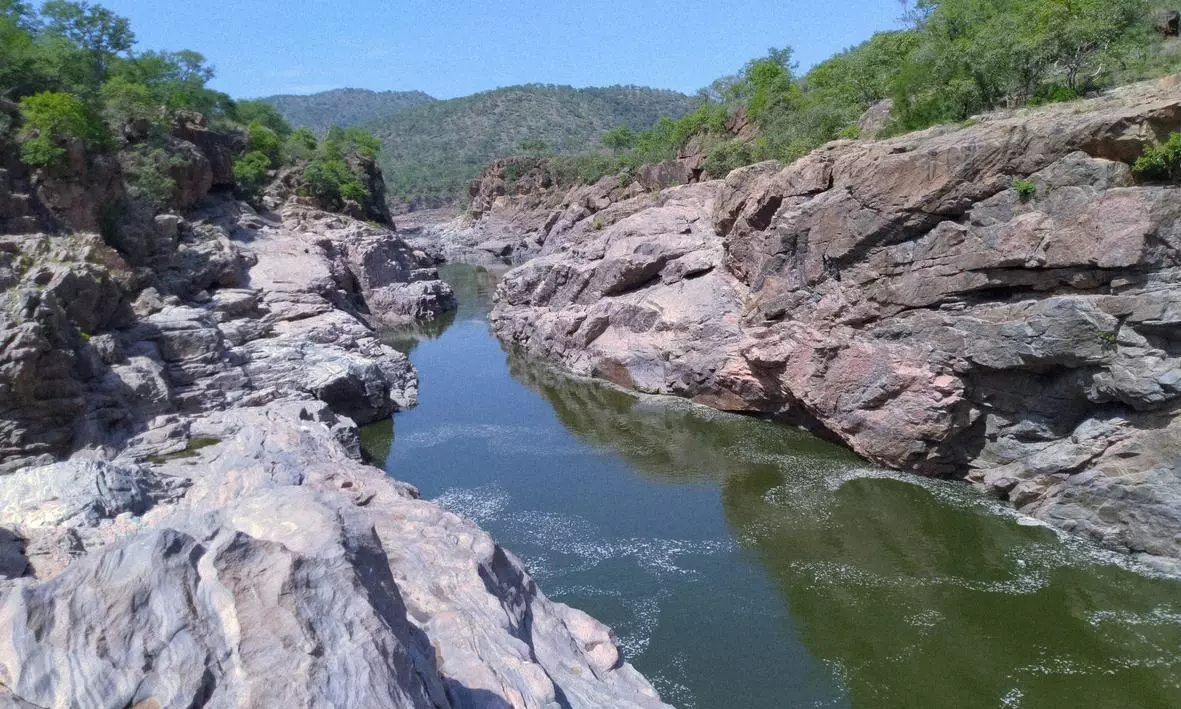
Karnataka’s Mekedatu project does not require consent from other states: Centre
The clarification came from the Union Minister of State for Jal Shakti Raj Bhushan Choudhary in a written reply to a question raised by Tamil Nadu MP Dr. Anbumani Ramadoss in the Rajya Sabha

The Union government on Monday (July 27) stated that Karnataka does not require the consent of neighbouring states to take up the proposed Mekedatu dam project.
The clarification came from the Union Minister of State for Jal Shakti Raj Bhushan Choudhary in a written reply to a question raised by Tamil Nadu MP Dr. Anbumani Ramadoss in the Rajya Sabha.
Long-standing ambiguity ends
The response states that the Supreme Court's judgment does not require Karnataka to obtain the approval of neighbouring states while formulating or implementing the project.
Also read: Cauvery water dispute: Can Vijay-DK Shivakumar talks break deadlock?
In effect, it reinforces Karnataka's authority to take independent decisions on the utilisation of Cauvery river waters.
Dr. Ramadoss had sought to know whether Karnataka had secured the consent of Tamil Nadu, Kerala and Puducherry before proceeding with the Mekedatu project.
In its response, the Ministry of Jal Shakti stated unequivocally that "consent of other states is not mandatory for constructing any structure". The clarification is being seen as putting to rest a long-standing technical ambiguity surrounding the project.
SC’s landmark judgement
The Supreme Court's landmark judgment on the Cauvery water-sharing dispute, delivered on February 16, 2018, is regarded as a major legal milestone for Karnataka. The verdict laid down clear principles governing the utilisation of interstate river waters.
Also read: Why Mekedatu will be an acid test for new CMs DK Shivakumar and Vijay
According to the Union Minister, the judgment nowhere stipulates that Karnataka must obtain prior approval or consent from Tamil Nadu, Kerala or Puducherry before constructing any structure across the river. The Centre's clarification is therefore being viewed as a significant legal endorsement of Karnataka's position.
Mekedatu project: DPR and role of Central Water Commission
The Karnataka government submitted the Detailed Project Report (DPR) for the Mekedatu project to the Central Water Commission (CWC) in 2019. The Commission returned the DPR, citing certain technical issues as well as objections raised by Tamil Nadu.
Following the CWC's directions, the state government has initiated the process of preparing a revised DPR in line with the Cauvery Water Disputes Tribunal's award and the Commission's existing guidelines. As with any major infrastructure project, environmental clearance, forest clearance and technical approvals remain essential. The state government is expected to address these requirements before submitting the revised report.
Tamil Nadu maintains that the construction of the Mekedatu dam would reduce the flow of water into the state. Karnataka, however, has consistently argued that the project is intended to store water rather than divert it, and that this distinction is crucial.
Tamil Nadu Chief Minister C Joseph Vijay is expected to travel to Bengaluru in the first week of August for crucial talks with Karnataka Chief Minister DK Shivakumar over the Cauvery water dispute and the Mekedatu dam project.
(This article was originally published in The Federal Karnataka)