



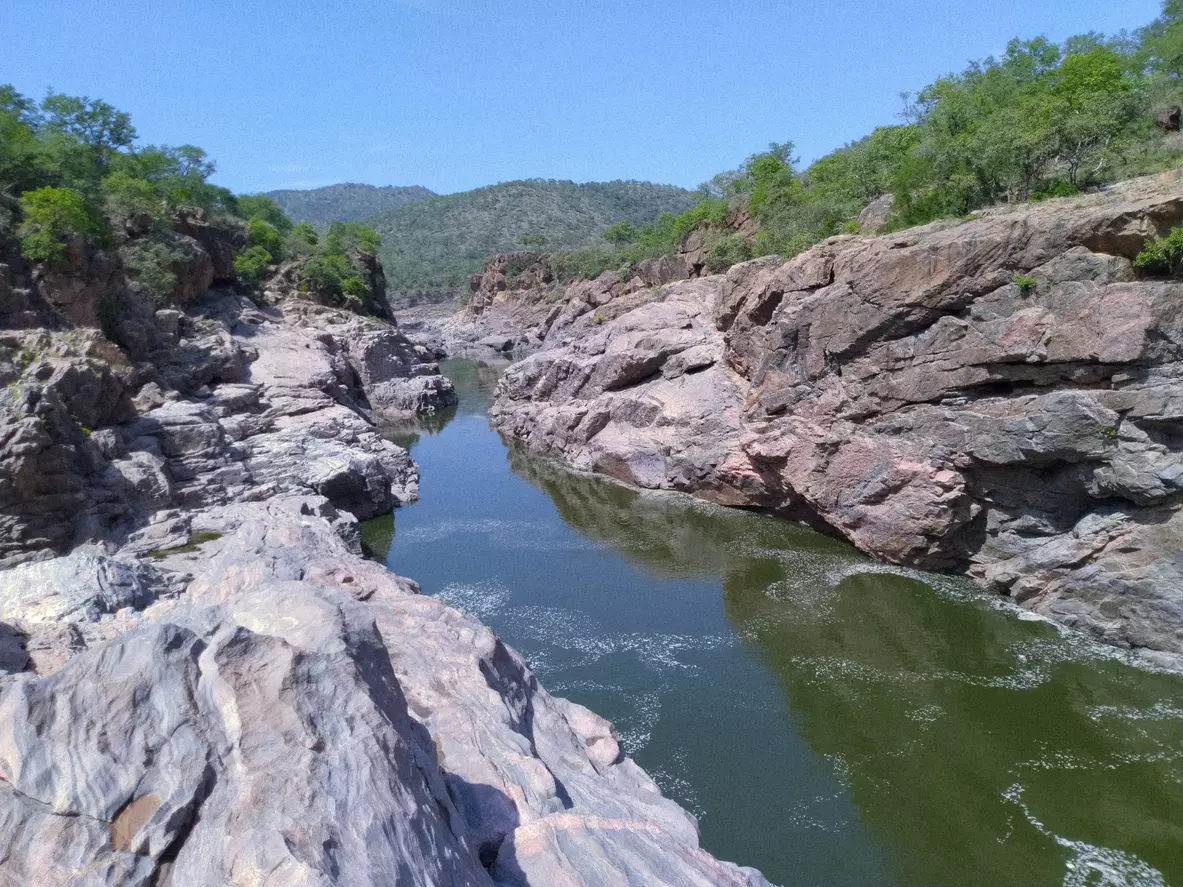
Located at Mekedatu in Ramanagara district, at the confluence of the Cauvery and Arkavathi rivers, the project proposes constructing a balancing reservoir to supply 4.75 TMC of drinking water to Bengaluru, regulate river flows, and generate hydroelectric power
Mekedatu row: Kannada outfit announces 'TN border bandh' on July 15
Nagaraj says traffic will be blocked at Attibele–Hosur border, slams TN leaders over opposition to the project; criticises Karnataka's political leaders and film industry

Kannada activist and former MLA Vatal Nagaraj has announced that a complete bandh will be observed along the Tamil Nadu border on Wednesday (July 15) to protest what he described as the Tamil Nadu government's continued obstruction of the implementation of the Mekedatu balancing reservoir project.
He warned that vehicular traffic would be completely halted at the Attibele–Hosur border on that day, and that an intense protest would be staged against the Tamil Nadu government.
Speaking to The Federal Karnataka, Vatal Nagaraj said that irrespective of who the Chief Minister of Tamil Nadu is, it has become a practice for leaders there to oppose Karnataka on the Cauvery and Mekedatu issues. He alleged that actor-turned-politician C. Joseph Vijay and Congress leaders in Tamil Nadu were making irresponsible statements, saying they would not allow even a single brick to be laid for the Mekedatu project.
Anger over silence of politicians and film industry
Expressing strong displeasure, Vatal said that despite Karnataka's interests being at stake, the state's politicians, writers, and Kannada film actors have remained silent.
"In Tamil Nadu, film actors come out onto the streets and protest in support of their state. But the actors in our state are fast asleep. Even when we raise our voice, they do not wake up. They have no seriousness about protecting Karnataka's land and water. They fear that speaking out may affect their business interests. They should learn from artistes in the neighbouring state," Vatal Nagaraj said.
Also Read: TN will turn into desert if Karnataka builds Mekedatu Dam: Vijay govt in Assembly
He also criticised the opposition BJP and JD(S), alleging that they were immersed only in caste and communal politics and were not raising serious issues such as Mekedatu, the Cauvery dispute, or the Belagavi border dispute in the legislature.
‘Congress padayatra was only a five-star yatra’
Vatal also strongly criticised the Congress party's padayatra undertaken three years ago in support of the Mekedatu project.
"It was not a padayatra; it was a five-star yatra. They enjoyed good food, rested comfortably, and once they reached Bengaluru, they got into their cars and went home. Now the same party is in power. Even after being in office for so long, Siddaramaiah and DK Shivakumar have not taken any concrete steps to determine how much land is required for the project or what progress has been made in the survey work," he said, questioning the government's commitment to the project.
Mekedatu project
Located at Mekedatu in Ramanagara district, at the confluence of the Cauvery and Arkavathi rivers, the project proposes constructing a balancing reservoir to supply 4.75 TMC of drinking water to Bengaluru, regulate river flows, and generate hydroelectric power.
However, despite being conceived primarily as a drinking-water project, it has evolved into what many describe as the “second Cauvery dispute” due to Tamil Nadu’s strong opposition.
Also Read: Why Mekedatu will be an acid test for new CMs DK Shivakumar and Vijay
The project is currently in the pre-construction stage. Karnataka has submitted a revised Detailed Project Report (DPR), and the Supreme Court has cleared a significant legal hurdle by dismissing Tamil Nadu’s review petitions.
Karnataka’s stand
While presenting the DPR, Karnataka Chief Minister Shivakumar had maintained that Tamil Nadu had no legal grounds to oppose the project, arguing that it falls entirely within Karnataka’s territory and uses water allocated to the state under existing arrangements. Karnataka has also argued that the reservoir would benefit Tamil Nadu by storing excess monsoon water that would otherwise flow into the sea.
To minimise legal and political friction, Shivakumar has repeatedly emphasised that the project is meant exclusively for drinking water purposes and that no additional irrigation benefits would be created.
Tamil Nadu’s opposition
Tamil Nadu, however, remains firmly opposed. Recently, TN Chief Minister Vijay expressed surprise that the Ministry of Jal Shakti and the Central Water Commission were considering Karnataka’s proposal without adequately addressing Tamil Nadu’s objections.
During his visit to Delhi, he urged Prime Minister Narendra Modi to direct authorities to reject the DPR, arguing that the project violates both the final award of the Cauvery Water Disputes Tribunal and the Supreme Court’s 2018 judgement.
Also Read: Mekedatu project: Karnataka to submit DPR to Centre, DKS says TN cannot stop it
Vijay said recent announcements regarding a proposed bhoomi puja for the project and statements by Shivakumar had caused concern among lakhs of farmers in Tamil Nadu who depend on Cauvery waters.
TN’s concerns
According to Tamil Nadu, the Mekedatu reservoir was never among the projects permitted under the Tribunal’s final award. Since the Cauvery basin was already classified as a deficit basin and available water had been allocated among the riparian states, Tamil Nadu argues that there is no scope for creating a new large storage reservoir.
The state fears that the project would effectively give Karnataka greater control over river flows and could adversely affect water availability in the Cauvery delta, threatening agricultural livelihoods.
Also Read: Mekedatu will benefit TN farmers more than Karnataka: CM Shivakumar
Tamil Nadu has consistently maintained that any new project across the Cauvery or its tributaries, beyond those specifically approved by the Tribunal and upheld by the Supreme Court, would amount to interference with binding judicial orders.
(This article first appeared in The Federal Karnataka)