



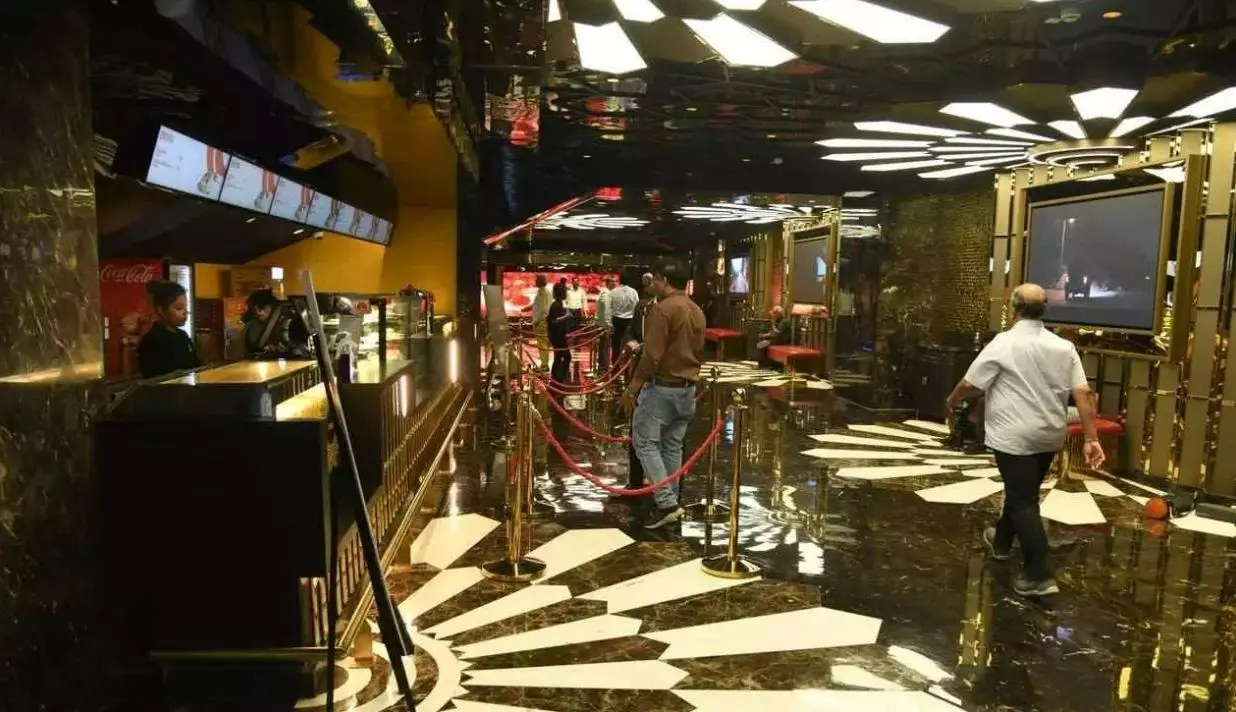
Launched as AMB Cinemas Kapali, the multiplex has begun operations with nine screens. It is South India’s first cinema to feature Dolby Vision with immersive sound.
Bengaluru’s iconic Kapali theatre is reborn as Mahesh Babu’s AMB Cinemas
As times changed, single-screen theatres gradually gave way to multiplex culture. Kapali, too, was caught in this transition. In October 2017, with the screening of Huliraya, the theatre brought its 49-year-long journey to an end

Bengaluru’s Majestic area is more than just a crowded hub. It is the heart of Gandhinagar, the nerve centre of the Kannada film industry. And right there stood the iconic Kapali theatre.
There was a time when a film’s success in Kannada cinema was considered complete only if it screened at Kapali. Movies starring legends such as Dr. Rajkumar, Vishnuvardhan, Ambareesh and Shankar Nag found pride of place here. So when Kapali — once Asia’s largest cinema hall — was razed to the ground, it left millions of cinema lovers deeply saddened.
Also read: Border 2 review: Ambitious Indo-Pak war epic let down by excess length and loud writing
But there is no reason for despair anymore. Kapali has been reborn — this time in a brand-new avatar.
The famed AMB Cinemas, owned by Tollywood actor Mahesh Babu, has now risen grandly on the very site where Kapali once stood. Launched as AMB Cinemas Kapali, the multiplex has begun operations with nine screens. It is South India’s first cinema to feature Dolby Vision with immersive sound. With state-of-the-art screens offering superior visual quality, the new Kapali promises an exceptional movie-watching experience.
When Morarji Desai inauguraed Kapali
In 2020, one of the most treasured links to Gandhinagar’s cinematic past was severed. Kapali theatre — an institution that echoed with whistles and applause for nearly half a century — was demolished. Known for introducing the ‘Cinerama’ technology to Asia for the first time, Kapali stood as a proud landmark of cinema history. The historic theatre, originally owned by the Dasappa brothers, was later purchased by an industrialist from Belagavi.
Built in 1968 on a 44,184 sq ft plot on Subedar Chatram Road, the theatre was inaugurated by then Finance Minister and former Prime Minister, the late Morarji Desai.
Also read: Why the backlash against AR Rahman is unfair and an act of cultural illiteracy
With a seating capacity of 1,465, Kapali became the first theatre in India to use three projectors for the Cinerama format. It was here that Dr Rajkumar’s Mannina Maga celebrated its 100-day run. When his blockbuster Haalu Jenu was released, a massive 58-foot cutout of the actor adorned the theatre — earning recognition as the first giant cutout in the history of Kannada cinema.
Shivarajkumar’s cult film Om created history at Kapali. The film was re-released here a record 30 times, and each release turned the theatre into a festival ground.
South India’s first Dolby Cinema screen
As times changed, single-screen theatres gradually gave way to multiplex culture. Kapali, too, was caught in this transition. In October 2017, with the screening of Huliraya, the theatre brought its 49-year-long journey to an end. When the structure was finally demolished, movie lovers were left with a mix of pain and curiosity about what would come up next. Today, that question has been answered with the arrival of a grand multiplex in the same space.
Now, at this very spot, AMB Cinemas Kapali has come up.
All screens at AMB Cinemas Kapali are equipped with Barco laser projection technology to ensure superior colour accuracy and visual clarity. Screen 6 is particularly special — it is South India’s first Dolby Cinema screen.
The theatre features a Christie 6K Dolby Vision projector along with an immersive sound system. To offer a premium experience, a special lounge and seating arrangement called M-Lounge has been introduced. Moviegoers can also enjoy a carefully curated selection of food and beverages.
Ticket prices are expected to be reasonable and affordable for all sections of the audience. As per government regulations, the first show will begin at 6 am, while the last show will be at 10:30 pm, with five to six screenings planned each day. A live kitchen has also been set up to ensure high-quality food for viewers.
(This article was originally published in The Federal Karnataka)