Bengaluru’s water crisis deepens as cases of contaminated drinking water surge
Ageing infrastructure and rusted pipes cause contamination in city water lines as BWSSB struggles to bridge the 1,100 MLD supply gap in Silicon City

Bengaluru, which was once known as the 'City of Lakes' decades ago, suffers not only from water shortage but also from contaminated drinking water. Periodically, sewage flows into the Cauvery water lines carrying drinking water to the homes of the residents of Silicon City.
As Bengaluru's population crosses the crore mark, the gap between water demand and supply has become a massive chasm. Now, even though the ambitious Cauvery Phase 5 project of the Bangalore Water Supply Board (BWSSB) has been completed, it is not enough to quench the city's thirst for water.
Meanwhile, citizens are grappling with the harsh truth that besides shortage, polluted water, tanker mafia and management failures have made life miserable.
Recent case
The most recent shocking case of contaminated drinking water that surfaced in the city happened at KSFC Layout in Lingarajapuram, which is located in the eastern part of Bengaluru. (7 km from the heart of the city).
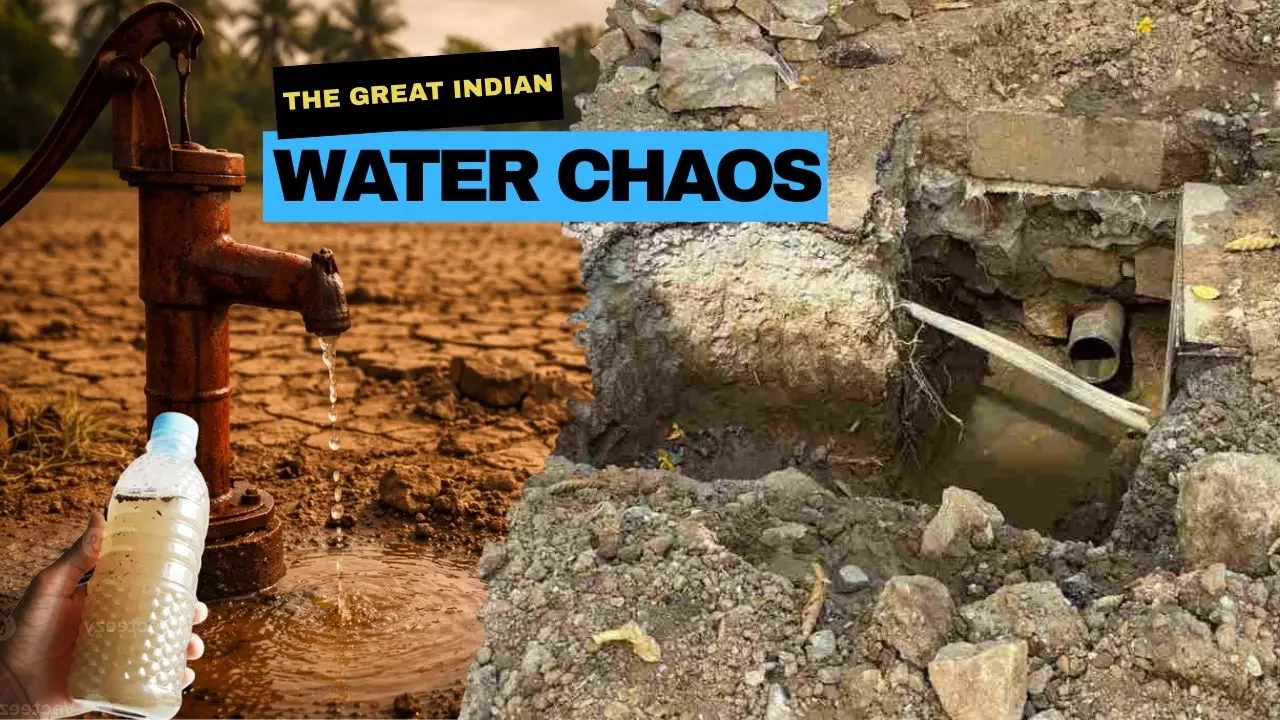
For many days, several residents at KSFC layout were falling ill. It was only after they found foul-smelling, frothy water flowing from their taps and thick, dark silt coating their underground sumps that they realised that sewage had mixed with their drinking water.
The residents included children, pregnant women, and the elderly. They had been suffering from symptoms ranging from vomiting and diarrhoea to stomach and intestinal infections. A fatal tragedy was averted since people stumbled upon the problem and immediately stopped drinking the water. After complaints were made, the Bangalore Water Supply and Sewerage Board (BWSSB) halted piped water supply to the area as a precautionary measure. But this meant the residents had to depend on private tankers.
When The Federal Karnataka correspondent visited the area, the residents described the hardships they faced. Roja, a resident, narrated the hardships she faced for the past 15 days. She cursed the system, telling how her daughter and grandchildren are in constant danger due to the lack of clean drinking water. Many residents felt that the problem is due to the ageing water and drainage pipelines.
The issue stemmed from a rusted drinking water pipeline and a leaking sewage connection from one of the oldest houses in the layout.
Also read: Bengaluru water board restricts drinking water usage for non-essential purposes
Meanwhile, speaking to The Federal Karnataka, the BWSSB Chairman, Dr V Ram Prasath Manohar said, "Yes, there was a problem. But we responded immediately. We quickly identified the source of the problem using robotic technology. Such a technology-based approach will help increase the performance of the water board in the coming days.”
An old problem
This is not the first time this is happening in Bengaluru. This appears to be a recurring nightmare in the city. What is alarming is that polluted water often gets mixed with Cauvery water in other parts of the city as well.
Shivajinagar, an old area of the city, has also faced this problem. Azmat, a shop owner in Shivajinagar, told The Federal Karnataka that this is common in their area. However, he also added that the BWSSB immediately arrives in their area to sort out the issue. However, he said that it is common for people who drink contaminated water to be hospitalised for a couple of days.
In November 2024, three hundred residents of the city’s BTM Layout faced serious health risks, when sewage entered the Cauvery water lines in their area.
In February 2025, in a major area of the city's southern suburbs, a leak in a BWSSB pipeline caused sewage to mix with drinking water, causing diarrhea and hundreds of people to contract typhoid.
When samples of Cauvery water were tested in the area called Pulakeshinagar, they found the presence of harmful bacteria, including E. Coli and Klebsiella Pneumoniae. More than 30 people were sick with severe vomiting and diarrhea.
Residents of Nanjappa Road in Shanthinagar too have complained that they have been drinking sewage-mixed water for the last 10 years.
Skin diseases are common among the residents living in that area. In April 2024, there was a surge in cholera cases in Bengaluru. It was almost a 40 per cent increase. City doctors had made it clear that the main reason was the contamination of water sources.
Water shortage
If we look at Bengaluru’s water supply situation in 2025-26, the statistics are shocking. The city’s total water demand has crossed 2,600 to 3,400 MLD per day. The total water capacity supplied to the city from the Cauvery river (with the addition of Cauvery 5th stage) is only 2,225 MLD.
Also read: Deve Gowda urges centre to address Bengaluru's drinking water shortage
Therefore, the city faces an estimated water shortage of at least 400 to 1,100 MLD per day.
However, after water wastage and theft, the shortage may work out to be more. This shortage is the root cause of the tanker mafia and the unchecked growth of unauthorised borewells in the city. The 110 villages that are not covered by Cauvery water and the newly-emerging apartments are facing water shortages.
According to experts, the city's water is getting polluted due to the ageing infrastructure and shortage of water and people are starting to feel that the water they are consuming is not safe.
Process of purification
What is the process of purifying the water in the city? The process starts at the water board's purification plant in TK Halli, Malavalli taluk, Mandya district. The plant operates day and night, and the water collected from the Cauvery river allegedly undergoes eight sophisticated and stringent stages of purification before it reaches Bengaluru homes.
A technical officer of the water board told The Federal Karnataka that the process involves providing oxygen content to the river water and removing any bad odour. Chlorine is added to destroy algae, microorganisms and bacteria in the water at the initial stages. Chemicals like 'Alum' are used to collect the smallest soil particles in the water. The water is gently stirred to separate the impurities.
The larger impure particles are allowed to sink by gravity, and the lighter water on top is separated. The water is passed through various layers of sand, stone and charcoal to filter out the very fine impurities. Chlorine is finally added to prevent the formation of any new germs until the water reaches your home through the pipes.
The quality is tested at various storage tanks in the city and if necessary, the amount of chlorine is added again.
The water board follows the standards of the Central Public Health Engineering Organisation (CPHEEO) for all these processes. However, experts said that the water is getting contaminated as it passes through the city's old and rusty pipelines.
Water reservoirs
There are a total of 70 to 84 ground-level reservoirs across the city with a storage capacity of more than 1,067 million liters. More than 59 above-ground tanks are being used to supply water to high-altitude areas. More than 62 stations are functioning to pump water.
However, according to experts, reservoirs are not being cleaned from time to time. And the water gets polluted due to the accumulation of soil and algae at the bottom of the reservoirs.
Tanker mafia
Meanwhile, capitalising on the city's water shortage, the tanker mafia has been active in the city, holding the hapless residents to ransom. There are about 3,500 tankers plying in the city, of which only half are officially registered.
Also read: Power of recycling: How Bengaluru overcame its acute water crisis
A water board official, who did not wish to be named, told The Federal Karnataka that this would not have been possible without the support of politicians.
What is even more disturbing is that some private tanker owners are filling water from toxic lakes like Bellandur, Varthur, Yele Mallappa Shetty and Kalkere. The water from these lakes, which contain industrial chemical waste and sewage, is being supplied to residential areas only after adding bleaching powder.
The authorities have failed to stop this business that takes place at night. This dangerous water is being used by the residents of Horamavu, KR Pura and Mahadevapura areas, where there are many IT companies.
Moreover, by creating artificial scarcity, they are charging Rs 1,500 to Rs 3,000 for 6,000 litres of water in the summer. The government has not provided a fixed value for the water.
IT hubs of Bengaluru
According to urban planning and water experts, the IT hubs of Mahadevapura and KR Pura are more dependent on tankers than on Cauvery water connections. There are many complaints about high fluoride and nitrate content in lake water supply and groundwater.
Areas like Shivajinagar, Halasuru and Chikkapet in central Bengaluru have decades-old and rusty pipelines. Residents say that water contamination is more common here as leaking drains run right next to these pipes. There are allegations that the water in Yelahanka and Batarayanapura areas of North Bengaluru is muddy and has a bad smell.
Since Dasarahalli and Peenya are industrial zones, the borewell water here is full of chemicals.
Are '5 Rs' water centres safe?
To counter this serious problem, clean drinking water centers have been started by people's representatives from the constituency development funds to benefit the poor. They pay Rs 5 to get clean water and are popular across the city. This is a very low price compared to private canned water (Rs 40). However, there are serious shortcomings in the way it is being maintained.
In most of the centers, the filters are not being replaced on time. Water users alleged that this is resulting in the supply of more dirty water than clean water.
According to Chetan, a resident from Vijayanagara area, this water is inexpensive and is very useful since he does not earn a big income. "However, during the summer, when the demand for water is high, we get suspicious about the purity,” he admitted. He has never seen the filters being replaced, he said.
According to Sanjay from Rajarajeshwari Nagar, such centers in their area are functioning properly. The 5 rupee coin they deposit is being spent on electricity bills and maintenance of the centres, he pointed out . This water obtained from a borewell is our support, he added. The disadvantages of these centres, according to residents, is that there is no proper system to recycle waste water in most of the centers. Moreover, most of these centers are always under repair or are closed due to power problems.
Citizens' demands
According to citizens, old and rusty pipelines should be replaced on a war footing. Minimum distance should be maintained between sewage pipes and drinking water pipes and GPS and QR code should be made mandatory for every tanker.
Supply should be allowed only after testing the water source. Sewage water should be prevented from entering lakes. Groundwater level should be increased by pumping treated water into lakes, said one resident.
Sudarshan, the former president of Brahmagiri BDA Apartment Association in Nagarbhavi, felt the onus lies on the water board to ensure that clean drinking water reaches every household. Only then will 'beautiful' Bengaluru get healthier and cleaner.
(This article first appeared in The Federal Karnataka)