Karnataka anti-conversion law: Keep your promises, Archbishop Machado tells Congress govt
Archbishop says the anti-conversion law has spread fear among Christians and the cow slaughter law hurts small farmers

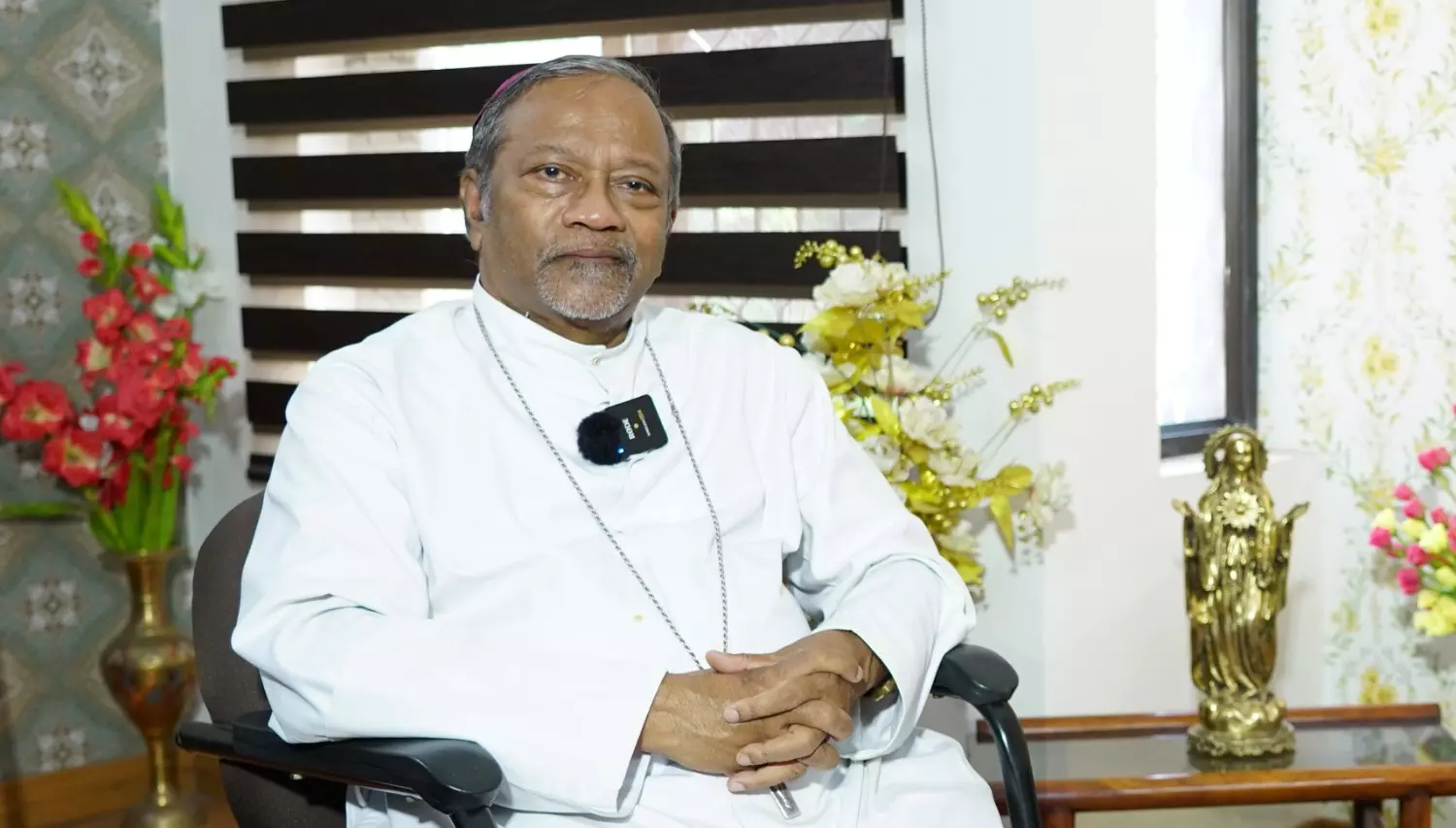
Archbishop of Bengaluru Peter Machado has urged the Congress government in Karnataka to fulfil its 2023 Assembly election promises, including withdrawing the anti-conversion law and the cow slaughter law.
In an exclusive interview with The Federal Karnataka, Machado said the existing anti-conversion law has created fear among Christians because of its strict punishment provisions, with 32 cases reported since January.
Machado said the anti-conversion law hurt the Christian community because it portrayed them negatively. He said the community had never used its schools or hospitals to force people to convert to Christianity.
Also read: Cauvery dispute: SC dismisses TN's pleas seeking additional water from Karnataka
"If there is any complaint, surely we will take action. But for that, we don't need a separate anti-conversion law," he said.
Machada cites Article 25
He referred to incidents in which people attending small prayer gatherings, a birthday celebration and people coming out of a church were arrested. Such incidents, he said, had raised concerns about whether people could freely practise their religion.
The Archbishop said the right to choose and practise a religion was a fundamental freedom. Referring to Article 25 of the Constitution, he said every citizen had the right to preach, profess and propagate religion.
He also questioned why laws that created fear among people were needed when the Constitution guaranteed religious freedom. He said the anti-conversion law questioned the identity and faith of the Christian community.
On the cow slaughter law, Machado said its impact on small farmers should be considered. He explained that small farmers depend on cattle for milk and cow dung but face difficulties when their animals grow old and can no longer be used for farming.
He questioned the lack of gaushalas to shelter old cattle, as promised, and asked what farmers were expected to do with their ageing animals when such facilities were unavailable. He said farmers needed proper facilities such as gaushalas to care for old cattle. The government should also consider compensation to help farmers buy replacement cattle, he said.
Machado clarified that the demand to withdraw the cow slaughter law was not to encourage more slaughter, but to protect the interests of poor farmers. He said the Christian community had joined hands with farmers in raising this demand because the Congress had promised to withdraw the law.
Minorities, a vote bank?
He avoided accusing the government of treating minorities as a vote bank, saying he did not want to attribute intentions to the ruling party. However, he warned that failure to fulfil promises would affect the government's credibility.
"If you make more promises and you don't keep up the old promises, people will surely tell you that these people cannot be trusted. You will lose the credibility, not me," he said.
Machado said keeping its promises would benefit the Congress more than the minority communities, as people would recognise a government that honoured its commitments.
He said Christian institutions serve people of all religions and that only 3-5 per cent of students in Christian educational institutions are Christians. Similarly, he said, Christian hospitals provide treatment to people irrespective of their religion.
“If we wanted to, we could have converted all the children studying in our schools into our religion. Or at least we could have told them, ‘I will give you more marks if you become Christian. I will give you better treatment in the hospital if you become Christian’. We will never do that,” he said.
He challenged anyone to come forward and prove that even one person had been forcibly converted through Christian institutions.
Asked about the BJP's recent efforts to woo the Christian community in Keralam and whether a similar development could happen in Karnataka, Machado said he was not aligned with any political party. He said any party that comes to power has a responsibility to look after all citizens, including Christians. He clarified that the Christian community had no hostility towards the BJP or the JD(S), and that there was no question of believing only in the Congress. "It is a democratic system," he said.
Demand for reservation
Machado also reiterated the Christian community's demand for 1 per cent reservation under Category 3B, saying Christians account for around 2 per cent of Karnataka's population. He said the community was seeking a separate share within the 3B category, which also includes Lingayats and other communities. He urged the government to consider the demand and address the concerns of the Christian community.
He said Karnataka Pradesh Congress Committee (KPCC) president BK Hariprasad had recently assured the Christian community that the issues relating to the anti-conversion law and the cow slaughter law would be raised during the Belagavi Assembly winter session in December. He expressed hope that the Congress government would fulfil its promises this time.
However, he said he was disappointed that the government had taken nearly four years but had yet to fulfil these demands. At the same time, he acknowledged that the Congress government had done several things for the Christian community. He said the community did not intend to go against the Congress but wanted the government to honour its election promises and address its demands.