A city without flyovers: Why Mysuru is finally building one
Bengaluru-Mysuru Expressway traffic and tourist influx add to congestion; even heritage activists back the move

When was the last time you drove through a city with no flyover? Pause and think.
Despite its reputation as one of India’s best-planned cities, Mysuru (earlier Mysore) stands out for an unusual reason: it has no flyover within the core city limits. In fact, it has only one flyover in the entire city limits.*
In an era when cities of comparable size and population boast multiple grade separators and flyovers to ease congestion, Mysuru continues to rely largely on traffic signals, roundabouts, and at-grade intersections.
Also Read: Legendary Mysore Mylari Dosa Hotel to open in Bengaluru
Well, with the city growing rapidly, things are changing. Rather, it has to. A massive grade separator, costing Rs 100 crore, is being built at the busy Kempegowda Circle. Also known as Columbia Asia/Manipal Hospital Junction, it is Mysuru’s busiest traffic intersection where major roads meet. This is the point where the traffic diverges to places like Bengaluru, Hunsur, Coorg, Mangaluru, Gundlupet, Ooty, and Wayanad/Kozhikode.
Excavation work is on at the Manipal Junction in Mysuru. Pic: Rajaneesh Vilakudy
'Most-needed flyover coming up', says Mysore MP
Work has already begun in what could be called the first 'flyover’, which falls close to the core area. And most stakeholders believe the Rs 100-crore project is better late than never.
Mysuru MP Yaduveer Krishnadatta Chamaraja Wadiyar, who has been instrumental in pushing for the flyover, said it had been a long-standing demand among most Mysoreans.
‘’It has been a big bottleneck for years. The proposal for a grade separator to decongest the area was submitted to the Union Road Transport Ministry, which was approved with some modifications. With all hurdles cleared, the construction has begun. I am overseeing the project to ensure the work is completed in time,” Yaduveer, who is part of the Royal Mysore lineage, told The Federal.
Traffic congestion is a rare word in Mysuru. We receive regular feedback from the public, gig workers and auto drivers, and congestion is largely limited to the Dasara festive time
Why has the city finally decided to go for a grade separator? The main reason is the launch of the new Bengaluru-Mysuru Expressway (NH-275), which has reduced the commute from Bengaluru to under two hours. [The Federal readers might remember the story we carried when the Expressway was opened].
Tourists from Bengaluru started coming in droves, and the tourism department estimates that the number of overall domestic tourists has risen annually to 50 lakh over the past three years.
The grade separator is part of a larger enhancement project for the Bengaluru-Mysuru Expressway.
Part of bigger project, says highway official
''The Manipal Junction project is part of a larger expressway infrastructure plan. We also intend to build multiple ROBs, entry and exit carriageways, and underpasses along the entire stretch. This will ease congestion, and we plan to complete the work within two years,” Milind Wabale, National Highway Project Director (Mysuru), told The Federal.
Mysuru’s reluctance to build flyovers is partly rooted in its planning philosophy. Known for its wide roads, boulevards, and roundabouts, the city has historically (since the time of the Wadiyars) prioritised aesthetic order and, later, surface-level traffic management.
Then there is the heritage factor at play. Authorities have always been cautious about erecting elevated structures that might affect heritage zones, sightlines, and the signature architectural character.
A drive like no other city
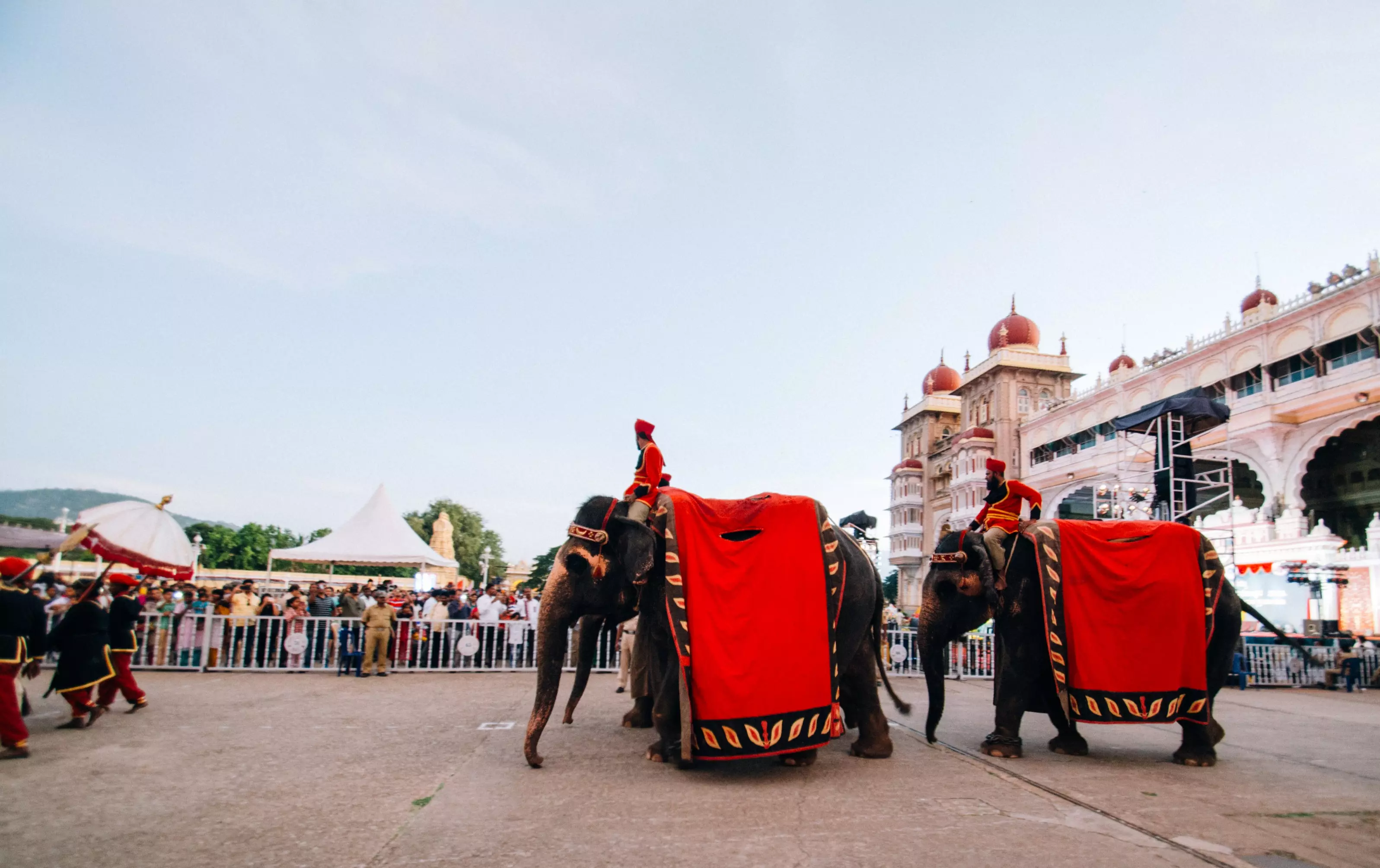
A drive through the city feels like a hark back to time — gliding past palaces, royal edifices, gardens and wide, large roundabouts around Wadiyar statues, tree-lined avenues. You slow down and absorb the city’s rhythms, from horse-drawn tongas to old-world markets buzzing with jasmine, incense sticks and betel leaves.
Remember, Mysore has always been quick to embrace modernity, being the first in Asia to produce electricity by harnessing water and the first princely state to set up a Legislative Assembly with people's representatives. What Mysuru aspires to be is a seamless yet cautious blend of old-world charm and modernity.
Heritage activists bat for flyover
Which is why even heritage lovers are cheering for this grade separator. NS Rangaraju, a member of the Mysore Heritage Conservation Committee, said the proposed flyover could finally help ease the chaos at Manipal Junction.
Also Read: How Bengaluru-Mysuru Expressway is changing travel in South India
“We are not against development per se; what we want is meaningful development. In a city like Mysuru, projects should be undertaken only when truly necessary. I travel this stretch regularly, and the congestion at this junction — especially on the service road leading towards the Ooty bypass — has been a persistent problem. This is a big, welcome move.''
Known for its wide roads, boulevards, and roundabouts, the city has historically (since the time of the Wodeyars) prioritised aesthetic order and, later, surface-level traffic management.
''Mysuru was declared a heritage city in 2004. We have identified 17 heritage roads where major alterations are not allowed. In the core area, where heritage structures are located, building heights are restricted to 12–15 metres, and buildings in the vicinity must be painted ivory. The committee is working closely with the corporation to ensure the city develops in sync withits heritage and character. Any big projects should also get approval from the heritage panel as well,'' Rangaraju told The Federal.
There are discussions about proposed flyover projects at Vinoba and JLB Roads, and Metro/Monorail projects within the city, but those are unlikely to get the go-ahead.
'Markets, utility buildings should be planned outside core area'
MP Yaduveer is also on the same page regarding ‘development’ in the core area.
’Yes, we cannot have haphazard developmental activities. It has to be in sync with the rich character and heritage. If we remove them now, they can never be brought back. There are no quick fixes when it comes to conservation,’’ said Yaduveer, who was anointed as the titular Maharaja of Mysore in 2015.
Also Read: Why Mysuru MP Yaduveer wants pigeon feeding banned near Mysore Palace
Yaduveer says he has big plans to decongest the city further, an early step to prevent Mysuru from going the Bengaluru way.
‘’Traffic congestion is a rare word in Mysuru. We receive regular feedback from the public, gig workers and auto drivers, and congestion is largely limited to the Dasara festive time. However, we cannot remain complacent. Major markets and public offices are concentrated in the core city, and the only long-term solution is to develop new markets, offices, and public utility buildings outside the core. Public should not be coming to the city unless it is necessary. Once urban patterns change, they are difficult to reverse,” adds Yaduveer.
*Mysuru's first flyover (KRS Road-Hunsur Road) was opened only in 2018, less than a decade ago.