







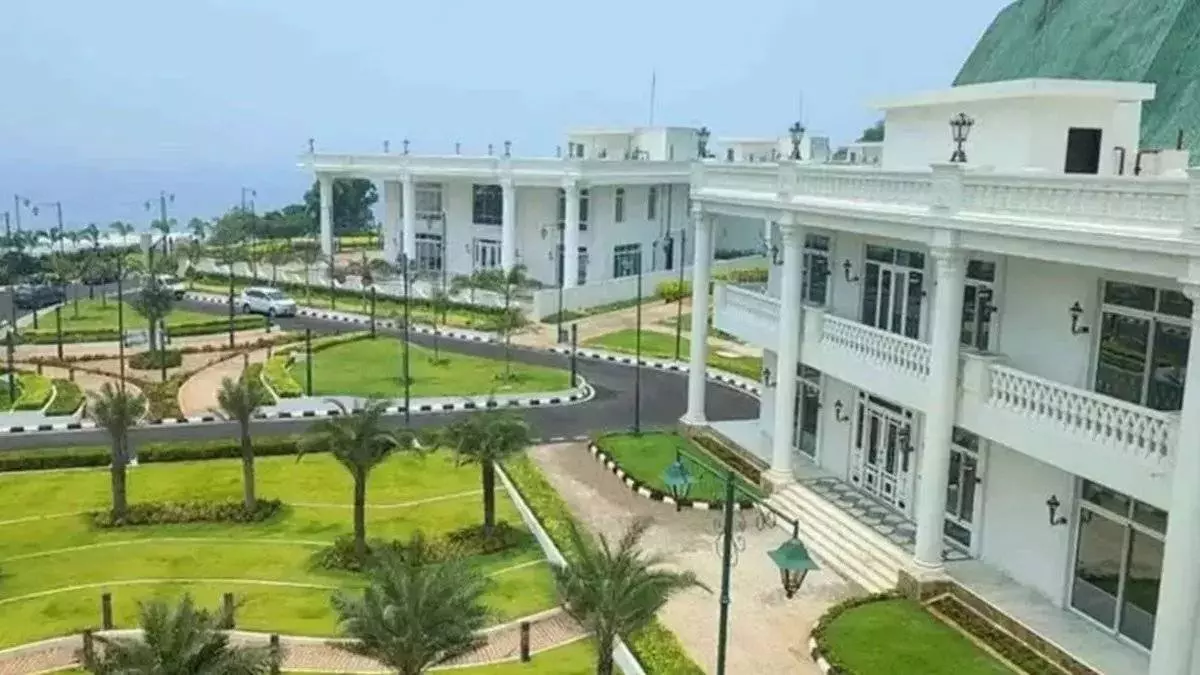
Yelahanka Palace row: One property, 3 claims, and an ownership twist
Brother drops an ownership bomb, sister claims the property is entirely hers, while mother wants it divided equally among 4 grandkids. What does the law say?

Yelahanka Palace, one of the most valuable properties in the YS family assets dispute, has once again become the centre of attention. Three different claims are now being made over the property, making the question of who actually owns it increasingly complicated.
Claim 1: Brother drops an ownership twist
In the 2019 family memorandum of understanding (MoU) between YS Jagan Mohan Reddy and his sister YS Sharmila, Jagan reportedly mentioned that the Yelahanka Palace would belong to Sharmila. She has been relying on this document to assert her ownership claim.
Also read: Yelahanka Palace: How Bengaluru property became centre of Jagan-Sharmila feud
However, Sharmila alleges that when she recently sought permission to use the premises for her daughter’s wedding, the Jagan camp responded that the property did not belong to their family but was registered in the name of Jagan’s mother-in-law Sugunamma, and that it could not be made available due to security concerns.
Claim 2: Sister says it is entirely hers
Sharmila’s position is clear: “The Yelahanka Palace belongs 100% to me. It was built by my father, YSR, and my children grew up there. My brother himself allotted it to me in the MoU.”
On October 31, she declared on X, “God is my witness, Yelahanka is mine.” She subsequently shifted her daughter’s wedding venue to another location. She has also approached the NCLT in Hyderabad with a petition concerning the issue.
Claim 3: Mother wants it shared by 4 grandchildren
YS Vijayamma, their mother, has presented a third position in this dispute.
In an open letter in October 2024, she stated that all of YSR’s properties should be distributed equally among her four grandchildren — Harsha, Varsha, Anjali and Raja — describing this as the last wish of YSR.
Also read: Sharmila shifts daughter’s wedding but reasserts claim over Yelahanka property
According to her position, all properties, including the Yelahanka Palace, should belong to the four grandchildren rather than being transferred entirely to her daughter.
Who owns the property?
According to registration records, a substantial portion of the 22 acres in Yelahanka is reportedly registered in the names of Sugunamma and YS Bharathi Reddy, Jagan’s wife. The property does not appear to be directly registered in the names of YSR or Vijayamma.
However, the ED chargesheet reportedly refers to transactions relating to the property being carried out through companies associated with the YS family. This has brought the benami ownership angle into the discussion.
How will the courts look at it?
According to legal experts, the court is likely to examine three key aspects:
Registration: In whose name is the property officially registered?
Source of funds: Who actually paid for the property? Was there any benami arrangement?
Also read: Amid Jagan-Sharmila’s property dispute, YSR’s wife takes daughter’s side
The 2019 MoU: Is the agreement legally valid and enforceable as a family settlement?
Since YSR did not leave behind a registered will, if the property is legally established to be his, his wife Vijayamma would also have an equal inheritance right under the applicable provisions of the Indian Succession Act.
Vijayamma, however, wants to relinquish her claim in favour of her grandchildren.
Who will the property go to?
One palace, three competing claims within one family, and no clarity or consensus over the ownership and distribution of the property. The Yelahanka Palace dispute is now raising questions both inside and outside the courtroom, with the final word likely to depend on the legal ownership records, financial transactions, and the validity of the family MoU.
(This article was originally published in The Federal Andhra Pradesh.)