



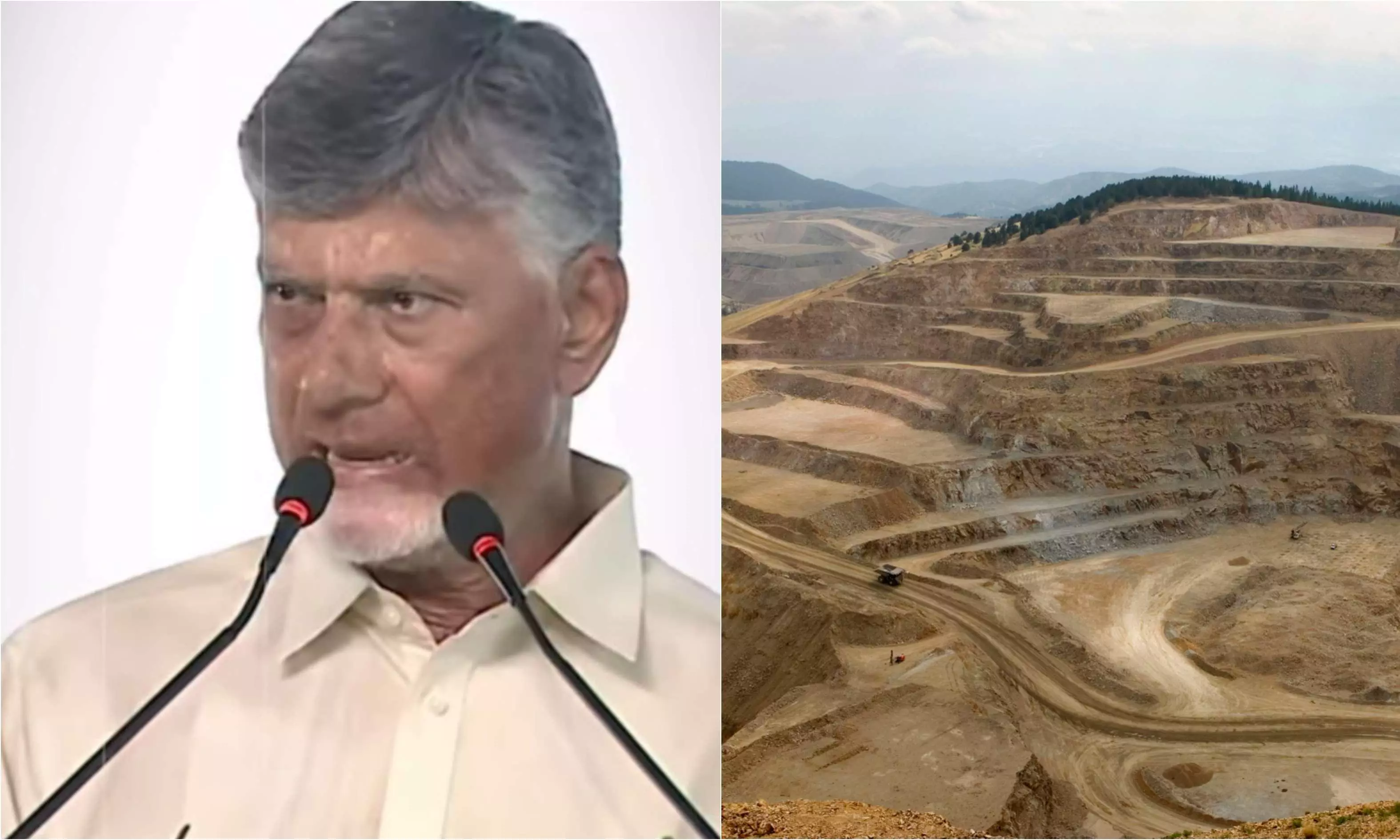
Jonnagiri gold mine rises as India battles a growing forex crunch
As PM Modi asks Indians to put gold purchases on hold amid a West Asia-fuelled oil shock, Andhra's Jonnagiri project aims to help the country's mining story

When Prime Minister Narendra Modi addressed a BJP gathering in Hyderabad on May 10, the appeal he made was striking in its bluntness. With crude oil prices having surged nearly 50 per cent since the outbreak of the US-Iran war in February, touching USD 105 a barrel, and foreign exchange reserves coming under mounting pressure, Modi asked Indians to limit excessive gold purchases for at least a year.
Also Read: How will Modi’s gold appeal impact consumers, jewellers and economy? | AI With Sanket
The numbers behind that appeal are sobering. India spent nearly USD 72 billion on gold imports in the last financial year, making it the world's second-largest buyer after China.
Layer that over a crude oil import bill of approximately USD 123 billion, factor in the ongoing stranglehold on the Strait of Hormuz, and the IMF's projection of an USD 84 billion current account deficit for 2026 begins to feel less like a forecast and more like a reckoning.
A mine whose moment has arrived
Into this charged moment comes a mine in a drought-parched district of Andhra Pradesh.
The Jonnagiri Gold Fields, spread across nearly 598 hectares covering the villages of Jonnagiri, Erragudi and Pagidirayi in Kurnool district, quietly began commercial operations in early May 2026 — becoming India's first large-scale private gold mine since Independence.
Developed by Geomysore Services India Pvt Ltd, backed by Thriveni Earthmovers & Infra and Deccan Gold Mines Ltd, the project has drawn investments of over Rs 400 crore. Certified gold resources stand at 13.1 tonnes, with exploration pointing to a potential of up to 42.5 tonnes.
At peak capacity, the mine is expected to deliver up to 1,000 kg of refined gold a year across the next 15 years. The processing plant was built and commissioned in 13 months.
From KGF to JGF: Naidu's vision
Andhra Pradesh Chief Minister N Chandrababu Naidu has wasted little time in casting the project as both a state triumph and a national milestone, making his reference point unmistakable.
"In the past, the mention of gold brought to mind KGF; now, it signifies JGF — the Jonnagiri Gold Fields," he said, invoking the legendary Kolar Gold Fields that shut in 2000, leaving a two-decade void in large-scale domestic production. He projected that Jonnagiri would produce 600 kilograms of gold this year, scaling to 1,500 kilograms in its second year.
Naidu situated the mine within a sweeping vision for Rayalaseema, a region he described as once renowned as "Ratanala Seema", the land of diamonds, before hardship turned it into what he called "Karuvu Seema," or drought-prone land.
"We have initiated a comprehensive action plan to ensure that every single acre of land receives water," he said. "With an investment of Rs 1 lakh crore, we are transforming the Rayalaseema region into a premier horticulture hub."
He added that through industries such as defence, space, aerospace and electronics, "we will transform Rayalaseema into a land of gems."
Also Read: Why PM Modi urged Indians to avoid buying gold; experts decode
Speed of execution, scale of ambition
In a report published in Economic Times, Thriveni Earthmovers founder and managing director B Prabhakaran framed the mine's speed of execution as proof of a larger possibility. "Jonnagiri reflects what India is capable of when vision, technology and execution come together. We are not just building a mine, but creating a model for responsible, efficient and globally competitive mining in the country," he said.
Mukesh Kumar Meena, principal secretary, mines and geology, Andhra Pradesh, described the launch as "a landmark moment — not just for Andhra Pradesh, but also for India's broader mining ambitions."
One tonne won't end the story
Industry voices are careful to calibrate expectation alongside enthusiasm. India consumes roughly 800 tonnes of gold annually, almost entirely through imports, and Hutti Gold Mines in Karnataka — the country's only other active producer — yields a mere 1.5 tonnes a year. One tonne from Jonnagiri will not move that needle dramatically, in the near term. But the structural signal matters.
Dr Hanuma Prasad Modali, director of Geomysore and managing director of Deccan Gold, told ET that the project's success "should encourage many investors to come into the gold and critical mineral sector, which is the need of the hour for India, both commercially and strategically," and set out an ambition for India to produce "at least 50 to 100 tonnes of gold per annum in the next decade."