Ayodhya theft: ‘Trust meet a sham, does little to restore confidence’ | AI With Sanket
Acceptance of Champat Rai's resignation changes little as he continues to remain a trustee, argue senior journalists Sunita Aron and Sharad Pradhan

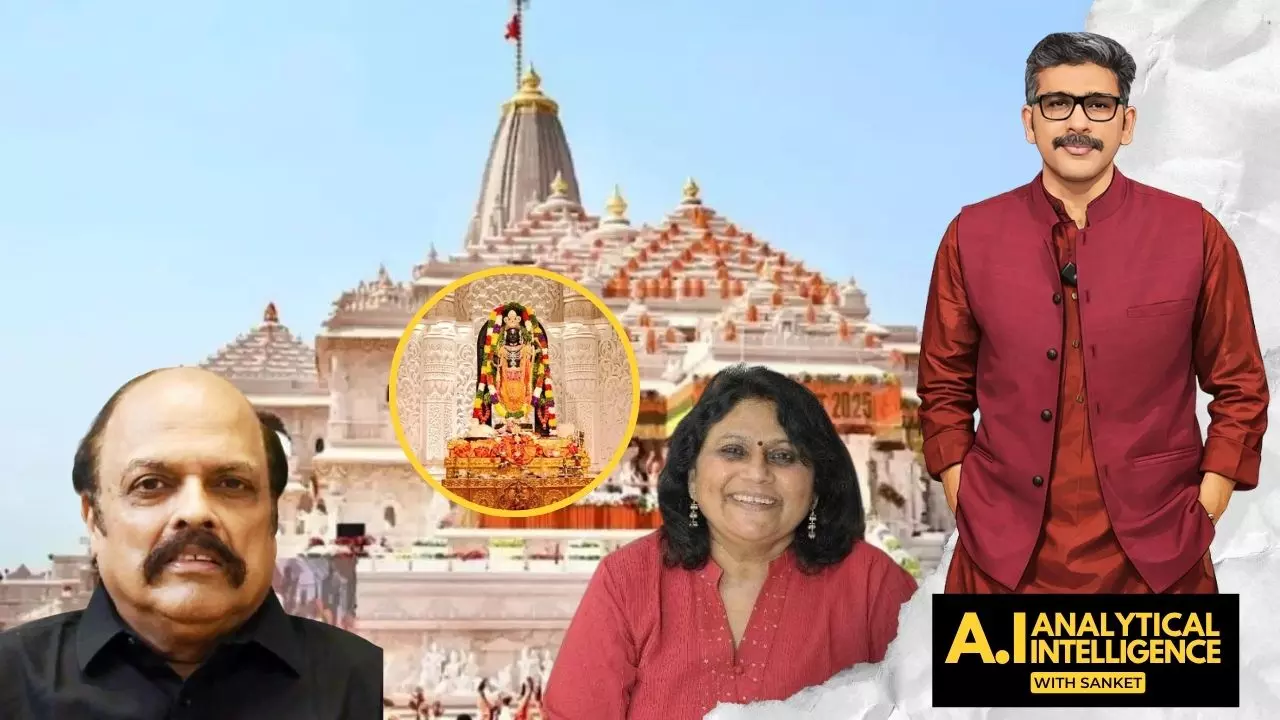
The recent meeting of the Ram Mandir Trust was an "eyewash", said senior journalists Sunita Aron and Sharad Pradhan in this episode of AI With Sanket, arguing that it failed to address the core concerns arising from the alleged donation theft controversy.
They contended that merely accepting the resignations of key office-bearers, while allowing them to continue as members of the trust, does little to restore public confidence.
Speaking during the panel discussion, Aron and Pradhan said the trust missed an opportunity to announce systemic reforms or order a wider independent inquiry into the allegations. Instead, the meeting focused on cosmetic measures that left several fundamental questions unanswered, they argued.
Questions remain
Aron said the meeting should have gone beyond accepting resignations and addressed the larger issues surrounding the alleged thefts.
According to her, if reports suggest there were around 70 instances of theft, the public deserves to know the total amount involved and how such incidents allegedly continued for an extended period without effective oversight.
Also read: Ram Temple trust considers CEO appointment amid SIT probe into donation embezzlement
She also questioned why the trust chose to praise former General Secretary Champat Rai at a time when public confidence had been shaken.
"Even if he is not personally involved, questions of administrative responsibility cannot simply be ignored," she said, adding that the trust should have discussed institutional reforms rather than limiting itself to procedural decisions.
Aron also noted that trust chairman Nripendra Mishra had described the incident as a theft, whereas other public statements had referred to it as a "dacoity", saying the differing descriptions only added to public confusion.
'Headline management'
Pradhan argued that the meeting appeared designed primarily to manage headlines rather than resolve the controversy.
He pointed out that although the resignations of Champat Rai and others were presented as major decisions, they continue to remain members of the trust.
According to him, the public was led to believe that decisive action had been taken when, in reality, the organisational structure remained largely unchanged.
Also read: Ram Temple SIT report: 70 thefts caught on CCTV; probe widens to consecration ceremony spending
Pradhan referred to legal expert K Parasaran, saying the trust's constitution reportedly treats resignations differently from conventional organisations, allowing the trust to avoid a formal acceptance-or-rejection process.
He argued that this interpretation effectively enabled the trust to retain the influence of those who had stepped down from executive responsibilities.
"The entire exercise appears intended to create an impression of accountability without substantially changing anything," he said.
RSS under scrutiny
Aron said the controversy has inevitably drawn attention towards the Rashtriya Swayamsevak Sangh (RSS) because several individuals associated with the trust have longstanding links with the organisation.
She argued that while the RSS may wish to distance itself from the controversy, it cannot ignore the historical association many trustees have had with both the RSS and the Vishwa Hindu Parishad (VHP).
Pradhan went further, alleging that efforts were being made at higher organisational levels to protect those facing scrutiny rather than ensuring complete transparency.
Also read: Ram temple trust meets amid donation theft probe; chairman says 'deeply hurt'
According to him, the larger objective appeared to be preventing reputational damage to the organisations associated with the Ram Mandir movement.
Both journalists maintained that restoring public trust would require far greater transparency than what emerged from the recent trust meeting.
(The content above has been transcribed from video using a fine-tuned AI model. To ensure accuracy, quality, and editorial integrity, we employ a Human-In-The-Loop (HITL) process. While AI assists in creating the initial draft, our experienced editorial team carefully reviews, edits, and refines the content before publication. At The Federal, we combine the efficiency of AI with the expertise of human editors to deliver reliable and insightful journalism.)