Sengar sentence suspension: There must be accountability for such orders, says activist
Human rights activist Kavita Srivastava reflects on long trail of intimidation in Unnao rape case and systemic failures in survivor protection in India

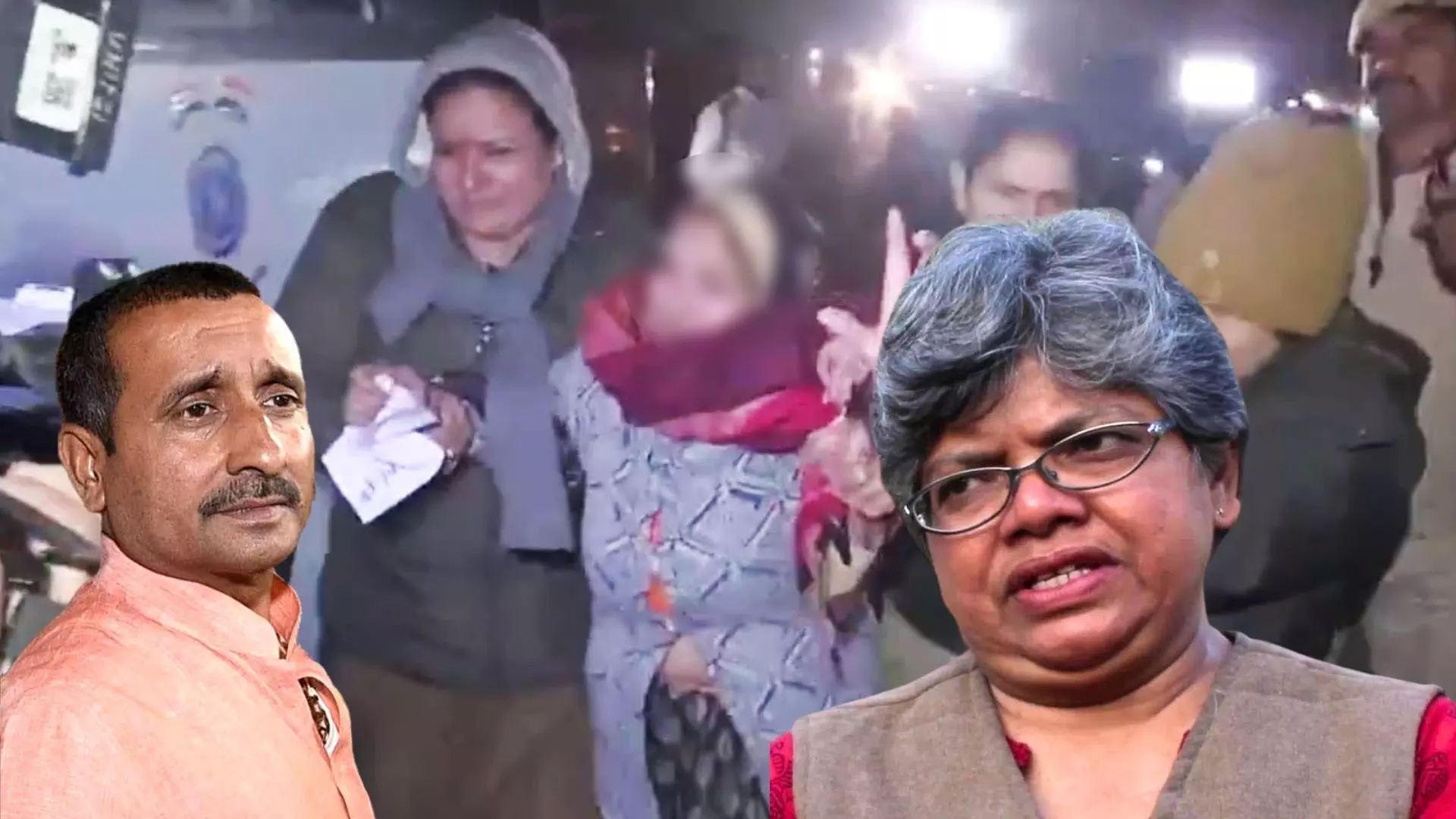
The Delhi High Court’s decision to suspend the life sentence of Kuldeep Singh Sengar in the Unnao rape case has triggered widespread outrage and concern over survivor safety and judicial accountability.
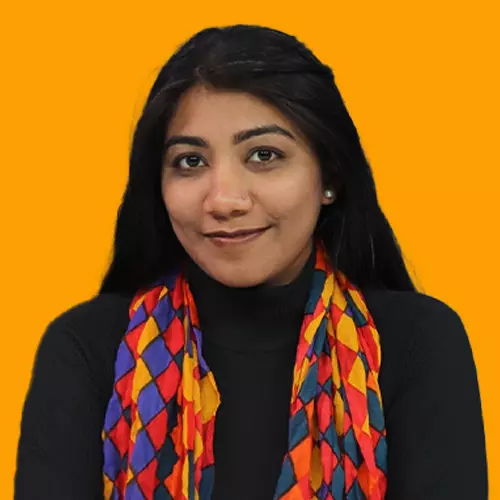
In an interview with The Federal, human rights activist Kavita Srivastava reflects on the long trail of intimidation in the case, systemic failures in survivor protection, and what such rulings signal for women seeking justice in India.
In light of the Delhi High Court’s decision to suspend Kuldeep Singh Sengar’s sentence, what do you see as the most glaring systemic failures in how cases of sexual violence, especially involving minors, are handled?
I must first clarify that I have not read the Delhi High Court judgment in detail or the specific grounds on which the suspension of sentence was ordered. But if we look at the outcome—that he gets out of jail and can live where he wants, except for a five-kilometre restraint from the survivor’s house in Delhi—it is deeply tragic.
We must remember the run-up to this case. The young girl went to him in absolute trust. She was from his constituency. He took advantage of her vulnerability and raped her. The abuse began when she was a child. Despite this, she showed immense courage and eventually spoke out.
When she did, the FIR initially refused to name him. His name, Kuldeep Sengar’s name, was deleted by the police, even though she clearly stated what had happened. This is what the police did. Only later did the investigation reach him, and even then, the probe had to be shifted to Delhi.
Then look at what followed. She lost two of her aunts—her father’s sisters—in a road accident. Her lawyer was also killed in a road accident. It is too much to believe that all this happened accidentally. A truck hits them, and suddenly key people around her are dead. This clearly showed how the accused tried to make her completely vulnerable, stripping away her support system, even resorting to killing.
This reflects the lawlessness we saw. Was this the kind of protection provided by the police systems of Uttar Pradesh and Delhi? She lost relatives and her lawyer. Against this backdrop, yes, we were glad that a Delhi court eventually convicted him. He was sent to prison in 2018, and the conviction came in 2019. He has spent about seven years in jail.
But given the circumstances—his central involvement not just in rape but also in murders—how can the Delhi High Court suspend his sentence? That question has to be asked. He was a politically powerful person, a sitting MLA at the time. He was involved in destroying evidence and in the killing of three people.
Is the survivor not vulnerable today? The convict has got his sentence suspended, and I will say this bluntly—it appears to be because of his political affiliation with the BJP. I work in prisons. We have never seen people with life sentences get out before 14, 15, or even 16 years. How did he get out after seven years? How does this kind of favoritism operate, especially in a POCSO case involving a minor?
We are outraged and shocked. There must be accountability for such orders. I am glad the CBI plans to move the Supreme Court, and I hope this suspension is cancelled. Otherwise, the girl is at high risk. We simply do not trust this man.
You mentioned serious security lapses and threats faced by the survivor and her family. What does this reveal about broader failures in protecting survivors, and what immediate reforms are needed?
The truth is, we still do not have a real protective mechanism for survivors, even though it is written about repeatedly—in the Justice Verma Committee report and various Law Commission reports. How exactly do you protect a survivor? Does it mean a personal security guard all the time? Or does it mean something else—like continuous monitoring by the police and judiciary?
The problem is that the police rarely take threats seriously when powerful people are involved. A real protective mechanism does not exist in our country. The police are often unable to handle even their regular cases, let alone monitor threats against survivors who need protection.
We see this difficulty repeatedly, especially in cases involving Dalit survivors. When a woman or a Dalit speaks out against a crime, many times their family members are attacked or killed. Protection has to work at multiple levels.
First, there must be an actual protective cover in such cases. If the Delhi High Court felt compelled to suspend the sentence, it should at least have simultaneously put a protection mechanism in place for the survivor.
Second, we need to rethink our discourse on prisons. Jails are not meant to be mere lock-ups. They are supposed to be reformatory spaces where human rights are preserved and rehabilitation happens. But that requires a different approach and trained staff, which we simply do not have.
In many states, the top jail positions—ADG, IG, DG—are all held by police officers. How can an agency meant to investigate and control law and order also run the jail system? Reformation becomes a lost project. There are hardly any counsellors, very few psychiatrists, and no sustained effort at reform.
Yes, we must work with the accused too. We cannot write off human beings entirely. But suspending a life sentence after just seven years, especially when the person has posed such a serious threat to the survivor, without any assessment or report, is bizarre.
There were other options. He could have been given parole. There are instruments within the jail system. Open jails exist in places like Rajasthan and even Delhi. Releasing him outright is a folly. I only hope nothing happens to the girl or her family.
When they protested, they were dragged away and humiliated. Is this the justice Indian democracy offers women? It is deeply depressing, especially as we mark decades of being a republic.
What are the wider implications of this sentence suspension for women’s rights, particularly in terms of reporting sexual violence and the culture of impunity?
Despite everything, there has been a significant breaking of silence around rape over the years. From the Mathura case to Bhavri Devi in the early 1990s, women have challenged denial and stigma. The definition of shame changed dramatically after the Nirbhaya case, where she said, “I want to live,” instead of internalising shame.
Today, many women are speaking out. They are willing to go through long investigations and trials. When women come to us, we tell them clearly that this process is not easy and will take years. Still, they say they will fight till the end.
Such judgments, however, do demoralise survivors. During the Nirbhaya debate, we argued that life imprisonment should not automatically mean imprisonment till the last breath, because we have a reformatory system. But even then, reductions were discussed in terms of 14 years or more, with assessments.
Here, there was no such assessment. Seven years against a life sentence is a betrayal. It sends a message that life sentences can be reduced arbitrarily. That is devastating for survivors and for the broader movement against sexual violence.
This has been a very depressing period. Such judgments from the judiciary create setbacks. The judiciary needs to seriously rethink why it appears to show favoritism toward the ruling party or powerful individuals. These questions are unavoidable.
Do you believe there are strategies or campaigns that can hold powerful figures accountable in sexual violence cases?
Under the law, there is no such thing as a VIP prisoner. Everyone is equal in jail. There are no formal class systems, yet we repeatedly see these principles flouted.
The judiciary is supposed to ensure that the law is implemented in spirit and act as a check on the executive. When it fails to do so, judicial accountability becomes crucial. Increasingly, the system appears anti-people, anti-vulnerable, and anti-women.
There has to be a comprehensive campaign for judicial accountability. We cannot let such decisions pass unquestioned. There will be a campaign, and it must happen.
“The content above has been transcribed from video using a fine-tuned AI model. To ensure accuracy, quality, and editorial integrity, we employ a Human-In-The-Loop (HITL) process. While AI assists in creating the initial draft, our experienced editorial team carefully reviews, edits, and refines the content before publication. At The Federal, we combine the efficiency of AI with the expertise of human editors to deliver reliable and insightful journalism.”