


‘Create fear among goons’: SC asks police to make Delhi safer for women
Hearing recent rape cases, the court said police must focus on preventing crimes and ensure women feel safe travelling on Delhi roads and the metro at night

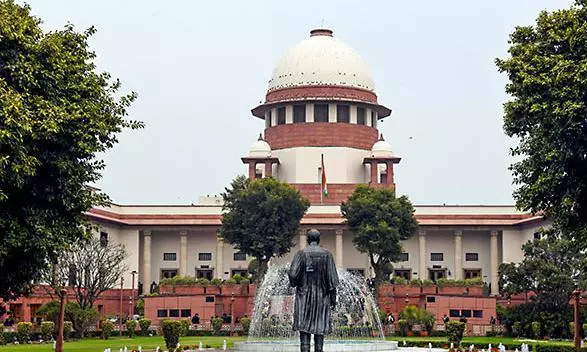
The Supreme Court on Monday (October 5) said there was a need to create fear in the minds of goons committing crimes against women, while noting that there is a feeling that women are not safe in the city, particularly some vulnerable pockets.
The court made the remarks while hearing a suo motu case over recent rape incidents in Delhi-NCR. "We have to work together. We must ensure that every woman in Delhi-NCR should feel safe even at 11 pm whether travelling on the roads or the metro," a bench of Justices JB Pardiwala and K Vinod Chandran observed.
"What is important is to prevent a crime, not what you do after a crime is committed," the bench said, adding police needs to create fear in the mind of goons and anti-social elements who are prone to committing such crimes.
The bench, which was hearing a suo motu case titled 'In Re: Recent rape incidents in Delhi NCR', observed that "rape is something which is not at all acceptable to any society".
Safety audit flags concerns
The court's intervention comes against the backdrop of several cases involving women and minors in the National Capital Region. The Supreme Court had on September 28 taken suo motu cognisance of the incidents, including the alleged gang rape of a 17-year-old girl at Aastha Kunj Park near Kalkaji, the alleged gang rape of a minor in Swaroop Nagar and the alleged sexual assault of a 16-year-old girl inside a bus travelling from Greater Noida to Delhi.
The bench had observed that public spaces such as parks, roads and buses cannot be permitted to turn into “zones of high risk” and questioned whether the lessons of the 2012 Nirbhaya case had been learnt. It also connected the issue of public safety with the fundamental right to live with dignity and without violence under Article 21 of the Constitution.
The alleged gang rape of the 17-year-old at Aastha Kunj Park on September 21 led to widespread protests and renewed attention on security arrangements in Delhi's parks. A subsequent DDA safety audit found CCTV cameras in only 16 of the 736 parks managed by the agency. It classified 190 parks as high-risk, while 520 were found to need additional lighting and 323 additional CCTV cameras.
The audit also highlighted shortcomings in boundary security, gates, toilets and abandoned structures across several parks. More than 30 locations within Aastha Kunj have since been identified for CCTV installation, with officials pointing out that the park's secluded stretches and wooded areas make effective surveillance difficult.
(With agency inputs)