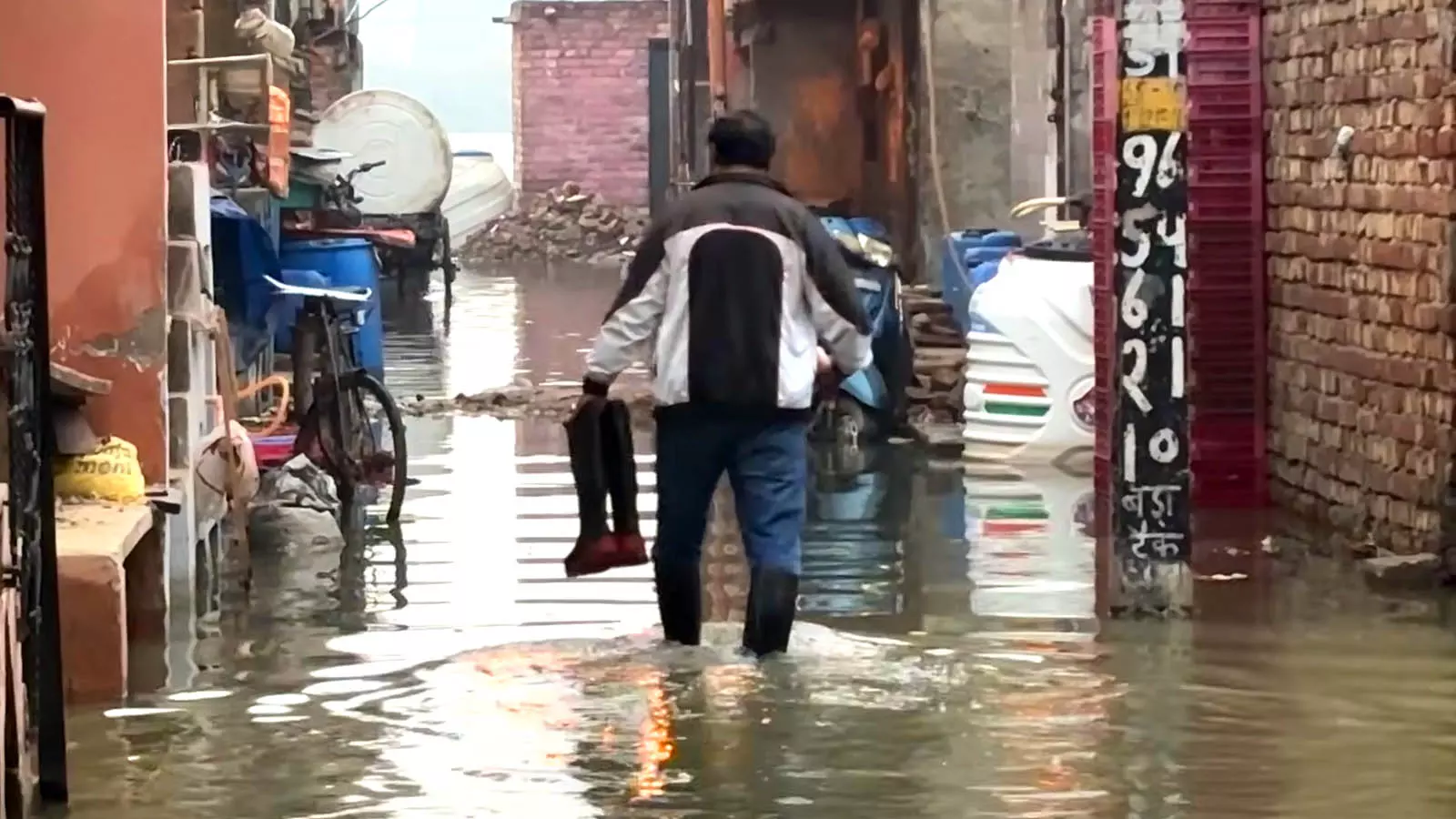
Delhi’s Kirari woes overflow: Sewage, gumboots and snakes
Many families, fed up with the conditions in the Sharma Enclave of Kirari, have abandoned their homes. Families have locked up their homes and shifted to rented accommodation

Delhi, the national capital, is often showcased as a model of development. Claims of smart cities and world-class facilities are made every day. But behind these claims lies a dark reality — one that unfolds in the Sharma Enclave of Kirari.
This is a part of Delhi that has been forgotten. For eight months, residents here have been living a hellish life, and conditions continue to deteriorate. People here are no longer recognised by their faces, but by the gumboots on their feet.
Also read: Noida techie death: Two more builders arrested
Whether children or the elderly, everyone wears rubber boots. Filthy water and slush have engulfed the entire colony. Dirty water from the lanes has now entered people’s bedrooms. Official apathy has turned this colony into a modern-day ‘Kala Pani’.
Venomous snakes in water
In Sharma Enclave, fancy footwear has become useless. For residents, gumboots are now a lifeline. The struggle begins the moment they wake up and lasts until they go to bed at night. Stepping out of the house without boots is impossible. Gumboots have become an unavoidable compulsion. Whether it is going to work or to the market, wearing boots is mandatory. Locals say they have forgotten what it feels like to wear shoes. Water that has been stagnant for eight months has made daily life unbearable. People are forced to live amid this filthy, foul-smelling water.
The danger is not limited to filth or stench alone. Life itself is at constant risk here. Water in the lanes ranges from knee-deep to waist-deep. Venomous snakes are often seen swimming in the stagnant water. Poisonous insects frequently enter homes. Out of fear, parents have stopped sending their children to school. For children carrying schoolbags on their shoulders, stepping out of the house feels like a battle. Around 35 lanes have turned into ponds. Residents are confined to the upper floors of their own homes. The threat of disease looms constantly.
Also read: Delhi records 9,211 respiratory deaths in 2024 as mortality rate rises
Many families, fed up with the conditions, have abandoned their homes. Families have locked up their homes and shifted to rented accommodation. Ground floors are no longer fit for living. Dampness and water seepage have weakened the structures. The elderly and the sick are suffering the most. For them, the colony has turned into an open prison. Some have lost their livelihoods, others their education. Financial losses have broken the backbone of many families.
VIP Delhi versus reality of Kirari
This is the same Delhi where the Prime Minister and the President reside. In New Delhi Municipal Council (NDMC) areas, even a fallen leaf is promptly cleared. But in Kirari’s Sharma Enclave, the hollowness of official claims stands exposed. The Swachh Bharat Abhiyan appears to be a cruel joke here.
Also read: Delhi elderly couple duped of Rs 14.85 crore, kept under ‘digital arrest’ for 17 days
As the issue went viral across media and social media, both the ruling Bharatiya Janata Party (BJP) and the Opposition Aam Aadmi Party (AAP) began trading accusations. While the AAP blamed the BJP government and the Delhi Development Authority (DDA), the BJP and the Delhi government pointed fingers at the former AAP government in the capital. Local AAP MLA Anil Jha Vats was also held responsible. Residents themselves levelled similar allegations against Vats.
Minister’s assurance
On January 23, North West Delhi MP Yogendra Chandolia visited Sharma Enclave in Kirari. During the visit, Jha also arrived with his supporters. An argument broke out between the two, with both sides exchanging accusations.
After media reports brought the issue to light, Delhi minister Parvesh Verma has assured residents that the problem will be resolved. He has claimed that the budget has been approved and that work will begin soon.
(This article was originally published in The Federal Desh)