Brittas alleges assault in detention, Left calls police vans ‘moving Guantanamo’
Police detain hundreds despite SC order; CPM MPs John Brittas and AA Rahim allege brutal treatment as Left student and youth organisations defy restrictions

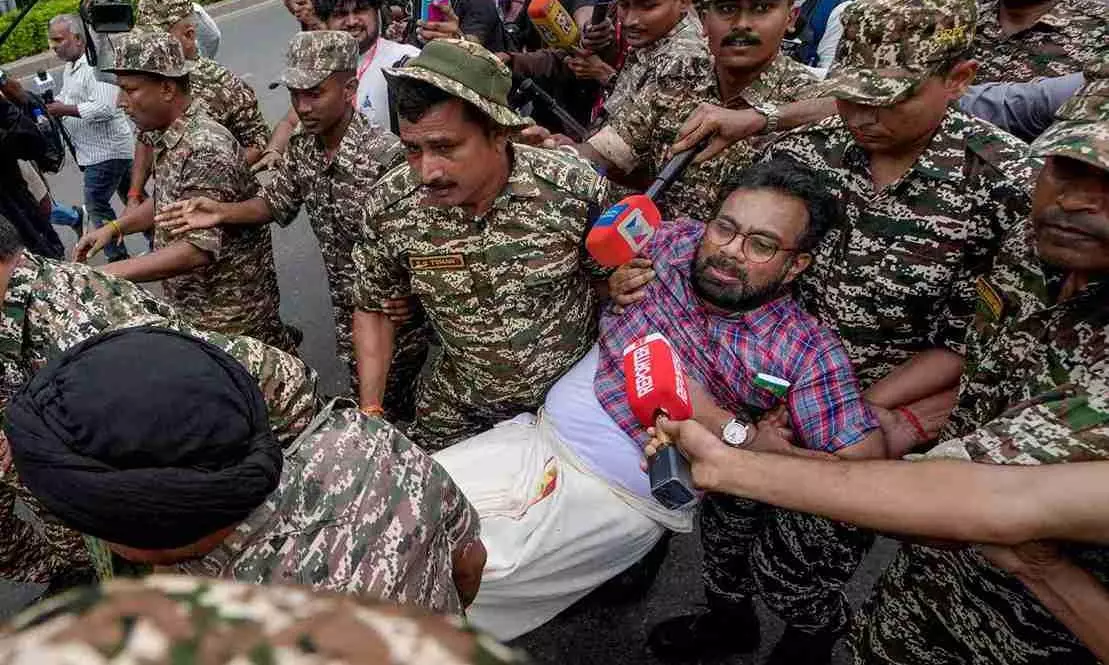
Despite the Supreme Court’s (SC) interim intervention and observations on the restrictions imposed in the national capital, the crackdown on protesters continued in Delhi on Sunday (October 11), with central forces confronting demonstrators, detaining hundreds of activists and forcibly removing even elected lawmakers from the protest site.
Indiscriminate use of force: Protesters
A surprise march by Left student and youth organisations erupted at Connaught Place by 11.30 am, with workers of the Students’ Federation of India (SFI), Democratic Youth Federation of India (DYFI), All India Youth Federation (AIYF), and All India Students’ Federation (AISF) taking to the streets. The protest was met with police action at Rajiv Chowk as demonstrators attempted to march towards Jantar Mantar.
Also read: LIVE updates from Delhi
SFI’s all-India president Adarsh M Saji, Delhi state secretary Sooraj Elamon, SFI Central Executive Committee member Abhijith Manilal, and hundreds of other protesters were attacked and detained, alleged Left leaders. Central forces were at the forefront of the confrontation, with protesters alleging that the personnel used force indiscriminately, including against those attempting to exercise their democratic right to assemble and protest.
Supreme Court’s orders
The crackdown continued even as the Supreme Court was seized of a contempt petition concerning the restrictions and the alleged failure to comply with its directions. The court appeared to make oral observations critical of the Delhi Police and issued notice to the Delhi Metro Rail Corporation (DMRC) in the contempt case, according to developments reported from the proceedings.
The court’s observations and notice came amid mounting questions over the continued enforcement of prohibitory restrictions under Section 163 of the Bharatiya Nagarik Suraksha Sanhita (BNSS), which replaced Section 144 of the Code of Criminal Procedure. The issue of lifting the restrictions had come up before the court, even as protesters and Opposition leaders alleged that the authorities were continuing to suppress demonstrations.
Left students inside a detention van on Sunday. Screenshot from specially arranged video
Brittas alleges assault
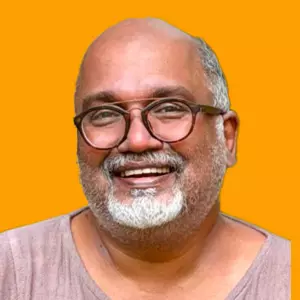
The police action also drew attention to the use of force against public representatives. Communist Party of India (Marxist) Rajya Sabha MP John Brittas was detained while speaking to the media about the Supreme Court’s intervention and the need for de-escalation. He was forcibly taken away into a detention van, even as he was explaining the court’s position on the restrictions.
Brittas later alleged that he was assaulted inside the vehicle and that a Central Reserve Police Force (CRPF) personnel attempted to suffocate him. He said the personnel involved were not wearing identity cards or badges, making it difficult to identify those responsible.
Also read: CPM takes centre stage at CJP’s anti-CEC protests; police action shifts focus
“A CRPF personnel member attempted to suffocate me,” Brittas told the media after his release. He said someone in the control room had seen visuals of the alleged assault captured on a body camera and instructed the personnel to release him somewhere after learning that he was a Member of Parliament.
According to Brittas, he was pushed out of the detention van onto the road. His account raised further questions about the conduct of the forces deployed to manage the protests and the safeguards available to people detained during police action.
‘Moving Guantanamo’
CPM Rajya Sabha MP AA Rahim also accused the Delhi Police of subjecting protesters to brutal treatment inside detention vehicles. He described the vehicles as “moving jails” and “torture camps on wheels”, alleging that demonstrators were being confined and their voices silenced.
“Delhi Police is deliberately subjecting protesters to brutal treatment. They are torturing the protesters inside the detention van,” Rahim said.
Referring to Brittas’s detention, Rahim said the MP had been dragged away while addressing the media about the Supreme Court’s order on de-escalation. “When even a lawmaker is forcibly removed while addressing the media, what does that say about the state of our democracy?” he asked.
Also watch: CJP vs Centre: Is crackdown on Gen Z, leaders, activists justified?
Rahim described the detention vehicle carrying Adarsh M Saji, DYFI leader Jaik C Thomas and other protesters as a “moving Guantanamo”, drawing a comparison with the US detention facility notorious for allegations of abuse and the denial of due process.
Disregard for Supreme Court?
The use of central forces against the demonstrators, including the reported treatment of lawmakers, became a central point of contention as Opposition leaders questioned whether the administration was respecting the court’s intervention. The continued detention of protesters despite the judicial proceedings also intensified demands for the restrictions to be lifted and for those detained to be released.
The confrontation unfolded against the backdrop of restrictions on public assembly and concerns over the right to communicate. Brittas alleged that internet shutdowns were denying people the ability to communicate, while the close-range filming of protesters by police personnel using cameras carried in their pockets raised concerns about privacy and surveillance.
He argued that the restrictions had created a situation in which even a gathering of four or more people in the national capital could lead to detention and the use of force. The continuing police action, he said, amounted to a disregard for the Supreme Court and the rule of law.