TMC's internal turmoil: Is Trinamool headed Shiv Sena way? | Capital Beat
Internal dissent, leadership questions and opposition calculations dominate the discussion as the Trinamool Congress faces its biggest crisis in years

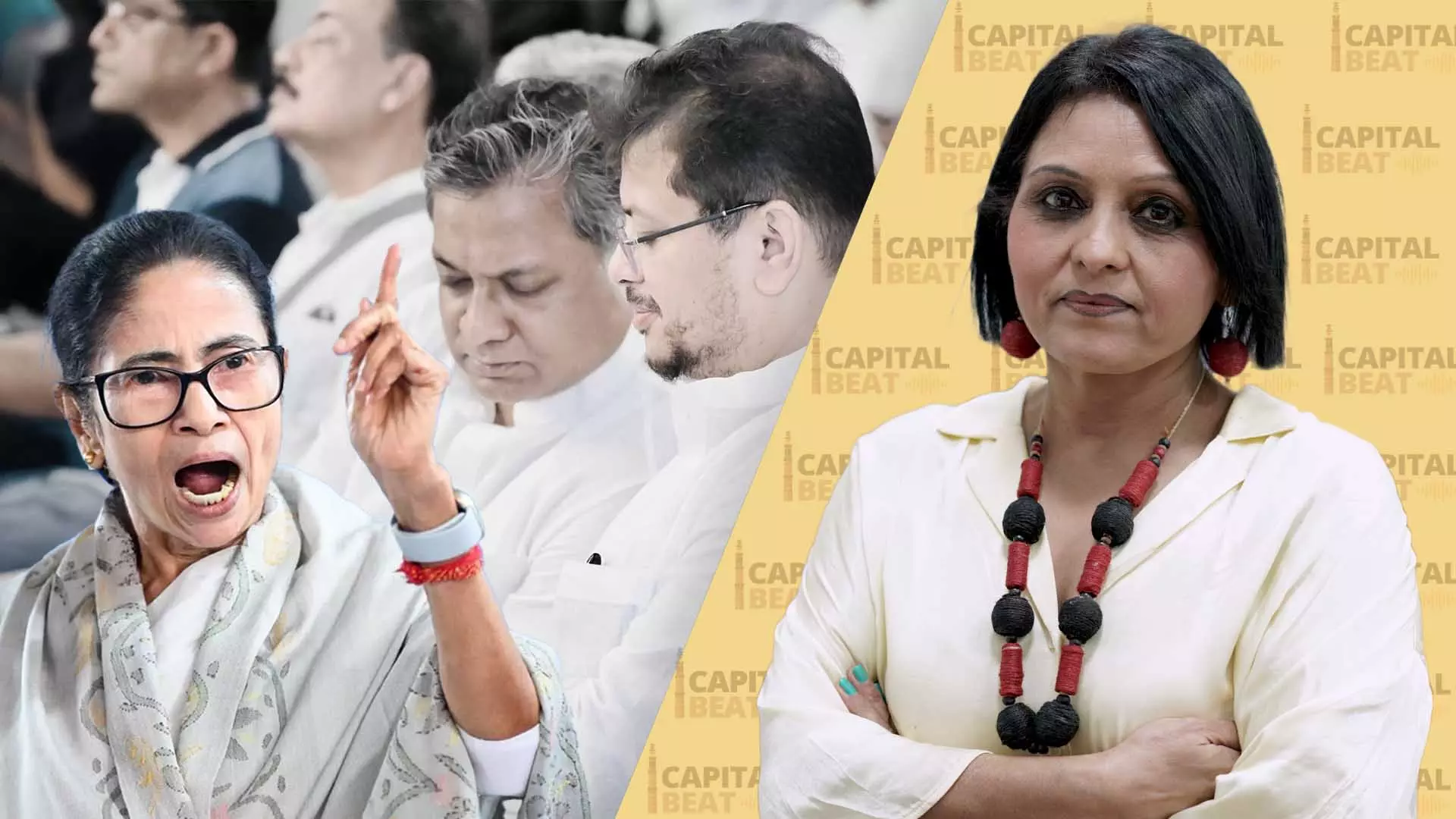
In the latest episode of Capital Beat, senior journalist Shikha Mukherjee and Congress spokesperson Chandan Ghosh Choudhury examined the growing political turmoil within the Trinamool Congress (TMC) following its electoral setback and the controversy surrounding the appointment of the Leader of the Opposition in the West Bengal Assembly.
The discussion focused on reports of dissent within the party, allegations of internal rebellion, the expulsion of two legislators, and speculation over whether the party could face a split similar to developments witnessed in Maharashtra in 2022.
Also read: Is TMC headed for a split? Expulsions, MLAs’ absence from meet fuel speculation
The controversy intensified after two TMC legislators, Rituparna Banerjee and Sandipan Saha, were expelled by the party following allegations related to a forged-signature controversy linked to the appointment of the Leader of the Opposition. The developments were followed by reports of meetings involving several legislators and growing speculation regarding divisions within the party.
Questions over party's future
Addressing the speculation surrounding a possible split, Mukherjee said, “Mamata Banerjee is still around, and she founded the Trinamool Congress. So, I guess till the numbers make it otherwise, we have to wait and see.”
She described the developments as “a real cliffhanger thriller kind of story” while noting that clear divisions were emerging within sections of the party.
Also read: Mamata threatens to protest in Delhi if barred in Kolkata; flays expelled MLA as 'betrayer'
Mukherjee pointed to statements made by expelled leaders and said distinctions were increasingly being drawn between the original party and what some dissidents viewed as its current organisational structure.
According to her, one expelled MLA publicly reiterated loyalty to Banerjee while simultaneously alleging that the party had been “hijacked by the corporate”, referring to the influence of election strategist organisations and the leadership of Abhishek Banerjee.
Comparisons with Maharashtra
Mukherjee cautioned against assuming that a split was imminent and drew comparisons with the political developments in Maharashtra.
“If you remember Maharashtra Operation Kamal, Operation Kamal took a lot of preparation beforehand,” she said.
She outlined two possibilities: either extensive planning had already taken place before the election results, or discussions among legislators and political parties were still underway.
Mukherjee noted that reports had emerged suggesting some legislators had reached out to both the Congress and the BJP. She also referred to comments by BJP state president Somik Bhattacharya, who publicly stated that the party was not in a hurry to induct leaders from other parties.
She said there were internal considerations within both national parties regarding how they would respond to any potential defections and observed that larger political calculations remained a factor.
Congress's view on developments
Choudhury argued that the current situation was primarily a consequence of internal developments within the Trinamool Congress rather than an operation led by the BJP.
“I don't think BJP is going to do much, but it is Trinamool Congress by itself,” he said.
He pointed to organisational challenges within the ruling party and said the BJP itself was dealing with internal equations between longstanding party members and leaders who had joined from other political formations.
Choudhury stated that the Trinamool Congress had been built around political power rather than a clearly defined ideological framework and suggested that internal contradictions had become increasingly visible over time.
He also referred to the political backgrounds of expelled leaders and said their actions reflected broader dissatisfaction within sections of the party.
Debate over leadership and accountability
Asked whether there was a genuine rebellion brewing within the TMC, Choudhury replied, “It is surely so.”
He argued that allegations of corruption, nepotism, and organisational decline had weakened the party over the past decade and contributed to its recent electoral defeat.
According to Choudhury, dissatisfaction had increased after 2022 and eventually became visible during the election cycle. He attributed the situation to leadership decisions taken over several years.
“Abhishek Banerjee did not fall from the sky. He was projected,” Choudhury said while discussing the rise of the party's national general secretary and the reactions among senior leaders and grassroots workers.
He maintained that sections of the party had reservations regarding the leadership structure but continued to function within the organisation.
Mamata Banerjee’s silence
The discussion also focused on Banerjee’s public response to the crisis.
Mukherjee suggested that the former chief minister’s decision not to speak extensively about the rebellion reflected the sensitivity of the situation.
“I think silence is a way of doing diplomacy,” she said.
Mukherjee added that any public statement at a time of uncertainty could have significant political consequences and that party leaders were likely assessing the extent of support among legislators before making major decisions.
She also noted that criticism from dissidents appeared to be directed largely at Abhishek, though she argued that such criticism ultimately reflected dissatisfaction with decisions taken by the party leadership.
Attendance concerns and political distancing
Mukherjee highlighted reports that only around 20 of the party’s 80 legislators attended a meeting called by Banerjee.
“That is rebellious against her leadership. It's not against Abhishek Banerjee,” she said.
She argued that the low attendance reflected concerns extending beyond individual leaders and indicated broader questions about the party’s direction.
Mukherjee also referred to resignations from organisational posts by local leaders and councillors, describing them as attempts to distance themselves from the party while retaining elected positions.
According to her, many political figures appeared to be positioning themselves ahead of future elections while avoiding immediate commitments regarding their political future.
Role of Muslim legislators
A significant portion of the discussion focused on the role of Muslim legislators within the TMC.
Mukherjee noted that the party had 34 Muslim MLAs and said their decisions could become crucial if any formal split were to emerge.
“The catch is with these 34 MLAs,” she said.
She questioned whether legislators would support any political arrangement that ultimately aligned with the BJP and suggested that alternative political destinations could include the Congress or the Indian Secular Front.
Mukherjee also observed that political calculations surrounding representation and future electoral prospects would likely influence decisions taken by legislators.
Congress keeps its options open
Responding to questions about whether the Congress would welcome legislators leaving the Trinamool Congress, Choudhury said the party would evaluate individuals on a case-by-case basis.
“Untainted leaders are welcome,” he said.
He added that decisions regarding new entrants would be taken by senior Congress leadership and stressed that the party would maintain its existing criteria for membership.
Choudhury also argued that many political workers who had moved from the Congress to the Trinamool Congress over the years could consider returning if circumstances changed.
He maintained that the Congress would remain selective while assessing any future political realignments in West Bengal.
(The content above has been transcribed from video using a fine-tuned AI model. To ensure accuracy, quality, and editorial integrity, we employ a Human-In-The-Loop (HITL) process. While AI assists in creating the initial draft, our experienced editorial team carefully reviews, edits, and refines the content before publication. At The Federal, we combine the efficiency of AI with the expertise of human editors to deliver reliable and insightful journalism.)